U.S. energy exports hit record highs as Strait of Hormuz conflict persists
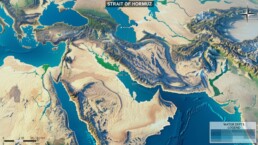

The ongoing conflict in the Middle East has cemented America’s position as a global energy-exporting powerhouse, with international demand for U.S. crude, natural gas, and refined products reaching unprecedented levels.
According to the U.S. Energy Information Administration, total exports of crude and petroleum products climbed to a record 12.9 million barrels a day last week, as global markets scramble to replace supply disruptions centered on the Strait of Hormuz and damaged facilities in Qatar.
Infrastructure constraints and geopolitical friction
The frenzy shows little sign of cooling; current data indicate that over 60 empty crude supertankers are currently en route to the U.S. Gulf Coast, roughly triple prewar levels.
The demand surge has bolstered the administration’s “energy dominance” strategy, but energy experts warn that converting this wartime demand into a long-term commercial shift presents significant hurdles.
Major structural impediments remain, particularly in Asia, where refineries are largely optimized for the denser, sourer oil historically sourced from the Middle East. Modifying the existing infrastructure to accommodate American supply would require significant capital and years of engineering, creating a barrier to permanent adoption.
Furthermore, the U.S. Gulf Coast is nearing its own physical throughput capacity, meaning that incremental export growth will be limited until new terminal projects, currently under construction, come fully online over the next 18 to 24 months.
Market outlook: Global shifts in energy strategy
Meanwhile, Europe is navigating its own precarious path. The continent currently relies on U.S. liquefied natural gas (LNG) to replenish storage levels, and leaders are increasingly vocal about the risks of trading one energy dependency for another.
Concerns are mounting that the U.S. may leverage this supply dominance in trade and security negotiations.
Despite the long-term geopolitical and technical concerns, global buyers currently have little choice. The closure of the Strait of Hormuz, which typically manages 10% of global oil supply, has created a supply chasm that only the U.S. is currently positioned to fill.
As long as shipping remains throttled, the U.S. Gulf Coast will remain the primary marginal supplier for global markets.
Source: Investing.com



Related News.

Navigating the Multi-Orbit Era: In Conversation with Intellian’s Jon Harrison at SMM 2026
At SMM 2026 in Hamburg, the rapid evolution of maritime satellite communications took centre stage. Across the exhibition halls, discussions among…
Cyprus ports need joint energy and investment strategy, shipping agents chief says
Cyprus needs a coordinated strategy for shipping, energy and environmental protection to support port investment and modernisation, Cyprus shipping…

MASO Public Affairs introduces MASO Regulatory Intelligence
A new subscription service helping businesses understand what is changing and what it means for them MASO Public Affairs introduces MASO Regulatory…
Anglo-Eastern helps turn CMBTECH’s ammonia ambition into an operational reality
From early feasibility study and risk-based design to newbuilding supervision, crew readiness and technical management, Anglo-Eastern drew on its…

Escalation of attacks threatens to derail recovery in Middle East oil exports
World oil demand is forecast to fall by 2.5 mb/d y-o-y in 4Q26 and 2.6 mb/d on average in 2026. As the Iran war manifests itself through restricted…
New study finds shipping pays twice its share to EU ETS earmarked revenues should triple to help build market for sustainable fuels and technologies
Shipping is responsible for around 10% of EU ETS emissions but pays almost 20% of the ETS bill. Unlike other sectors, it has never received free…

MSARC strengthens maritime mass rescue readiness through training and national live exercise off Dakar, Senegal
Joint MSARC–FHAS programme combines three days of SAR training with a national multi-agency live exercise The Maritime Search and Rescue Council ,…
Sogese report deliveries are still being delayed as container freight rates fluctuate
FOR IMPORTERS Spot rates into the Mediterranean are back at January levels, Far East to Europe reliability sits at pandemic lows, and nearly…
Glencore begins trading on Australian Securities Exchange
Glencore has begun trading on the Australian Securities Exchange under the ASX code GLC. Gary Nagle, Glencore’s CEO, said it was an exciting day for…
BIMCO Shipping Number of the Week
Suez Canal container ship transits exceed 50% of pre-disruption levels "During the first two weeks of October, weekly container ship capacity…
Subscribe to our newsletter!
if you dont want to swim alone in the ocean of news, sign up for the newsletter, and you will receive daily all the important news of world shipping!
