Squarehead brings “superhearing” to ships


The Norwegian company Squarehead Technology is introducing advanced acoustic monitoring to the maritime sector. Using AI and directional microphone arrays, the company’s technology can detect abnormal sounds in engine rooms and machinery spaces, long before a trained technichian can detect a problem.
The system is designed for ships and other maritime assets where early detection of technical issues can prevent costly downtime and improve safety.
The technology is now being tested on vessels operated by Fjord1 and will soon be deployed on ferries operating the Lavik–Oppedal route on Norway’s west coast.
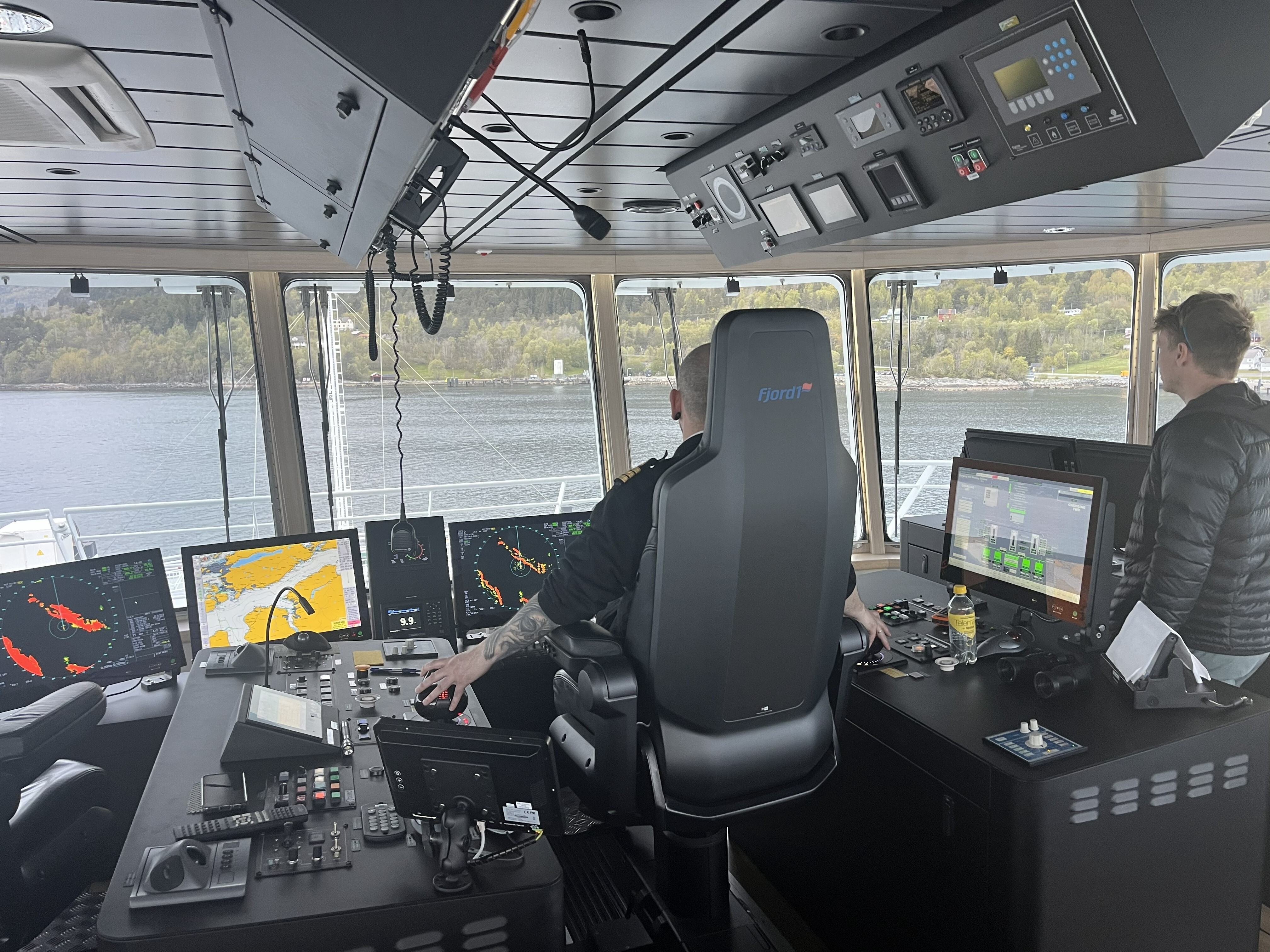 Bridge on MF Skopphorn. Photo: Squarehead
Listening for early warning signs
Mechanical faults often originate as subtle acoustic signatures as small variations in vibration, cavitation, or mechanical movement. In practice, many faults are first discovered by experienced mechanics with a trained ear and deep familiarity with the machine. Without their presence, these early signals are easily missed, making detection inconsistent and largely a matter of chance.
While vibration sensors and other monitoring systems can also reveal developing issues, achieving full coverage requires multiple sensor types—introducing added complexity, cost, and maintenance challenges.
In practice, it is neither feasible nor realistic to instrument everything, and sensors themselves may fail or drop out without being detected, increasing the risk that early-stage faults go unnoticed.
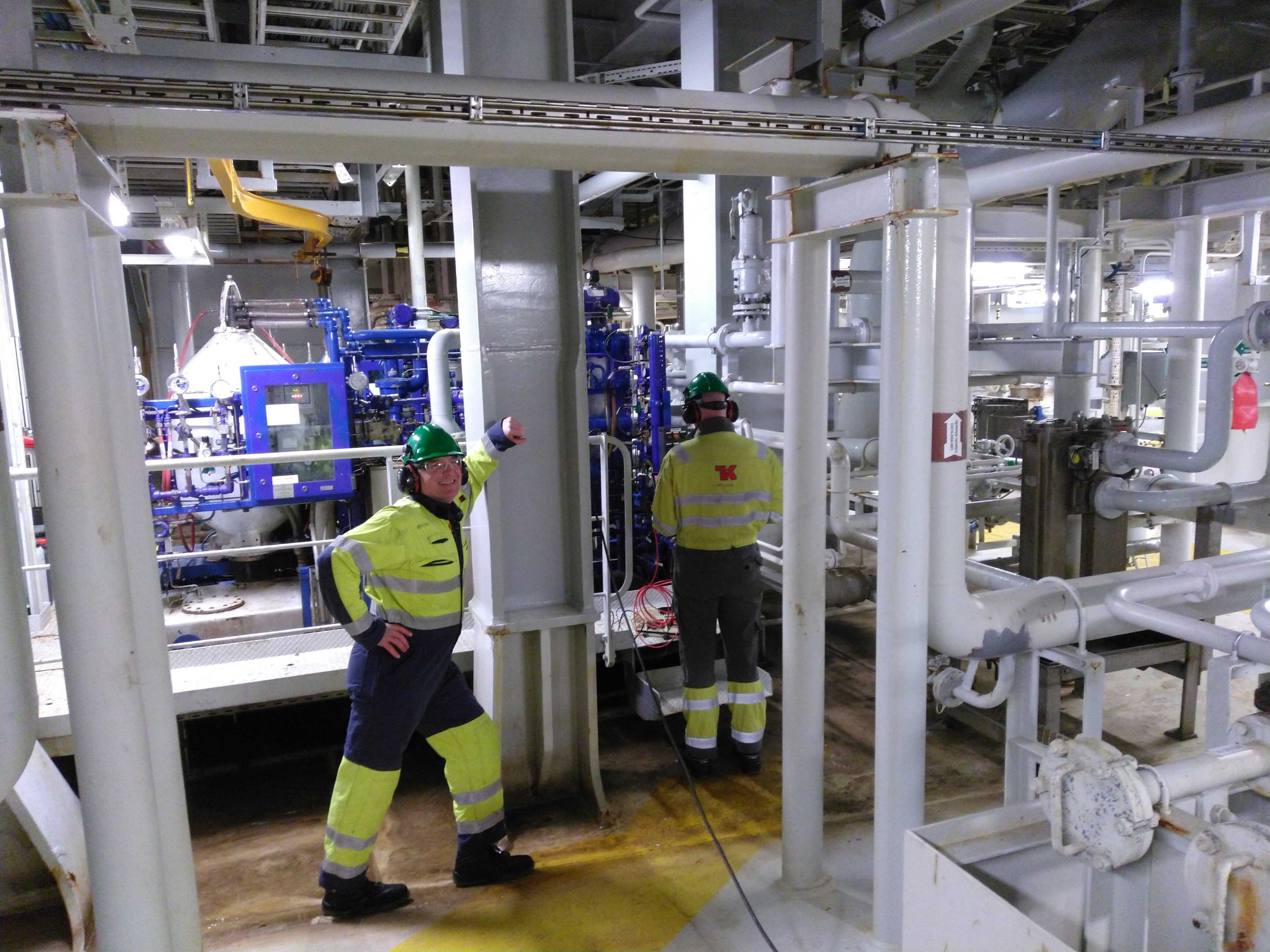 FPSO engineroom, FPSO “Knarr”. Photo: Squarehead
Acoustic monitoring is not intended to replace such sensors or necessarily detect faults earlier; rather, when a deviation becomes audible, the issue has typically already developed to a stage where action is required. The value lies instead in providing continuous coverage across entire machinery spaces, including equipment that is not already instrumented.
Squarehead’s solution uses advanced microphone arrays combined with AI-based acoustic analysis to continuously monitor sound patterns in machinery spaces. When the system detects deviations from normal operation, it can alert operators and help locate the source of the sound.
In effect, the system adds an additional layer of safety, comparable to having an experienced mechanic continuously present in the engine room, equipped with enhanced hearing and the ability to precisely pinpoint and communicate emerging issues across all onboard systems.
In practice, the system provides something close to “superhearing” inside complex engine and pump rooms.
“The users really gain a superhuman awareness by using our equipment,” product manager Jørgen Grythe explains.
 Jørgen Grythe, Product Manager at Squarehead Technology
By detecting anomalies early, operators can intervene before minor issues develop into serious technical failures.
The technology also represents a new layer of digital situational awareness for vessels. By translating sound into actionable data, the system effectively digitalizes one of the most important human senses – hearing – allowing both onboard crews and remote operators to monitor vessel systems in real time.
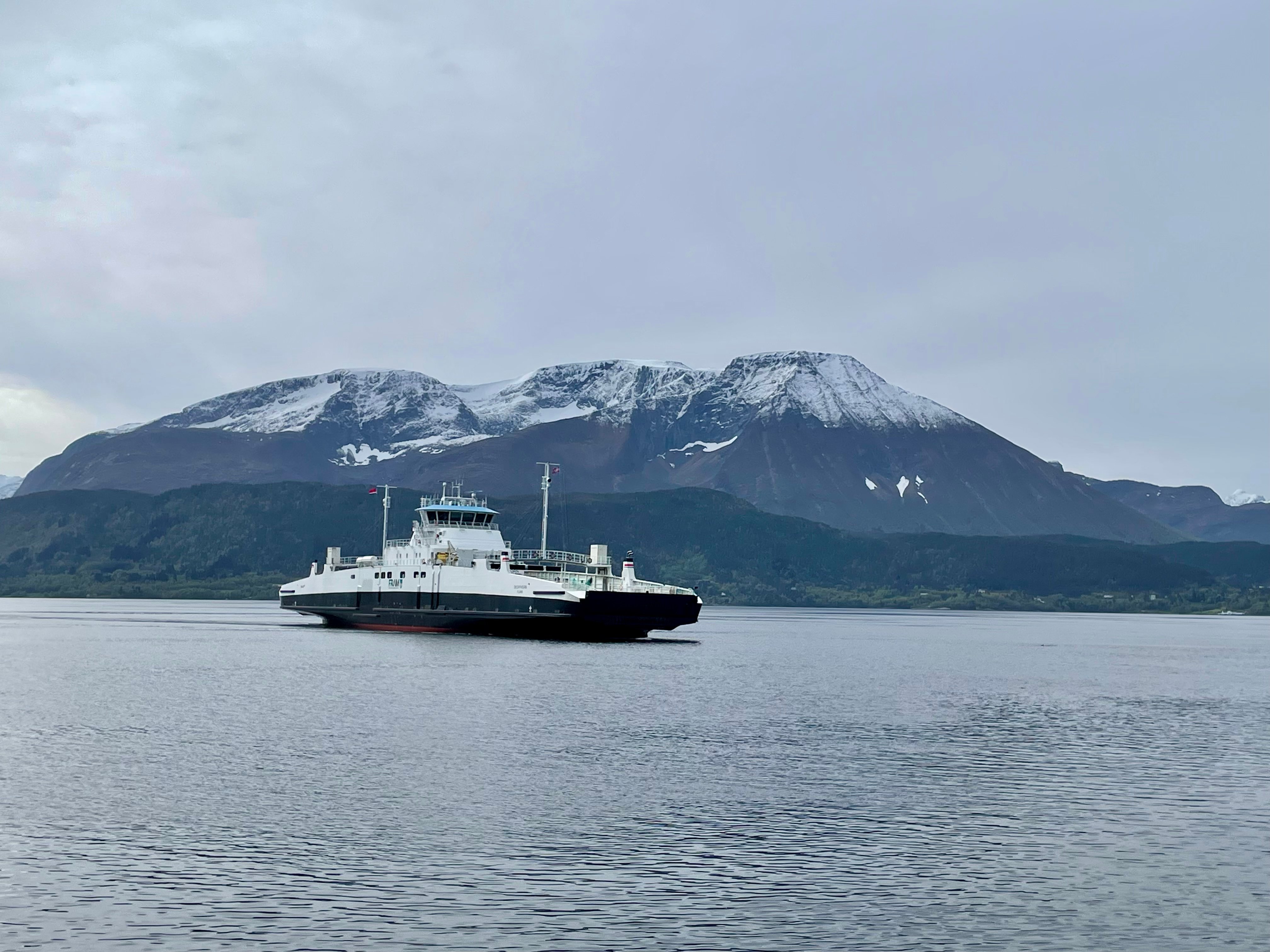 MF Skopphorn. Photo: Squarehead
Testing on Fjord1 vessels
The technology is currently being tested on the ferry MF Skopphorn, which operates the Sykkylven–Magerholm route close to Ålesund.
Following a successful test phase on the Sykkylven–Magerholm route, which demonstrated the system’s effectiveness and convinced Fjord1 of its value, the acoustic monitoring technology from Squarehead will now be implemented on the new vessels operating the Lavik–Oppedal ferry connection.
The 5.6-kilometre crossing runs across the Sognefjord from Lavik in Høyanger municipality to Ytre Oppedal in Gulen municipality and takes around 20 minutes.
“From autumn 2026, four new zero-emission ferries will operate the route with a high degree of automation of vessel systems,” Peter A. Brønlund explains.
 Peter A. Brønlund, General Manager and Business Development Director
Lavik–Oppedal is planned to become the world’s first autonomous ferry connection. The vessels will initially operate with advanced automation, while features such as autocrossing and autodocking are expected to be introduced in 2027. Fully autonomous navigation is planned from 2028.
“In such highly automated vessels, new types of sensor systems are needed to provide situational awareness not only of the external environment, but also of internal vessel systems,” Brønlund adds.
Acoustic monitoring can play an important role in this sensor ecosystem by detecting anomalies in engines, pumps and other mechanical systems before they escalate into technical failures.
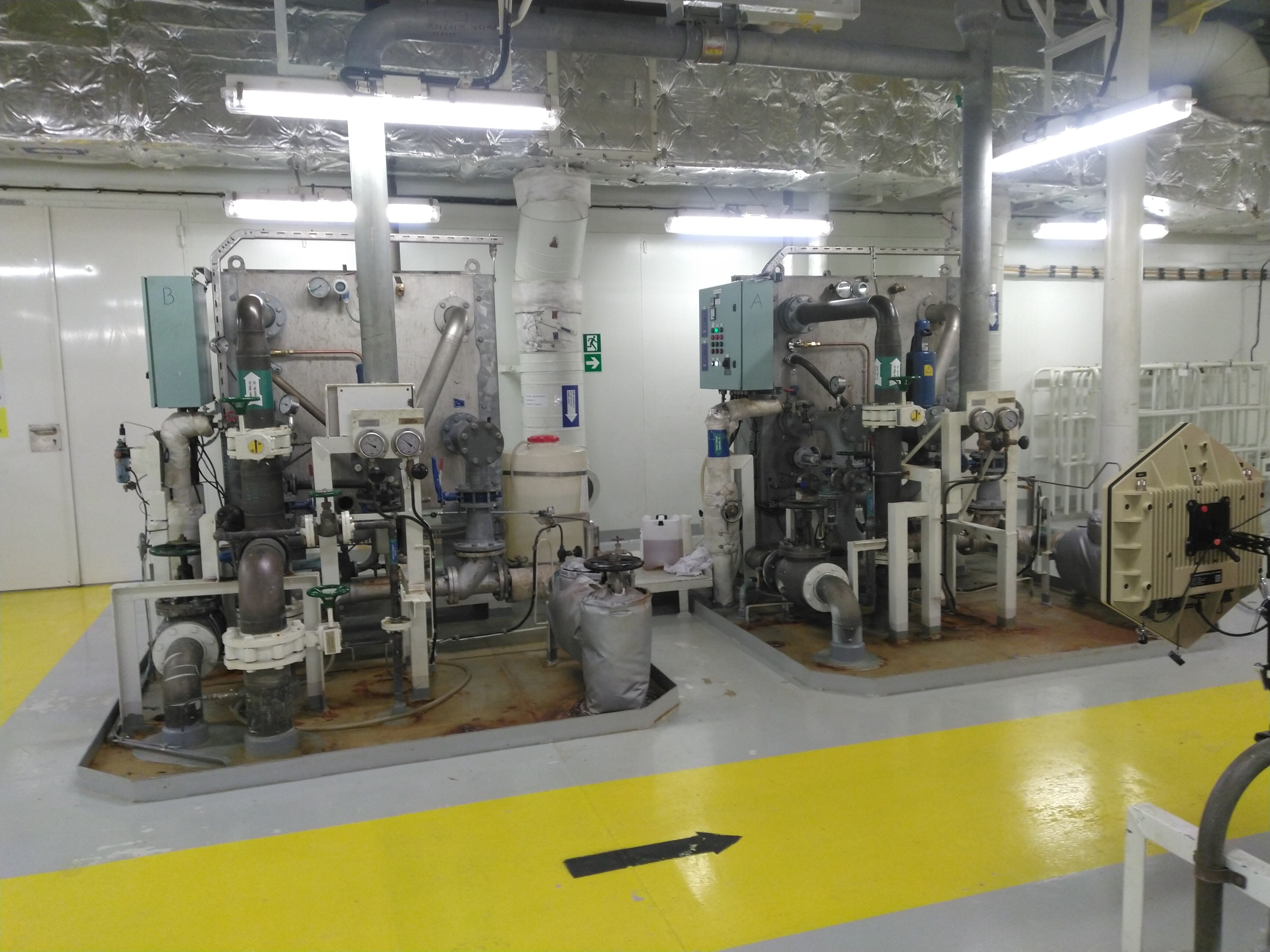 Testing in freshwater pumproom at FPSO “Knarr”. Photo: Squarehead
Part of a broader autonomy technology ecosystem
The Lavik–Oppedal project involves several technology companies contributing to the autonomous capabilities of the vessels.
Ocean Autonomy Cluster member SentiSystems is developing sensor fusion technology that integrates data from multiple sensors to provide precise positioning and situational awareness, even in GNSS-denied environments.
Together, technologies such as sensor fusion for navigation and acoustic monitoring of vessel systems form part of the broader technology stack needed to enable safe and reliable autonomous maritime operations.
From defense technology to maritime operations
Squarehead has long experience in advanced acoustic sensing technology and is well established in the defense sector.
“Our systems are widely used for acoustic drone detection and airspace monitoring, identifying drones based on their sound signatures. We are now applying this expertise to maritime applications, where acoustic sensing can be used to monitor vessel machinery and detect anomalies.” Jørgen Grythe says.
As shipping moves toward higher levels of automation and remote operation, technologies that digitalize human senses, such as vision, positioning and hearing, are becoming increasingly important components of future vessel operations.
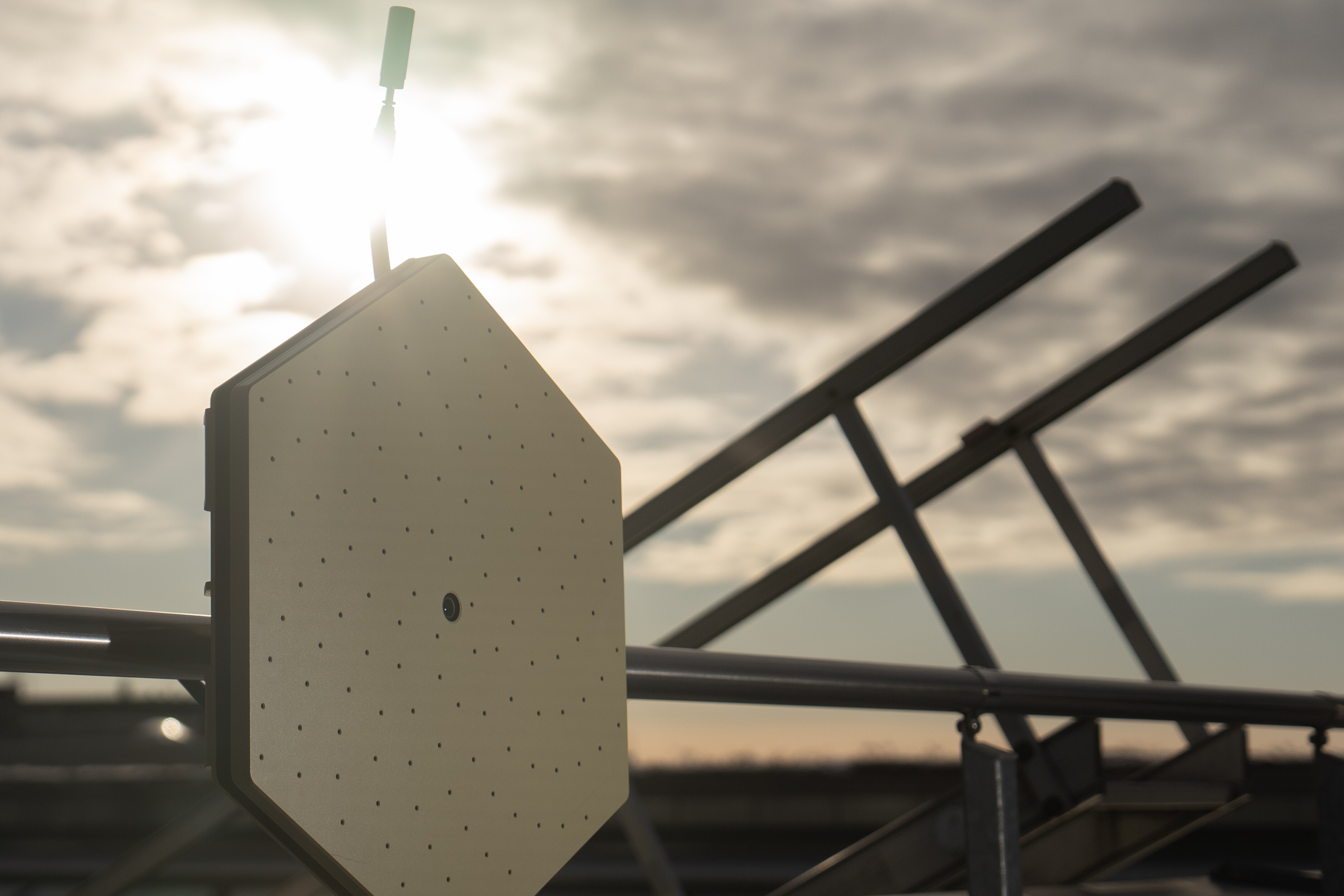 Squarehead Acoustic sensor. Photo: Squarehead
Squarehead
Squarehead is a Norwegian technology company specializing in advanced acoustic sensor systems and AI-driven anomaly detection. Its solutions enable real-time monitoring of critical onboard systems, enhancing situational awareness, safety, and operational efficiency in maritime and autonomous environments. By combining directional audio technology with machine learning, Squarehead supports the transition toward more reliable and fully autonomous vessel operations.



Related News.

WISTA Cyprus brings the next generation closer to the sea
As part of its activities for World Maritime Day 2026, WISTA Cyprus brought its members and their families together for “Here Only Monachus”, a…

Europe remains top destination for US LNG in September amid winter storage rebuild
HIGHLIGHTS Europe receives 53% of September cargoes Netherlands, Egypt top September destinations EU storage trails prior years……

NORDEN raises full-year guidance
On the back of strong operational performance, NORDEN upgrades the 2026 full-year net profit On the back of strong operational performance, NORDEN…
South Korea, China clash over LNG carrier market
Fierce competition is unfolding between South Korea and China in the market for large liquefied natural gas )carriers, which represent high…

Iran insists it controls Hormuz as rial hits record low and exports dry up
Iran's military insisted it retained full control of Hormuz and the foreign minister said the strait could reopen within seven days if Tehran's…

“K” LINE holds opening ceremony for new consolidated office in Singapore
Bringing Together the Knowledge, Human Resources, and Functions of Three Group Companies to Strengthen Its Business Foundation in Southeast Asia On…

Intermodal Report Week 40 2026
Pls find below the Intermodal Report - Week 40 2026 Intermodal Report Week 40 2026

Allied Weekly Market Review Week 40
Pls find below the Allied - Weekly Market Review - Week 40 ALLIED - Weekly Market Report- Week 40

FIS-RDC, EnPower, Trafigura and Gridworks join forces to deliver landmark power interconnector to supply the DRC’s Copperbelt
A 700MW cross-border transmission line will bring affordable power to the DRC's Copperbelt, unlock new mining and industrial capacity, open export…

Ocean Network Express expands partnership with Project Maji to Nigeria
Ocean Network Express announced the expansion of its partnership with Project Maji, a pan-African safe water social enterprise, in Nigeria.…
Subscribe to our newsletter!
if you dont want to swim alone in the ocean of news, sign up for the newsletter, and you will receive daily all the important news of world shipping!
