US supply chains intact but fuel costs rise amid Middle East tensions


Bunker fuel used by container vessels has doubled over the past three weeks, increasing costs across supply chains.
There is a low probability that American consumers will be immediately impacted by the ongoing Middle East conflict, according to Gene Seroka, Executive Director of the Port of Los Angeles.
Seroka notes that the ports of Los Angeles and neighbouring Long Beach together handle about 40% of US imports, with the majority of cargo originating from Asia rather than the Middle East.
As a result, supply chains linked to US-bound goods remain largely insulated from disruptions in that region.
“We don’t share vessel assets, cruise, or other routing instructions with those cargo ships that go to the Middle East,” he says, underscoring the limited direct exposure of US trade flows.
However, rising bunker fuel costs are beginning to have an impact. The fuel used to power large container vessels has doubled over the past three weeks, even though Middle East-linked trade accounts for only about 10% of global cargo.
Despite its relatively small share, the conflict has drawn disproportionate attention from global shipping players.
Seroka expects supply chains to remain intact in the near term, but at a higher cost due to increased fuel prices.
In a worst-case scenario, he warns that fuel supplies could be cut off, leading to shortages. Still, mitigation measures are already in place. Ships are increasingly taking alternative routes and fuelling at ports such as Los Angeles and Long Beach, leaving the system “in pretty good shape” for now.
A prolonged conflict involving Iran could, however, disrupt trade flows across key transshipment hubs such as Singapore, Shanghai, and ports in Korea and Japan.
If cargo bound for the Middle East stalls at these relay ports, it could create congestion and interfere with shipments traditionally destined for the United States.
Despite these risks, Seroka says ongoing coordination across ports, shipping companies, logistics firms, and manufacturers has helped maintain a reasonable flow of cargo globally.
Seasonality is also offering some relief. With the industry just emerging from the Lunar New Year holiday, a typically slower period, the Port of Los Angeles is better positioned to absorb fluctuations in cargo volumes than it would be during peak season.
Still, congestion remains a concern. If ports begin to clog and storage space at manufacturing sites fills up, cargo will need to be moved more frequently.
These additional handling requirements could drive up costs further, ultimately placing a burden on American consumers.
Source: ENGINE



Related News.

Hong Kong Global Maritime Trade Summit to return for third edition
The International Chamber of Shipping, in collaboration with the Transport and Logistics Bureau of the Government of Hong Kong and the Hong Kong…
Appetite for US crude oil exports climbs despite high freight
South Korea tops US crude destinations at 568,600 b/d VLCC rates to Asia double, closing arbitrage window European refining margins…
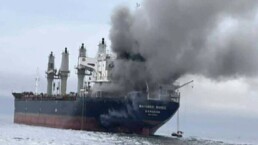
Shipping stocks Rally as Hormuz Traffic plunges 75%
Ship traffic through the Strait of Hormuz — a critical chokepoint handling about 20% of global crude oil and liquefied natural gas shipments — has…
Diana Shipping announces Time Charter Contract for m/v G P Zafirakis with Classic Maritime
Diana Shipping, a global shipping company specializing in the ownership and bareboat charter-in of dry bulk vessels, announced that, through a…
New IMO ESP Code framework for Remote Inspection Techniques
The International Maritime Organisation, through Resolution MSC.584(111) , has adopted amendments to the International Code on the Enhanced…

ABS opens Offshore & Marine Support Center in Bergen
ABS has expanded its capabilities in the Norwegian maritime market with the opening of a cutting-edge support center in Bergen, bringing advanced…
MOL holds giant step memorial ceremony and beach cleanup at Kashima Coast
Memorial and Reflection 20 Years After the Accident: Learning from the Past to Foster an Even Stronger Safety Culture Mitsui O.S.K. Lines, announced…

KEZAD-based Arabian Gulf Steel Industries achieves lowest verified Carbon Footprint for Rebar
CARES UK verified Environmental Product Declaration confirms 139 kg CO₂e per tonne for rebar produced at AGSI’s KEZAD Abu Dhabi facility Arabian…

Indian Register of Shipping announces launch of first fleet support ship INS Surya
Indian Register of Shipping continues to strengthen its role in supporting the Indian Navy and India’s naval shipbuilding capabilities through the…

VLCCs Climbing the Record Charts
LR2 The TC1 75kt MEG/Japan index decreased by only a single point this week to WS928. The corresponding Baltic round-trip TCE fell by $2,000 to…
Subscribe to our newsletter!
if you dont want to swim alone in the ocean of news, sign up for the newsletter, and you will receive daily all the important news of world shipping!
