Australia signals LNG export Curbs to South Korea
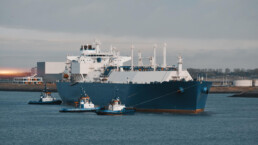

Seoul says near-term supply impact is limited, but notes Australia provides about 24% of Korea’s LNG imports
At a briefing held that day at the Government Complex Sejong, Yang Gi-uk, Director General for Industrial Security and Resources at MOTIE, said, “Last evening (April 1) the Australian Government stated that it would initiate procedures to restrict LNG exports.”
Last year, Korea relied on Australia for 31.4% of its total LNG imports, the highest share among its suppliers.
Australia cited a shortage of LNG for domestic use as the reason for the export restrictions. Yang said, “Even if Australia produces a lot of gas, a phenomenon occurs where it sells it abroad because overseas gas prices are good,” adding, “Because LNG for domestic use is being sold overseas, the Australian Government judged that it needs to restrict that part.”
The Australian Government said LNG produced in the east, totaling 220,000 tons, would be subject to review for possible export restrictions. No export restriction measure has been triggered immediately. It plans to make a final decision in May after discussions with industry.
MOTIE explained that even if Australia actually imposes LNG export restrictions, the impact on Korea would not be significant. Yang said that, assuming a worst-case scenario, the volume that could affect domestic supply and demand would be up to 40,000 tons, equivalent to 0.5 days of domestic consumption. Yang said, “The Australian Government also stated that there would be no impact on long-term contracts.”
Nevertheless, the implications of Australia’s move are significant. First, factors pushing up LNG prices have increased. With Qatar—responsible for about 20% of global LNG production—already having declared force majeure over long-term supply contracts to Korea, further price increases are unavoidable if Australia, another LNG powerhouse, gradually begins “closing the export door” as well.
The “LNG Japan-Korea Marker,” an LNG price benchmark, recorded 19.83 dollars per 1MMBtu (a fuel unit) on April 1. It was $10.70 on Feb. 27, just before the outbreak of war.
In addition, if countries “lock” their export gates on the grounds of energy security, it could deal a critical blow to Korea, which is highly dependent on resource imports. Australia’s ABC reported that this was “virtually the first energy policy the Australian Government has taken since the Middle East situation.”
According to Reuters and other sources, Australia’s Minister for Resources Madeleine King said, “a clear signal that the government can take any action when risks arise in Australia’s supply chain.”
Professor Yoo Seung-hoon of the Department of Future Energy Convergence at Seoul National University of Science and Technology said, “Korea’s dependence on energy imports is at around 94%, the highest in the world,” adding, “We need to think about how to safeguard energy security.”
Source: BusinessKorea



Related News.
Hong Kong Global Maritime Trade Summit to return for third edition
The International Chamber of Shipping, in collaboration with the Transport and Logistics Bureau of the Government of Hong Kong and the Hong Kong…
Appetite for US crude oil exports climbs despite high freight
South Korea tops US crude destinations at 568,600 b/d VLCC rates to Asia double, closing arbitrage window European refining margins…
Shipping stocks Rally as Hormuz Traffic plunges 75%
Ship traffic through the Strait of Hormuz — a critical chokepoint handling about 20% of global crude oil and liquefied natural gas shipments — has…
Diana Shipping announces Time Charter Contract for m/v G P Zafirakis with Classic Maritime
Diana Shipping, a global shipping company specializing in the ownership and bareboat charter-in of dry bulk vessels, announced that, through a…
New IMO ESP Code framework for Remote Inspection Techniques
The International Maritime Organisation, through Resolution MSC.584(111) , has adopted amendments to the International Code on the Enhanced…

ABS opens Offshore & Marine Support Center in Bergen
ABS has expanded its capabilities in the Norwegian maritime market with the opening of a cutting-edge support center in Bergen, bringing advanced…
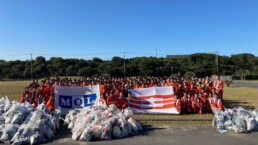
MOL holds giant step memorial ceremony and beach cleanup at Kashima Coast
Memorial and Reflection 20 Years After the Accident: Learning from the Past to Foster an Even Stronger Safety Culture Mitsui O.S.K. Lines, announced…

KEZAD-based Arabian Gulf Steel Industries achieves lowest verified Carbon Footprint for Rebar
CARES UK verified Environmental Product Declaration confirms 139 kg CO₂e per tonne for rebar produced at AGSI’s KEZAD Abu Dhabi facility Arabian…

Indian Register of Shipping announces launch of first fleet support ship INS Surya
Indian Register of Shipping continues to strengthen its role in supporting the Indian Navy and India’s naval shipbuilding capabilities through the…

VLCCs Climbing the Record Charts
LR2 The TC1 75kt MEG/Japan index decreased by only a single point this week to WS928. The corresponding Baltic round-trip TCE fell by $2,000 to…
Subscribe to our newsletter!
if you dont want to swim alone in the ocean of news, sign up for the newsletter, and you will receive daily all the important news of world shipping!
