Of the 453 vessels owned and operated by major domestic shipping companies, a total of 8 have been identified as being within the Strait of Hormuz. Furthermore, among the 51 vessels currently executing long-term transport contracts for bulk cargo such as crude oil and LNG, 45 are operating on routes to the United States and Australia, while 6 are identified as being anchored in waters near the Indian Ocean.
According to Korea Investors Service (KIS) on March 24, the total owned fleet—the collection of vessels directly owned by a shipping company, not chartered—of six major domestic shipping companies (Pan Ocean, H-Line Shipping, SK Shipping, Korea Line Corporation, Polaris Shipping, and HMM) comprised 453 vessels as of the 19th. Of these, a total of 8 vessels (two from Pan Ocean, one from SK Shipping, and five from HMM) have been identified as being currently inside the Strait of Hormuz.
The proportion of vessels remaining in the Strait of Hormuz relative to each company’s total owned fleet is low, at 1.7% for Pan Ocean, 1.8% for SK Shipping, and 4.1% for HMM. KIS explained, “the physical exposure of individual shipping companies is judged to be not significant.” It is understood that in response to the Hormuz blockade, the companies are either negotiating the designation of alternative ports with their long-term contract clients or are in the process of administrative procedures for entry into alternative ports.
KIS analyzed that “the actual risk to shipping companies from the strait’s blockade will be differentiated based on the ships’ contract structures and vessel types, rather than the number of ships located within the strait.” In a Time Charter (TC) contract structure, where a shipping company leases a vessel to a charterer for a certain period, the collection of charter fees is possible as long as there is no fault attributable to the shipping company or vessel defects, and no separate special clauses exist.
On the other hand, long-term transport contracts have a structure where loading and unloading are repeated on a per-voyage basis. Therefore, no freight revenue is generated for voyages that the shipping company fails to perform. If loading cargo from the Middle East becomes impossible due to restrictions on passage through the Strait of Hormuz, the execution of voyages will be constrained, leading to a decrease in revenue.
This means that long-term bulk transport contracts with a high proportion of cargo loaded in the Middle East are exposed to relatively greater volatility. The proportion of long-term transport contracts for bulk cargo like crude oil and LNG is highest for SK Shipping at 50%, followed by Korea Line Corporation at 19%, H-Line Shipping at 4%, and Pan Ocean at 3%.
SK Shipping is a company with strengths in bulk cargo, including tankers (crude carriers, product carriers), gas carriers (LNG carriers, LPG carriers), and bunkering vessels, and holds long-term transport contracts with SK Energy, GS Caltex, and SK Gas. Korea Line Corporation and H-Line Shipping are executing long-term transport contracts for clients such as the Korea Gas Corporation.
KIS also added that after inquiring about the current locations and destinations of 51 vessels from five shipping companies currently performing long-term bulk transport contracts, it was found that 45 vessels are operating on routes to the U.S. and Australia, while the remaining 6 are anchored in waters near the Indian Ocean. However, with increased voyage distances (Middle East to Korea: 25 days; West Africa/U.S. to Korea: 35-60 days), the voyage execution period is extended, which could also delay the recovery timing for transport payments received at the end of a voyage.
Meanwhile, following an attack by Iran on Qatar’s Ras Laffan complex that damaged two of Qatar’s LNG production facilities (accounting for about 17% of Qatar’s capacity and 2% of global capacity), the possibility has been raised that QatarEnergy may declare ‘force majeure’ on its long-term LNG supply contracts with major importing countries, including Korea. KIS explained, “Among domestic shipping companies, Pan Ocean, H-Line Shipping, and SK Shipping each have five LNG carriers on long-term charter to QatarEnergy, for a total of 15 vessels.
Source:Business Korea



Related News.

Navigating the Multi-Orbit Era: In Conversation with Intellian’s Jon Harrison at SMM 2026
At SMM 2026 in Hamburg, the rapid evolution of maritime satellite communications took centre stage. Across the exhibition halls, discussions among…
Cyprus ports need joint energy and investment strategy, shipping agents chief says
Cyprus needs a coordinated strategy for shipping, energy and environmental protection to support port investment and modernisation, Cyprus shipping…

MASO Public Affairs introduces MASO Regulatory Intelligence
A new subscription service helping businesses understand what is changing and what it means for them MASO Public Affairs introduces MASO Regulatory…
Anglo-Eastern helps turn CMBTECH’s ammonia ambition into an operational reality
From early feasibility study and risk-based design to newbuilding supervision, crew readiness and technical management, Anglo-Eastern drew on its…
Escalation of attacks threatens to derail recovery in Middle East oil exports
World oil demand is forecast to fall by 2.5 mb/d y-o-y in 4Q26 and 2.6 mb/d on average in 2026. As the Iran war manifests itself through restricted…
New study finds shipping pays twice its share to EU ETS earmarked revenues should triple to help build market for sustainable fuels and technologies
Shipping is responsible for around 10% of EU ETS emissions but pays almost 20% of the ETS bill. Unlike other sectors, it has never received free…
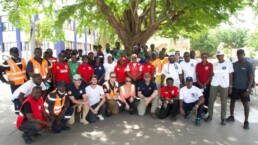
MSARC strengthens maritime mass rescue readiness through training and national live exercise off Dakar, Senegal
Joint MSARC–FHAS programme combines three days of SAR training with a national multi-agency live exercise The Maritime Search and Rescue Council ,…
Sogese report deliveries are still being delayed as container freight rates fluctuate
FOR IMPORTERS Spot rates into the Mediterranean are back at January levels, Far East to Europe reliability sits at pandemic lows, and nearly…
Glencore begins trading on Australian Securities Exchange
Glencore has begun trading on the Australian Securities Exchange under the ASX code GLC. Gary Nagle, Glencore’s CEO, said it was an exciting day for…
BIMCO Shipping Number of the Week
Suez Canal container ship transits exceed 50% of pre-disruption levels "During the first two weeks of October, weekly container ship capacity…
Subscribe to our newsletter!
if you dont want to swim alone in the ocean of news, sign up for the newsletter, and you will receive daily all the important news of world shipping!
