G7 tankers gain share in Russia before US waiver for sanctioned ships
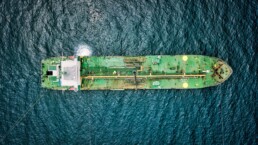

A temporary US waiver has enabled sanctioned tankers to transport Russian oil, after G7-linked tanker operators increased their share in the restricted market last month.
On March 5, the Office of Foreign Asset Control said Russian crude and refined products loaded by tankers before March 5 could be sold to India regardless of the ships’ sanctions status, if the barrels are to arrive at Indian ports by April 4.
US officials said the move was aimed at plugging an oil supply gap for India, the former top Russian crude buyer before tightening Western sanctions in recent months, due to shipping disruptions at the Strait of Hormuz — a key energy chokepoint with 19 million b/d of oil flows last year.
Non-G7 tankers, mainly from the shadow fleet established to bypass Western trade restrictions, have become much less willing to list India as their destination in recent months, according to data from S&P Global Commodities at Sea(opens in a new tab) and Maritime Intelligence Risk Suite.
The data shows 141,000 b/d of Russian oil were loaded onto non-G7 tankers signaling for India via their automatic identification system last month, down from 635,000 b/d in November.
The amounts of oil on ships destined for Singapore, a top offshore transshipment hub, and those without known destinations spiked in the same period. CAS data shows 19.6 million barrels of Russian oil were in floating storage for seven days or more on average last month, the highest monthly reading on record.
“All this Russia floating oil storage, that’s around southern Asian, China … there is a bunch of floating barrels just sitting there,” US Energy Secretary Chris Wright told ABC News on March 6, adding that Indian refiners taking those barrels would ease pressure on refineries in other parts of the world.
EU failure
Overall, tankers flagged, owned or operated by companies based in G7 countries and their allies, or insured by Western protection and indemnity clubs, lifted 29.2% of Russia’s crude exports of 3.42 million b/d in February, according to the CAS and MIRS data. That was up from 23% in January and was the highest in five months.
G7-based shipping service providers were still able to find compliant trade opportunities in Russia, with February’s average price for Urals, the country’s flagship crude, at $39.169/b on a free-on-board Primorsk basis according to Platts assessments.
The EU, UK and Canada currently set the price threshold for tanker firms and insurers to participate in Russian crude exports at $44.10/b. Japan’s price cap is at $47.60/b and the US, at $60/b.
Platts, part of S&P Global Energy, assessed Urals prices at $58.185/b March 6. International crude prices have surged on Hormuz disruptions in recent sessions.
The European Commission has planned to introduce a full maritime service ban to replace the price cap regime in its 20th sanctions package, but could not reach consensus among member states, and currently, the US is the only other G7 country that has publicly backed the proposal.
Tanker operators in Greece, Europe’s top ship owning nation, lifted 551,000 b/d of Russian crude last month — more than their peers in all other countries except for China, according to CAS and MIRS data.
Source: Platts



Related News.

Connected Fleets under Siege: Navigating Geopolitical Cyber Threats and Modern Maritime IT
An exclusive CSN interview between Adonis Violaris and Dr Matthew Maheras As commercial shipping becomes ever more digitally integrated, the industry…
InterManager warns enclosed space deaths demand urgent industry action
InterManager has called for urgent industry action on enclosed space safety after its latest research highlighted persistent failures in procedures,…

ATPI Greece marks 50 years at the heart of global crew changes
Five decades supporting the Greek and global shipping community 35% of ATPI’s marine business now managed from Greece More than 130 professionals…
Euroseas announces a new time charter contract for its 2001-built 2,556 teu Feeder Containership, M/V EM Corfu, and the sale of its sister vessel, M/V Evridiki G
Euroseas an owner and operator of container carrier vessels and provider of seaborne transportation for containerized cargoes, announced a new…

Possible further delay to road transport’s inclusion in EU ETS causes serious concern
Interferry, the global trade association representing the ferry shipping industry, is raising serious concerns over the current state of EU Emissions…

ABP appoints new head of commercial for Humber
Associated British Ports, the UK’s largest port operator, has appointed Sandrine Lagrost as its new Head of Commercial for the Humber, joining the…
Commodity Radar | Spotlight: Bauxite – Week 43.2026
The final quarter of 2026 is expected to see softer bauxite flows Chinese front-loading is expected to have run its course, pointing to softer…
Japan IMO attempt to weaken the IMO Net-Zero Framework
Japan has put forward a proposal to the International Maritime Organization to remove the Net-Zero Fund and put shipping companies in control of…

xclusiv S&P Report 19th October 2026
Pls find below the [xclusiv] S&P Report 19th October 2026 [xclusiv] 2026_10_19

Glencore achieves land access for the Coroccohuayco project at Antapaccay
Antapaccay, a Peruvian entity controlled by Glencore, has completed the access agreements required for the last blocks of land to unlock the…
Subscribe to our newsletter!
if you dont want to swim alone in the ocean of news, sign up for the newsletter, and you will receive daily all the important news of world shipping!
