Engine optimisation can reduce emission costs as EU ETS reaches full phase-in
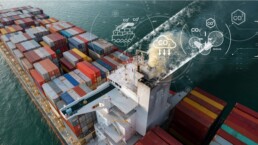

With maritime transport now operating under the 100% phase-in of the EU Emissions Trading System, shipowners are placing greater emphasis on engine optimisation as a means of controlling emissions-related operating costs, according to German engine diagnostics specialist CM Technologies .
From 1 January 2026, vessels trading between EU ports are required to surrender EU Allowances for the full volume of verified greenhouse-gas emissions, bringing the transition period that began in 2024 to an end. Emissions costs are no longer treated as a just another compliance issue but are an important factor in voyage economics.
Industry reports published at the start of 2026 indicate that full ETS compliance now adds about US$320/t of VLSFO consumed on intra-EU voyages, based on prevailing allowance prices and regulated fuel emission factors. While the exact cost varies with carbon markets and exchange rates, CMT says the scale of the exposure has sharpened operational focus on fuel efficiency and combustion quality.
“Under full ETS exposure, emissions costs are clearly visible at voyage level, which means even modest inefficiencies now have a direct financial impact,” said David Fuhlbrügge, joint Managing Director of CMT.
According to the company, incremental losses in combustion efficiency remain among the most common sources of avoidable emissions. Retarded ignition timing, uneven cylinder loading or injector degradation often develop gradually and may not trigger alarms, yet they steadily increase fuel consumption. Under the ETS framework, each additional tonne of fuel burned directly increases allowance requirements.

“Shipowners and managers are making greater use of performance data, fuel monitoring and combustion analysis to control fuel consumption and manage emissions exposure as carbon pricing becomes embedded in daily operations,” Fuhlbrügge said.
This is being reinforced by major classification societies. Recent guidance from DNV and ClassNK has indicated that managing EU ETS exposure requires closer operational control of fuel consumption and engine performance, alongside robust monitoring and verification of emissions data.
CMT says the combination of regulatory guidance and early operational experience under the ETS is driving a more proactive approach to engine optimization, with operators seeking to identify and correct small efficiency losses before they translate into emissions costs.
The company reports growing interest in onboard combustion analysis to assess ignition timing and cylinder balance under real operating conditions, allowing adjustments to be made. At the same time, wear-related efficiency losses under low-sulphur fuel operation are being monitored more closely, as liner and piston-ring wear can increase friction and fuel demand well before traditional maintenance thresholds are reached.
The expansion of the EU ETS scope in 2026 to include methane and nitrous oxide further increases the importance of combustion quality, CMT added.
“These gases have a significantly higher global warming potential than CO2, meaning incomplete combustion events can result in a disproportionate rise in carbon-equivalent emissions,” said Fuhlbrügge.
“The ETS price itself is outside an operator’s control, but what has changed is that engine performance now feeds directly into emissions cost. Maintaining efficient combustion is no longer just good engineering practice, it is part of managing operating risk in the carbon market.”
CMT expects engine optimsation to become more tightly integrated with emissions reporting, voyage analysis and commercial decision-making as ETS costs become fully embedded in charterparty negotiations.



Related News.

Navigating the Multi-Orbit Era: In Conversation with Intellian’s Jon Harrison at SMM 2026
At SMM 2026 in Hamburg, the rapid evolution of maritime satellite communications took centre stage. Across the exhibition halls, discussions among…

Cyprus ports need joint energy and investment strategy, shipping agents chief says
Cyprus needs a coordinated strategy for shipping, energy and environmental protection to support port investment and modernisation, Cyprus shipping…

MASO Public Affairs introduces MASO Regulatory Intelligence
A new subscription service helping businesses understand what is changing and what it means for them MASO Public Affairs introduces MASO Regulatory…

Anglo-Eastern helps turn CMBTECH’s ammonia ambition into an operational reality
From early feasibility study and risk-based design to newbuilding supervision, crew readiness and technical management, Anglo-Eastern drew on its…

Escalation of attacks threatens to derail recovery in Middle East oil exports
World oil demand is forecast to fall by 2.5 mb/d y-o-y in 4Q26 and 2.6 mb/d on average in 2026. As the Iran war manifests itself through restricted…

New study finds shipping pays twice its share to EU ETS earmarked revenues should triple to help build market for sustainable fuels and technologies
Shipping is responsible for around 10% of EU ETS emissions but pays almost 20% of the ETS bill. Unlike other sectors, it has never received free…

MSARC strengthens maritime mass rescue readiness through training and national live exercise off Dakar, Senegal
Joint MSARC–FHAS programme combines three days of SAR training with a national multi-agency live exercise The Maritime Search and Rescue Council ,…

Sogese report deliveries are still being delayed as container freight rates fluctuate
FOR IMPORTERS Spot rates into the Mediterranean are back at January levels, Far East to Europe reliability sits at pandemic lows, and nearly…

Glencore begins trading on Australian Securities Exchange
Glencore has begun trading on the Australian Securities Exchange under the ASX code GLC. Gary Nagle, Glencore’s CEO, said it was an exciting day for…

BIMCO Shipping Number of the Week
Suez Canal container ship transits exceed 50% of pre-disruption levels "During the first two weeks of October, weekly container ship capacity…
Subscribe to our newsletter!
if you dont want to swim alone in the ocean of news, sign up for the newsletter, and you will receive daily all the important news of world shipping!
