

The cost of creating ‘smart vessels’ has fallen dramatically in recent years, making digitalisation a financially viable and operationally compelling option for shipowners and managers, according to Columbia Group.
Speaking at a Capital Link conference in Athens this week, Mark O’Neil, President and CEO of Columbia Group, said one of the biggest barriers to digital adoption in shipping today is no longer technology itself, but a lingering misconception around cost.
“There is still a perception in the market that digitalisation is expensive,” Mr O’Neil said. “That may have been true in the past, but it is not true today. The economics have changed completely.”
Mr O’Neil explained that advances in sensors, cameras and optimisation software have significantly reduced the cost of making vessels fully digital. Where similar upgrades once required investments of around $50,000 per vessel, comparable systems can now be installed for closer to $5,000, delivering higher-quality data and greater functionality.
He said: “You can now make a vessel totally smart for a fraction of what it used to cost. In many cases, the return on investment can be achieved in weeks through fuel savings and operational efficiencies alone.”
Despite these improvements, Mr O’Neil said outdated cost assumptions continue to slow adoption across parts of the industry. He noted that when owners are presented with the current economics, perceptions often shift quickly.
Beyond cost, he identified training and system complexity as key challenges. Early digitalisation efforts brought a wide range of innovative but fragmented solutions, each requiring separate platforms and training programmes. This placed an unnecessary burden on crews and shore-based teams, he told the conference.
Mr O’Neil said: “Our people are extremely busy. They want integrated platforms with a common interface, where you train once and deploy multiple tools. Standardisation is critical if digital solutions are to be used effectively.”
He also highlighted the role of smart-vessel technology in decarbonisation, particularly as the industry reassesses the pace and practicality of alternative fuels. While alternative fuels will play a role, very few vessels currently operate on them as a single fuel source.
“What we are seeing instead is a strong focus on optimisation. Using existing assets more intelligently can deliver carbon reductions of up to 30 percent or more, regardless of fuel type,” he said.
Optimisation technologies, such as the OneLink platform provide a realistic and scalable pathway to emissions reduction while laying the groundwork for future solutions such as carbon capture, the Columbia Group chief said. He added that as technology becomes more affordable and more powerful, it must still be deployed within a strong governance framework to manage data and operational risk.
Mr O’Neil concluded: “Shipping will always be a people business. Technology should support decision-making, not replace it. With today’s economics smart vessels are no longer a future ambition, they are a viable reality.”



Related News.

Hong Kong Global Maritime Trade Summit to return for third edition
The International Chamber of Shipping, in collaboration with the Transport and Logistics Bureau of the Government of Hong Kong and the Hong Kong…

Appetite for US crude oil exports climbs despite high freight
South Korea tops US crude destinations at 568,600 b/d VLCC rates to Asia double, closing arbitrage window European refining margins…
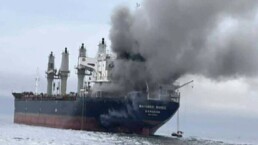
Shipping stocks Rally as Hormuz Traffic plunges 75%
Ship traffic through the Strait of Hormuz — a critical chokepoint handling about 20% of global crude oil and liquefied natural gas shipments — has…
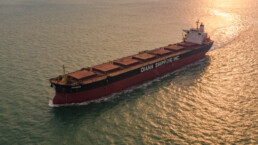
Diana Shipping announces Time Charter Contract for m/v G P Zafirakis with Classic Maritime
Diana Shipping, a global shipping company specializing in the ownership and bareboat charter-in of dry bulk vessels, announced that, through a…
New IMO ESP Code framework for Remote Inspection Techniques
The International Maritime Organisation, through Resolution MSC.584(111) , has adopted amendments to the International Code on the Enhanced…

ABS opens Offshore & Marine Support Center in Bergen
ABS has expanded its capabilities in the Norwegian maritime market with the opening of a cutting-edge support center in Bergen, bringing advanced…

MOL holds giant step memorial ceremony and beach cleanup at Kashima Coast
Memorial and Reflection 20 Years After the Accident: Learning from the Past to Foster an Even Stronger Safety Culture Mitsui O.S.K. Lines, announced…
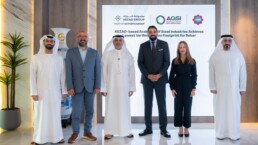
KEZAD-based Arabian Gulf Steel Industries achieves lowest verified Carbon Footprint for Rebar
CARES UK verified Environmental Product Declaration confirms 139 kg CO₂e per tonne for rebar produced at AGSI’s KEZAD Abu Dhabi facility Arabian…
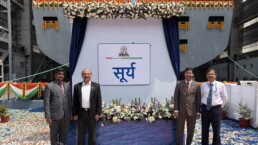
Indian Register of Shipping announces launch of first fleet support ship INS Surya
Indian Register of Shipping continues to strengthen its role in supporting the Indian Navy and India’s naval shipbuilding capabilities through the…

VLCCs Climbing the Record Charts
LR2 The TC1 75kt MEG/Japan index decreased by only a single point this week to WS928. The corresponding Baltic round-trip TCE fell by $2,000 to…
Subscribe to our newsletter!
if you dont want to swim alone in the ocean of news, sign up for the newsletter, and you will receive daily all the important news of world shipping!
