Venezuela’s Oil Policy Shift and the Rising Maritime Risk Landscape
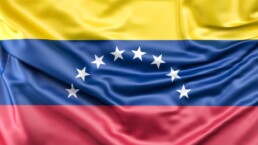

- Venezuela’s 2026 oil sector reform opens production to foreign investment and operational control but was driven by external political pressure, not internal stability.
- Shadow fleets, deceptive shipping practices, and non-cooperative vessel behavior remain embedded in Venezuelan maritime trade and may evolve under the new policy.
- Multi-source maritime intelligence is essential to detect hybrid activity, verify legitimacy, and anticipate risk across both government and commercial operations.
How Venezuela’s Oil Reform Is Changing Maritime Risk
In late January 2026, Venezuela’s legislature approved sweeping reforms to the nation’s oil laws, effectively opening its state‑dominated energy sector to private and foreign investment in a dramatic policy shift after more than two decades of socialist control. This overhaul aims to attract capital and increase production by giving private firms greater control over production and sales, reducing taxes, and introducing independent arbitration for disputes – a sharp reversal of the nationalization policies that have defined Venezuelan oil for decades.
However, while this legal change has geopolitical and economic significance, it also demands a closer look at the maritime realities behind the headlines. Shadow fleets, deceptive shipping practices, and geopolitical instability remain embedded in Venezuela’s maritime trade. Maritime stakeholders – from government agencies to shipping desks and compliance teams – need to understand what’s actually changing, what isn’t, and where the real risks now lie.
A Geopolitical Pivot With Maritime Consequences
The reform followed extraordinary political and military intervention. After the U.S. captured Venezuelan President Nicolás Maduro earlier in January, his vice president, Delcy Rodríguez, assumed control under direct pressure from Washington. With the threat of further military action looming, her government fast‑tracked the oil sector overhaul, effectively reversing decades of resource nationalism.
This external coercion may have pushed legal reform forward, but it did not rebuild institutional trust, oversight, or maritime transparency overnight. In fact, the very conditions that fueled the rise of the shadow fleet – opaque ownership, weak enforcement, and regulatory vacuum – remain largely intact.
Opening the oil sector does not automatically reduce maritime risk – instead, it may shift, evolve, or reveal deeper vulnerabilities.
That’s why understanding the maritime impact of this pivot requires more than following policy updates. It demands visibility into how vessels behave, where they operate, and how they navigate this new, but fragile, commercial environment.
Why Maritime Risk Intelligence Matters Here
For governments, defense organizations, and commercial maritime stakeholders focused on stability, trade continuity, and compliance, the key question isn’t just “What is Venezuela’s oil policy now?” but “How will shipping behavior and trade flows evolve as the sector opens?”
Maritime risk intelligence is the discipline that answers this question by evaluating patterns of activity, ownership, registry behavior, and movement data, not just official declarations. It builds on maritime domain awareness (MDA) but goes further by integrating multi‑source intelligence (MSI), behavioral analytics, and document verification to produce actionable insight in real time. This is critical in environments where actors may exploit legal openings to mask deceptive behavior, evade sanctions, or obfuscate cargo origin, creating exposure for not only regulators but also commercial operators, insurers, and logistics partners.
Shadow Fleet Activity and Compliance Exposure
Long before policy reform, Venezuela’s oil exports were sustained by a shadow fleet of tankersthat used tactics like AIS manipulation, ship‑to‑ship transfers, and false flag registries to move crude around sanctions regimes. These vessels often sail under ambiguous identities, obscure ownership structures, and engage in non‑cooperative behavior that traditional monitoring systems struggle to track effectively.
As policy shifts open the sector, the risk is that some operators may exploit the transition to engage in mixed behavior – part compliant, part evasive. That creates a challenge for compliance teams, insurers, and mission partners evaluating counterparties, risk exposure, and enforcement priority.
Risk Signals Governments Need to Prioritize
As Venezuela’s oil landscape transforms, maritime and defense intelligence teams should watch for risk signals that extend beyond trade volumes and paperwork, including:
- Non‑cooperative vessel behavior: Patterns such as AIS gaps, spoofed positions, or unexpected routing may indicate ships avoiding visibility or enforcement, even if they are nominally operating under a new legal regime.
- Registry and identity ambiguity: Vessels may adopt new registries or flags that appear compliant on paper but lack regulatory rigor, enabling legal ambiguity.
- Shadow fleet hybrid activity: Ships previously associated with sanctioned trade may attempt to blend into legitimate supply chains, complicating screening and interdiction efforts.
- Ship‑to‑ship transfers in or near Venezuelan waters: These behaviors often aim to mask cargo origin and can point to persistent sanctions evasion activity.
These indicators often precede formal violations, making behavioral risk intelligence essential for proactive enforcement and maritime security.
Seeing Risk Clearly with Multi-Source Intelligence
Traditional maritime domain awareness relies heavily on cooperative data such as AIS and declared identity information. But in a context where policy changes could mask deeper risk, a multi‑source intelligence approach becomes indispensable.
Multi‑source intelligence blends:
- Behavioral analytics to spot deviations from expected movement patterns.
- AIS, SAR, EO, and RF data fusion to validate vessel location and activity independently.
- Document and registry validation to confirm the authenticity of claimed flags and ownership.
- Historical risk modeling to contextualize new behavior against past risk patterns.
This fusion creates a real‑time operational picture that supports decision advantage for government, defense, commercial, and homeland security stakeholders, especially in regions where legal reform and geopolitical shifts intersect.
From Policy Change to Operational Reality
Venezuela’s oil reform is a significant geopolitical event with potential economic upside. But policy alone does not guarantee compliant behavior on the seas. As the sector evolves, so too will the maritime risk landscape, often in ways that remain obscured without advanced visibility.
For maritime stakeholders, understanding risk is not a theoretical exercise, but is a practical necessity. By leveraging maritime intelligence, particularly multi‑source intelligence, agencies can move from reactive enforcement to proactive risk anticipation, even in environments where legal and operational signals may conflict.
Source: Windward



Related News.

Hong Kong Global Maritime Trade Summit to return for third edition
The International Chamber of Shipping, in collaboration with the Transport and Logistics Bureau of the Government of Hong Kong and the Hong Kong…

Appetite for US crude oil exports climbs despite high freight
South Korea tops US crude destinations at 568,600 b/d VLCC rates to Asia double, closing arbitrage window European refining margins…
Shipping stocks Rally as Hormuz Traffic plunges 75%
Ship traffic through the Strait of Hormuz — a critical chokepoint handling about 20% of global crude oil and liquefied natural gas shipments — has…

Diana Shipping announces Time Charter Contract for m/v G P Zafirakis with Classic Maritime
Diana Shipping, a global shipping company specializing in the ownership and bareboat charter-in of dry bulk vessels, announced that, through a…
New IMO ESP Code framework for Remote Inspection Techniques
The International Maritime Organisation, through Resolution MSC.584(111) , has adopted amendments to the International Code on the Enhanced…

ABS opens Offshore & Marine Support Center in Bergen
ABS has expanded its capabilities in the Norwegian maritime market with the opening of a cutting-edge support center in Bergen, bringing advanced…

MOL holds giant step memorial ceremony and beach cleanup at Kashima Coast
Memorial and Reflection 20 Years After the Accident: Learning from the Past to Foster an Even Stronger Safety Culture Mitsui O.S.K. Lines, announced…

KEZAD-based Arabian Gulf Steel Industries achieves lowest verified Carbon Footprint for Rebar
CARES UK verified Environmental Product Declaration confirms 139 kg CO₂e per tonne for rebar produced at AGSI’s KEZAD Abu Dhabi facility Arabian…

Indian Register of Shipping announces launch of first fleet support ship INS Surya
Indian Register of Shipping continues to strengthen its role in supporting the Indian Navy and India’s naval shipbuilding capabilities through the…

VLCCs Climbing the Record Charts
LR2 The TC1 75kt MEG/Japan index decreased by only a single point this week to WS928. The corresponding Baltic round-trip TCE fell by $2,000 to…
Subscribe to our newsletter!
if you dont want to swim alone in the ocean of news, sign up for the newsletter, and you will receive daily all the important news of world shipping!
