Microsoft unveils seven major AI trends for next year


AI Becomes Key Collaborator in Healthcare; Quantum Computing Nears Practical Use with AI Integration
The seven AI trends identified by Microsoft are: AI establishing itself as a powerful collaborator; proliferation of AI agents with built-in security; AI contributing to healthcare gap resolution; AI becoming a scientific research partner; emergence of AI super factories; AI understanding code context; and quantum computing.
First, Microsoft expects AI to establish itself as a more powerful collaborator, going beyond simply assisting human capabilities. Particularly, AI agents are projected to serve as digital colleagues, handling data analysis, content generation, and personalization tasks. For instance, even small teams could plan and execute global campaigns within days through AI support.
Next, the analysis indicates that security is emerging as a core challenge alongside the proliferation of AI agents. Next year, AI agents are expected to function like digital team members within organizations, participating in daily tasks and decision-making support. Accordingly, securing the reliability of each agent from a security perspective will become more important than ever.
Additionally, AI is emerging as a key to resolving healthcare disparities. Dominic King, vice president of Microsoft’s AI Healthcare division, stated, “AI is expanding its scope beyond diagnosis to symptom classification and treatment planning, and will develop into generative AI services that millions of patients and consumers can actually use, moving beyond research environments.” He added, “The advancement of AI will provide another way for people to better understand their health and take control of it themselves.”
Fourth, AI is expected to play an increasingly important role in scientific research processes. AI is already accelerating innovation in fields such as climate modeling, molecular dynamics, and new material design. Particularly next year, it is projected to actively participate in actual discovery processes in physics, chemistry, and biology research, going beyond paper summaries or report writing.
Furthermore, AI infrastructure is being reorganized in a smarter and more efficient direction, moving beyond simple expansion. Accordingly, next year is expected to see the emergence of next-generation connected infrastructure, so-called ‘AI super factories,’ that deploy distributed computing resources more densely and operate them flexibly. Mark Russinovich, chief technology officer of Microsoft Azure, emphasized, “AI will be evaluated not by scale, but by how excellent intelligence it creates going forward. This transformation will begin with building smarter, more sustainable, and flexible infrastructure that can support global AI innovation with lower costs and higher efficiency.”
Sixth, AI is evolving to understand relationships between codes and past histories, beyond simple code interpretation. This technology, called ‘repository intelligence,’ analyzes patterns in code repositories, including change histories and reasons, to help with smarter suggestions, faster error detection, and automated corrections. In fact, this year recorded the highest level of software development activity ever. According to GitHub, an average of 43.2 million pull requests were merged monthly, a 23% increase from the previous year. The number of commits storing code change histories also increased by 25% to 1 billion. This proves that software development methods are rapidly changing as AI plays a central role throughout the entire process from code writing to review and maintenance.
Finally, quantum computing’s practical implementation that surpasses the limitations of existing computing is approaching within years, not decades. Particularly, as hybrid computing combining AI, supercomputers, and quantum technology emerges, new computational methods integrating the strengths of each technology are gaining attention.
Jason Zander, vice president of Microsoft’s Discovery & Quantum division, stated, “Quantum advantage will trigger innovation in various fields including materials and medicine. The future of AI and science will not simply be about becoming faster, but its structure and methods themselves will be fundamentally redefined.”
Source: BusinessKorea



Related News.
Columbia Group calls for greater focus on retaining women at sea as second She Beyond Conference takes place
Columbia Group has called on the maritime industry to create a future where women can thrive, progress and lead at sea, as it celebrated the second…
Neptune Group Welcomes “NIKOS TRAVLOS”
The new vessel proudly bears the name of Neptune's founder, who laid the foundation for the creation and enduring evolution of the Group. Her…

Wildcat Defense enters into exclusive agreement to acquire Fraser Shipyards
American family firm takes the next step in its strategy to rebuild U.S. shipbuilding and repair capacity, following its offer for Austal USA.…
Kawasaki signs strategic partnership MOU with Romania’s Transgaz for Onshore Hydrogen Gas Transport
Establishing a model for large-scale hydrogen supply and transport via pipelines Kawasaki Heavy Industries, announced at the Romania–Japan…

UK P&I Club and TT Club secure regulatory approval for Thomas Miller acquisition
The UK P&I Club and TT Club announce the successful completion of their joint acquisition of the Thomas Miller Holdings group, marking a major…
Valenciaport presents its Sandbox at PEIC’26 as a tool to bridge the gap between innovation and implementation
The opening session featured a discussion between Valenciaport President Mar Chao and Valenciaport Foundation Director Antonio Torregrosa. The…

Major investments strengthen Gothenburg RoRo Terminal
Expanded terminal areas, new rail connections and modernised quays are among the investments that have strengthened Gothenburg RoRo Terminal in…
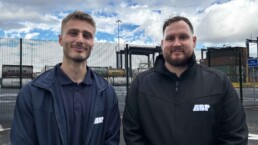
ABP appoints key roles in the Humber
Associated British Ports has made two key appointments at its container terminals strengthening its unitised operations at the ports of Immingham…
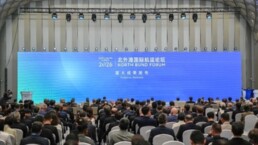
Xinhua Silk Road 2026 North Bund Forum unveils 20 shipping-related achievements
The 2026 North Bund Forum opened in Shanghai on October 20 with 20 key shipping-related achievements spanning international cooperation, green…
Ports encouraged to prepare now for advanced nuclear in maritime and clean energy
New joint Lloyd’s Register and British Ports Association paper sets out a practical readiness pathway for ports considering nuclear-powered vessels,…
Subscribe to our newsletter!
if you dont want to swim alone in the ocean of news, sign up for the newsletter, and you will receive daily all the important news of world shipping!
