Korean Government aims to expand Offshore Wind Power to 25GW by 2035
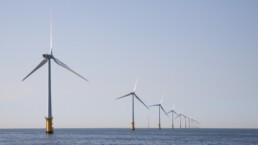
Plans to Secure Annual 4GW Installation Capacity Through Dedicated Port Construction and WTIV Building
The Ministry of Climate, Environment and Energy held the second meeting of the “Pan-Government Offshore Wind Power Acceleration Task Force” at the Iroom Center in Yeongdeungpo-gu, Seoul on Dec. 10 and announced the “Offshore Wind Power Infrastructure Expansion and Installation Plan” containing these details.
The core of the plan is to present a stable mid-to-long-term plan that will enable 25GW of facilities to begin construction or commence over the next 10 years. A ministry official explained, “Rather than stopping at declarative goals, we focused on the tasks needed in the field and compiled comprehensive measures so that offshore wind power installation can begin in earnest after 2030.”
To this end, the ministry intends to expand infrastructure to build the capacity to supply 4GW of offshore wind power facilities annually. Offshore wind turbines are substantial in scale, with the Vestas 15MW model having a tower height exceeding 125m and blade length reaching 116m. When adding the blade length to the tower, it approaches the size of N Seoul Tower (236.7m). Since such massive tower and blade materials must be stored and then transported for installation, dedicated ports and installation vessels are essential.
The problem is that domestically, there are only two berths at Mokpo New Port dedicated to offshore wind power. Considering that most offshore wind power projects are concentrated in the southwestern sea area, the government plans to expand Mokpo New Port’s dedicated berths to four and designate the storage facilities at Haenam Hwawon Industrial Complex, developed independently by private companies, as dedicated ports. Additionally, the government will pursue the installation of offshore wind power dedicated ports at Ulsan Namsin Port, Incheon Port, Gunsan Port, Pohang Youngilman Port, and Saemangeum New Port.
The government is also accelerating WTIV acquisition. Currently, it possesses two 10MW-scale WTIVs, but these alone make it difficult to proceed with the large-scale (15MW or larger) projects planned ahead. Accordingly, the government plans to secure an additional 15MW-class WTIV through joint investment by KEPCO and private companies, in addition to the 15MW-class WTIV that Hanwha Group is building with the goal of deploying it to the Sinan Ui offshore wind power project in June 2028. In this case, the annual installable facility capacity is known to be 2.5GW. The government plans to build a total 4GW installation capacity by securing an additional two vessels after 2030. A ministry official elaborated, “We will secure both dedicated ports and WTIVs in 15MW-plus form,” adding “This means we can install all generator facilities of 20MW or larger that will be developed in the future.”
After securing such supply capacity, the government announced it will lower generation costs by releasing a 10-year bidding roadmap during the first half of next year. This is a measure aimed at the fact that costs will fall when private companies increase turbine and substructure production capacity targeting orders. Specifically, the goal is to lower offshore wind power generation costs from the current level of 330 won per kilowatt-hour (kWh) to below 250 won by 2030 and below 150 won by 2035.
To achieve this, the government is rolling up its sleeves for financial support and permit reduction. First, it plans to enter consultations with related ministries to enable the use of the National Growth Fund, scheduled to be established at a scale of 150 trillion won, for offshore wind power projects as well. The government is also considering ways to deploy the Future Energy Fund, which raised 1.26 trillion won as a first-phase fund, to offshore wind power. Offshore wind power guarantee amounts will be raised from 32 billion won to 40 billion won per project, and loan support limits will also be increased from 80 billion won to 160 billion won.
The offshore wind power safety inspection period, which previously took nearly six months, will be drastically shortened to about one week. Regarding military operational reviews, which were considered the biggest uncertainty in project progress, the ministry is conducting a comprehensive survey of currently promoted projects and holding consultations with military authorities. Additionally, the ministry announced it will launch the Offshore Wind Power Development Promotion Team early within this year, which was scheduled to launch after the implementation of the Offshore Wind Power Special Act.
Measures to strengthen the domestic supply chain ecosystem were also introduced. First, the government will support research and development (R&D) for the independent development of ultra-large turbines of 20MW or larger. For floating offshore wind power, which is globally in the early stages of commercialization, the government plans to secure an independent model through core technology R&D and then build a 100MW-class test bed to preempt the market.
Source: BusinessKorea



Related News.
Hong Kong Global Maritime Trade Summit to return for third edition
The International Chamber of Shipping, in collaboration with the Transport and Logistics Bureau of the Government of Hong Kong and the Hong Kong…

Appetite for US crude oil exports climbs despite high freight
South Korea tops US crude destinations at 568,600 b/d VLCC rates to Asia double, closing arbitrage window European refining margins…
Shipping stocks Rally as Hormuz Traffic plunges 75%
Ship traffic through the Strait of Hormuz — a critical chokepoint handling about 20% of global crude oil and liquefied natural gas shipments — has…
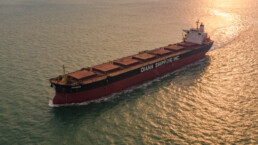
Diana Shipping announces Time Charter Contract for m/v G P Zafirakis with Classic Maritime
Diana Shipping, a global shipping company specializing in the ownership and bareboat charter-in of dry bulk vessels, announced that, through a…
New IMO ESP Code framework for Remote Inspection Techniques
The International Maritime Organisation, through Resolution MSC.584(111) , has adopted amendments to the International Code on the Enhanced…
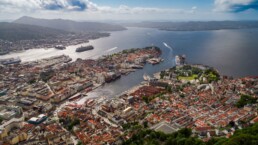
ABS opens Offshore & Marine Support Center in Bergen
ABS has expanded its capabilities in the Norwegian maritime market with the opening of a cutting-edge support center in Bergen, bringing advanced…
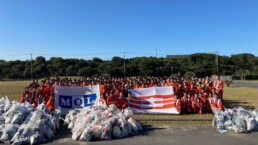
MOL holds giant step memorial ceremony and beach cleanup at Kashima Coast
Memorial and Reflection 20 Years After the Accident: Learning from the Past to Foster an Even Stronger Safety Culture Mitsui O.S.K. Lines, announced…
KEZAD-based Arabian Gulf Steel Industries achieves lowest verified Carbon Footprint for Rebar
CARES UK verified Environmental Product Declaration confirms 139 kg CO₂e per tonne for rebar produced at AGSI’s KEZAD Abu Dhabi facility Arabian…
Indian Register of Shipping announces launch of first fleet support ship INS Surya
Indian Register of Shipping continues to strengthen its role in supporting the Indian Navy and India’s naval shipbuilding capabilities through the…

VLCCs Climbing the Record Charts
LR2 The TC1 75kt MEG/Japan index decreased by only a single point this week to WS928. The corresponding Baltic round-trip TCE fell by $2,000 to…
Subscribe to our newsletter!
if you dont want to swim alone in the ocean of news, sign up for the newsletter, and you will receive daily all the important news of world shipping!
