US exempts Hungary from Russian energy sanctions


Hungary gets ‘full and unlimited’ exemption: foreign minister
Orban met Trump in Washington to seek sanctions waiver
US, Hungary sign MOU on nuclear, LNG cooperation
The US has granted Hungary a “full and unlimited exemption” to its Russian oil and gas sanctions after a meeting between President Donald Trump and Hungarian Prime Minister Viktor Orban, Hungary’s foreign minister announced Nov. 7.
In a statement on X, Hungarian Foreign Minister Peter Szijjarto announced that the US had agreed to the exemption, following the meeting between the two leaders in Washington for the first time in six years. The sanctions relief will allow the landlocked country to continue its trade with Russian energy companies Rosneft and Lukoil, after a Nov. 21 enforcement date.
After the sanctions were first announced on Oct. 22, Orban quickly announced that he was working on ways to circumvent the measures and had vowed to appeal to Trump, a close ally, to rethink his stance.
Speaking at a press conference after the meeting, Trump expressed sympathy for the Hungarian leader. “I stick up for Viktor Orban,” he said, “It’s very difficult for him to get the oil and gas from other areas. They don’t have the advantage of having sea.”
In a presumed reference to neighboring Slovakia, he went on to say, “They don’t have the ports, and so they have a difficult problem, and there’s another country that has the same problem.”
Instead, Trump suggested that his sanctions were designed to target other European countries with coastal access. “When you look at Europe, many of those countries don’t have those problems, and they buy a lot of oil and gas from Russia. And as they know, I’m very disturbed by that,” he said.
In the oil market, Hungary and Slovakia are some of the last remaining European buyers of Russian crude, after the EU banned seaborne imports in December 2022 and other countries, such as the Czech Republic phased out pipeline supplies. Under its 19th sanctions package, the bloc has banned imports of Russian liquefied natural gas starting from 2027.
MOL, a Hungarian energy company and one of the country’s most profitable businesses, operates two landlocked refineries in Hungary and Slovakia, which are primarily supplied with Russian crude via the Druzhba pipeline system. In an earnings report Nov. 11, MOL reiterated that it could theoretically source up to 80% of the crude oil for its two inland refineries through non-Russian channels, but said that a switch would be uneconomic and technically challenging.
Both MOL refineries are linked to the Croatian port of Omisalj by the Adria pipeline, which operator Janaf says can fully meet the crude demand for both facilities. However, speaking at the conference, Orban said he would like to convince the Croatian government to enlarge the pipeline. “It cannot be the main pipeline. It’s just supplementary. But later on, with some big investments, it would serve better the interests of Hungary,” Orban said.
MOL currently has contracts in place to source some 2.1 million mt of oil through the Adria connection by Dec. 31, 2025, representing just a fraction of its total of 14 million mt of inland refining capacity. Janaf has said the pipeline can supply MOL refineries with 14.5 million mt/year, and can hike supplies to its facilities at any time.
Sanctions diplomacy
Foreign Minister Szijjarto suggested in a post on X before the meeting that exemptions might be offered in exchange for a nuclear deal.
In a far-reaching memorandum of understanding agreed with Washington Nov. 7 and published by the State Department, Hungary committed to sourcing around $114 million of nuclear fuel from the US and to spend up to $20 billion on small modular reactors and spent fuel storage. Additionally, it committed to purchase approximately $600 million of US LNG and announced its intent to spend $700 million on US defense supplies.
Appeals for sanctions relief from other European countries have yielded mixed results so far.
A previous “letter of comfort” provided to the German energy ministry failed to translate to the indefinite sanctions initially expected for Rosneft Deutschland, which was placed under government trusteeship in 2022. Instead, the Russian-owned was granted a six-month sanctions exemption by the US authorities, expiring April 29.
Serbia delayed an initial sanctions deadline for its Russian-owned refining business, Naftna Industrija Srbije, from February until October, securing a series of one-to two-month deadline extensions before measures were eventually enforced and its crude supplies halted. A US bid to block Lukoil from selling its international assets to Swiss trading company Gunvor has sent a string of European countries into crisis mode over how to manage stranded Russian assets.
If enforced, US transaction bans could have cut off half the crude oil currently supplied to Hungary and Slovakia through the southern Druzhba pipeline, according to George Voloshin, an independent Russia energy analyst, noting a dearth of Russian suppliers capable of providing crude at a similar scale.
The EU has so far avoided directly sanctioning Lukoil, Russia’s second-largest oil company, but has agreed to phase out Russian pipeline oil deliveries in full by 2028.
Source: Platts



Related News.

ISLAND OIL: Unveiling of the Sculpture “Cyprus’s Journey Through the Ages” in Protaras – A Tribute and Landmark to Cyprus’s Historical Memory and Cultural Heritage
In a modest ceremony marked by a moving atmosphere, the sculpture “Cyprus’s Journey Through the Ages”, created by acclaimed Cypriot sculptor…

World Maritime Day 2026 from Policy to Practice – powering Maritime Excellence
Global regulations will deliver safer, more resilient shipping when they are implemented worldwide. The international maritime community marks…

Diana Shipping announces Time Charter Contract for m/v DSI Polaris with Dai An Ocean Shipping
Diana Shipping , a global shipping company specializing in the ownership and bareboat charter-in of dry bulk vessels, announced that, through a…

Chief Economists Expect Global Economy to Stabilize, but Fiscal Constraints, Rising Living Costs and AI Investment Uncertainty Threaten Growth
The global economy is stabilizing, but the fiscal support that cushioned successive shocks since 2020 is unlikely to play the same role in the year…
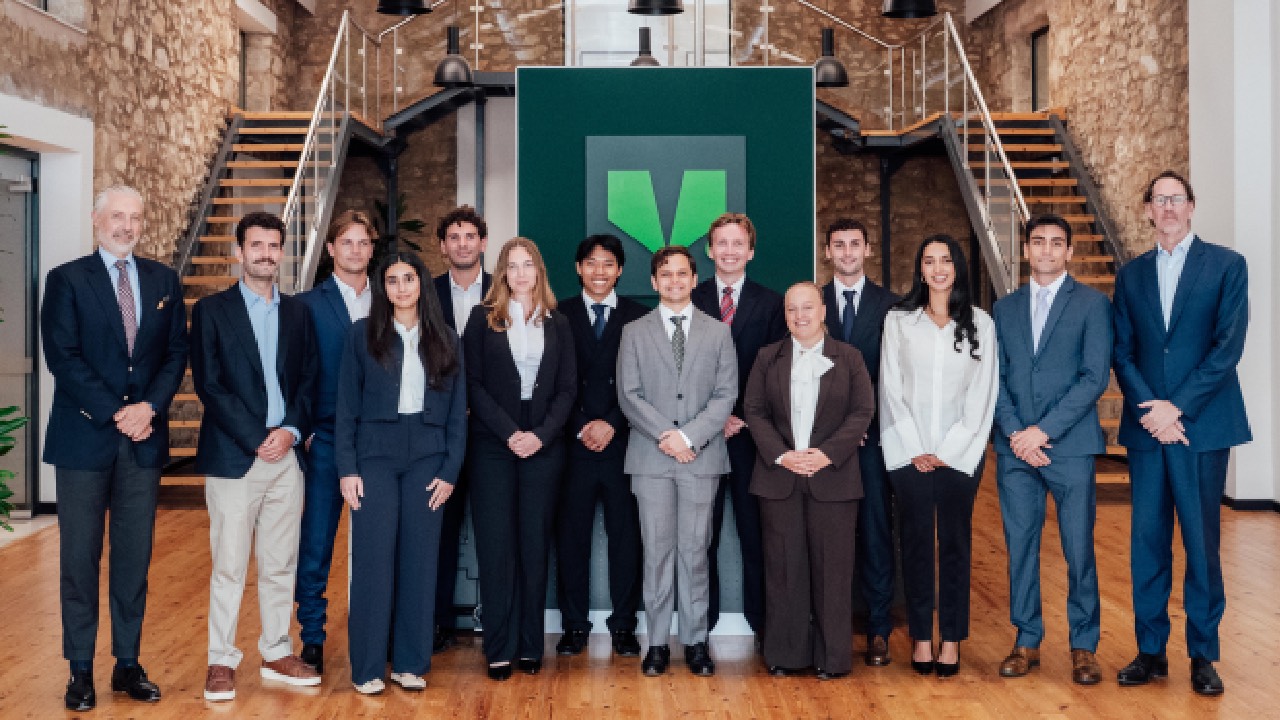
V. welcomes its new graduate cohort as programme expands across the group
Twelve graduates from nine nationalities join 11th year of V.’s expanded international management programme. V., the global ship manager and marine…

From Policy to Practice: Why Seafarers Are the Key to Maritime Excellence
The shipping industry is no stranger to regulation. Seafarers and ship operators work within a vast framework of international conventions, national…

Intermodal Report – Week 38 2026
Please find below the Intermodal market report for week 38 2026. Intermodal Report Week 38 2026 Market Insight By Nikos Tagoulis, Head of…

Allied – Weekly Market Review – Week 38
Please find below the Allied Weekly Report for Week 38 | 2026 ALLIED - Weekly Market Report- Week 38

Record year on the Northeast Passage but Arctic shipping remains very limited
In 2025, a record 103 transit voyages were made via the Northeast Passage. However, this is still equivalent to only around a day and a half of…

[xclusiv] S&P Report 21th September 2026
Please find below the [xclusiv] latest Weekly S&P Report [xclusiv] 2026_09_21 Market Commentary: VLCCs: Freight Boom Reprices the Fleet The VLCC…
Subscribe to our newsletter!
if you dont want to swim alone in the ocean of news, sign up for the newsletter, and you will receive daily all the important news of world shipping!
