Campaigners urge the IMO to keep Biofuels Out of Net-Zero Framework
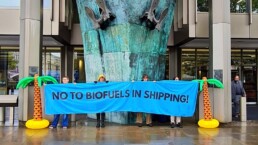

Biofuelwatch, Forest Watch Indonesia and Global Forest Coalition are calling the International Maritime Organisation (IMO) to exclude harmful biofuels from compliance with the Net-Zero Framework. Last week, during the Extraordinary Session of the Marine Environment Protection Committee (MEPC ES.2) in London, countries decided to postpone the decision on the adoption of the Framework to 2026. But important discussions will continue on 20–24 October on key details on clean energy incentives in the Framework, and the organisations stress the importance of preventing biofuels from being included as a supposed “green” alternative to fossil fuels.
Decades of evidence show that indirect land use change (ILUC) emissions from crop-based biofuels – such as soy and oil palm – wipe out their claimed climate benefits, driving forest loss, food insecurity, and land and water grabbing as agriculture is displaced onto marginal or uncultivated land. Soy and oil palm-based biofuels can generate emissions even higher than fossil fuels.
“Biofuels are not a sustainable solution under any circumstances. In Latin America, the push for soy-based biofuels has accelerated deforestation and driven communities off their lands. If the IMO creates new demand for biofuels, it will unleash more emissions, more inequality, and more land grabbing” said Jana Uemura, Climate Campaigner at the Global Forest Coalition.
“Rejecting biofuels in the Net-Zero Framework means protecting the world’s remaining tropical forests – critical carbon sinks and biodiversity hotspots.” said Anggi Putra Prayoga, Forest Campaigner at Forest Watch Indonesia. “The climate crisis is already real. It is crucial to take a firm stance on adopting truly zero-emission energy sources, rather than biofuels that generate new emissions through deforestation.”
The example of Indonesia should be a warning to other countries. In Indonesia, the expansion of palm oil plantations for biofuel continues to drive deforestation – even within protected and conservation forests which are highly vulnerable to climate change. “The loss of forests not only worsens emissions but also endangers the lives and rights of Indigenous peoples who depend on forest resources,” added the Forest Campaigner.
To avoid these impacts, the IMO should make sure high-ILUC fuels are excluded in the Framework. Major national and industry frameworks, including the EU’s Maritime and Aviation policies, the UK SAF Mandate, and the International Civil Aviation Authority’s CORSIA scheme, already exclude or cap high-ILUC biofuels, or include ILUC emissions in the life cycle accounting. The IMO must not fall behind.
“We urge all IMO member governments to take a strong, united stance against the inclusion of biofuels in the Net-Zero Framework” said Pax Butchart, Biofuel Campaigner at Biofuelwatch, “the science is clear: crop-based and waste-derived biofuels cannot deliver real emissions reductions. Governments now have a historic opportunity to steer the shipping sector toward truly clean, zero-emission solutions that protect people and the planet.”
Equally, biofuels produced from waste and residues such as used cooking oil (UCO), have limited availability and scalability, and won’t be able to satisfy the demand of international shipping in the long run.
Recent research estimates that while used cooking oil (UCO) will be the cheapest pathway for compliance, its supply is highly constrained and largely already used in the transport sector. The global waste oil supply currently used for biofuels production could only meet about 5% of shipping’s energy demand, leaving the sector reliant on the next-cheapest compliance pathway, high-ILUC biofuels, with major sustainability risks. UCO and palm derivatives, such as palm oil mill effluent (POME) and palm fatty acid distillate (PFAD), have been associated with fraud, weak auditing and risk displacement from their current use, increasing the use of unsustainable palm oil elsewhere.
The IMO governments must now pursue truly sustainable alternatives, including improved energy efficiency, wind-assisted propulsion and reducing demand for maritime transport in international trade.
IMO governments decided to delay the adoption of the Net-Zero Framework by one year at the Extraordinary Session of the Marine Environment Committee (MEPC ES.2) meeting in London on 14–17 October. The negotiations on key technical details are set to continue until then, with a technical working group (ISWG-GHG-20) on implementation and design taking place on October 20–24.
Despite the delay in adoption of the Net-Zero Framework, the 2023 IMO GHG Strategy remains in place, setting net-zero targets for the IMO and international shipping by 2050.



Related News.

Navigating the Multi-Orbit Era: In Conversation with Intellian’s Jon Harrison at SMM 2026
At SMM 2026 in Hamburg, the rapid evolution of maritime satellite communications took centre stage. Across the exhibition halls, discussions among…
Cyprus ports need joint energy and investment strategy, shipping agents chief says
Cyprus needs a coordinated strategy for shipping, energy and environmental protection to support port investment and modernisation, Cyprus shipping…

MASO Public Affairs introduces MASO Regulatory Intelligence
A new subscription service helping businesses understand what is changing and what it means for them MASO Public Affairs introduces MASO Regulatory…
Anglo-Eastern helps turn CMBTECH’s ammonia ambition into an operational reality
From early feasibility study and risk-based design to newbuilding supervision, crew readiness and technical management, Anglo-Eastern drew on its…
Escalation of attacks threatens to derail recovery in Middle East oil exports
World oil demand is forecast to fall by 2.5 mb/d y-o-y in 4Q26 and 2.6 mb/d on average in 2026. As the Iran war manifests itself through restricted…
New study finds shipping pays twice its share to EU ETS earmarked revenues should triple to help build market for sustainable fuels and technologies
Shipping is responsible for around 10% of EU ETS emissions but pays almost 20% of the ETS bill. Unlike other sectors, it has never received free…
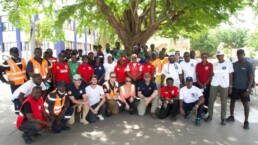
MSARC strengthens maritime mass rescue readiness through training and national live exercise off Dakar, Senegal
Joint MSARC–FHAS programme combines three days of SAR training with a national multi-agency live exercise The Maritime Search and Rescue Council ,…
Sogese report deliveries are still being delayed as container freight rates fluctuate
FOR IMPORTERS Spot rates into the Mediterranean are back at January levels, Far East to Europe reliability sits at pandemic lows, and nearly…
Glencore begins trading on Australian Securities Exchange
Glencore has begun trading on the Australian Securities Exchange under the ASX code GLC. Gary Nagle, Glencore’s CEO, said it was an exciting day for…
BIMCO Shipping Number of the Week
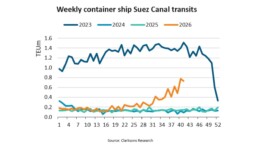
Suez Canal container ship transits exceed 50% of pre-disruption levels "During the first two weeks of October, weekly container ship capacity…
Subscribe to our newsletter!
if you dont want to swim alone in the ocean of news, sign up for the newsletter, and you will receive daily all the important news of world shipping!
