Shell Marine released its latest paper on the methane pathway

Shell Marine recently released its latest paper: “From compliance to competitive edge: The case for the methane pathway”.
The paper outlines why the methane pathway is a commercially viable and scalable way to help the industry lower greenhouse gas (GHG) fuel intensity and meet compliance targets.
The lower-emission fuel pathway begins with LNG, advances through the growing adoption of bio-LNG, and is poised to incorporate synthetic fuels (e-LNG) once they are commercially viable. LNG is the most widely adopted alternative marine fuel, backed by established global infrastructure and decades of experience.
The launch took place during a webinar hosted by Shell Marine on September 4, featuring Alexandra Ebbinghaus, General Manager for Decarbonisation, Shell Marine; Marie-Caroline Laurent, Group Senior Vice President, MSC Mediterranean Shipping Company; Stephen Brown, Technology Manager, Shell Shipping & Maritime and Panos Mitrou, Chairman of Methane Abatement in Maritime Innovation Initiative (MAMII).
Key insights from the paper include:
- The methane pathway is a valid route to net zero: start with LNG and blend bio-LNG, and, in the future, synthetic LNG, in any proportion to meet voluntary or regulatory carbon intensity targets.
- LNG emits fewer greenhouse gases on a life cycle basis compared to fuel oil. Its well-to-wake (WtW) emissions are decreasing over time as upstream and downstream methane emissions are reduced and operational efficiencies improve.
- Biomethane is available via a mature and commercially viable process, and it is increasingly being adopted across sectors as a renewable fuel. Liquefied biomethane, such as bio-LNG, is fully fungible with LNG and can be used in LNG dual-fuelled ships without retrofitting.
- The expanding global LNG bunkering network and the growing production of biomethane from organic waste and residues make the methane pathway viable and scalable.
- Clear guidelines and policy support are needed to unlock the full potential of the methane pathway.
Shell welcomes the IMO’s plan to set mid-term measures. The IMO has set ambitious reduction targets post-2030 that could drive earlier demand for more bio and synthetic fuels. LNG continues to play a role, and these measures could incentivise an earlier transition from conventional LNG to bio-LNG, which is already available today, and help propel synthetic LNG development. Furthermore, bio and synthetic LNG can be supplied by existing gas and LNG infrastructure, offering a scalable decarbonisation pathway.
Source: Shell Marine



Related News.
Navigating the Multi-Orbit Era: In Conversation with Intellian’s Jon Harrison at SMM 2026
At SMM 2026 in Hamburg, the rapid evolution of maritime satellite communications took centre stage. Across the exhibition halls, discussions among…
Cyprus ports need joint energy and investment strategy, shipping agents chief says
Cyprus needs a coordinated strategy for shipping, energy and environmental protection to support port investment and modernisation, Cyprus shipping…

MASO Public Affairs introduces MASO Regulatory Intelligence
A new subscription service helping businesses understand what is changing and what it means for them MASO Public Affairs introduces MASO Regulatory…
Anglo-Eastern helps turn CMBTECH’s ammonia ambition into an operational reality
From early feasibility study and risk-based design to newbuilding supervision, crew readiness and technical management, Anglo-Eastern drew on its…
Escalation of attacks threatens to derail recovery in Middle East oil exports
World oil demand is forecast to fall by 2.5 mb/d y-o-y in 4Q26 and 2.6 mb/d on average in 2026. As the Iran war manifests itself through restricted…
New study finds shipping pays twice its share to EU ETS earmarked revenues should triple to help build market for sustainable fuels and technologies
Shipping is responsible for around 10% of EU ETS emissions but pays almost 20% of the ETS bill. Unlike other sectors, it has never received free…
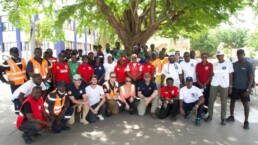
MSARC strengthens maritime mass rescue readiness through training and national live exercise off Dakar, Senegal
Joint MSARC–FHAS programme combines three days of SAR training with a national multi-agency live exercise The Maritime Search and Rescue Council ,…
Sogese report deliveries are still being delayed as container freight rates fluctuate
FOR IMPORTERS Spot rates into the Mediterranean are back at January levels, Far East to Europe reliability sits at pandemic lows, and nearly…
Glencore begins trading on Australian Securities Exchange
Glencore has begun trading on the Australian Securities Exchange under the ASX code GLC. Gary Nagle, Glencore’s CEO, said it was an exciting day for…
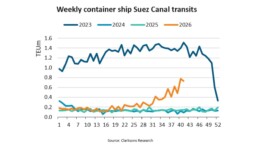
BIMCO Shipping Number of the Week
Suez Canal container ship transits exceed 50% of pre-disruption levels "During the first two weeks of October, weekly container ship capacity…
Subscribe to our newsletter!
if you dont want to swim alone in the ocean of news, sign up for the newsletter, and you will receive daily all the important news of world shipping!
