

We refer to Veritas Petroleum Services’ (VPS) Circular ‘A Global Pandemic of High Catfines in Marine Fuel’ dated 4 September 2025. Between 11 August and 31 August 2025, VPS observed a high number of elevated catfine levels, ranging from 62-176 ppm, in fuel across the regions shown in the below illustration. This is a trend that mirrors Gard’s own experience.
Understanding catfines
Catfines are microscopic, abrasive particles that pose a significant threat to a vessel’s engine. Short for catalytic fines, these particles are composed mainly of aluminum (Al) and silicon (Si). Along with viscosity and water, catfines are considered one of the three most critical properties to monitor in fuel quality at the engine inlet. To put their size into perspective, catfine particles range from 1 to 75 microns. A micron, or micrometer, is just 0.001 millimeters. In comparison, a human hair is about 50 to 70 microns thick, and a fine grain of sand is around 90 microns. Larger particles are more abrasive and can cause severe wear and damage to critical engine components such as cylinder liners, piston rings, and fuel injectors.
Cat fines –
Catfines are extremely hard and abrasive. They can scratch or become embedded in the steel surfaces of marine engine components, particularly those that move against each other. When they enter an engine, they can lead to high wear rates and scuffing, resulting in costly damage to key parts. Factors like a vessel’s motion in rough seas can stir up previously settled material in fuel tanks.
Catfines in VLSFO
The problem with cat fines is compounded in VLSFO due to several factors. The fuel’s typically low viscosity can reduce the effectiveness of centrifugal separators, while its varied composition makes its behaviour unpredictable. If the fuel is not sufficiently heated, waxes can precipitate and clog purifiers and filters, further diminishing their ability to remove these abrasive particles. Adding to the complexity is the risk of re-dissolving cat fines from old tank sediments. Given these challenges, rigorous fuel management is critical.
Industry standards
The ISO 8217 standard sets a maximum limit for catfine levels in fuel. The 2010, 2012, 2017, and 2024 versions set a maximum limit of 60 mg/kg (or 60 ppm) for viscous fuel grades as delivered to the ship. This limit is a significant reduction from the 80 mg/kg limit listed in the 2005 standard. It is crucial to note that the ISO 8217 limit applies to the fuel as it is delivered, not as it enters the engine.
For safe operation, most engine manufacturers recommend that catfine levels at the engine inlet be much lower — ideally below 15 ppm. To meet these requirements, vessels must rely on effective onboard fuel treatment systems. An overview of some of the major OEM requirements for fuel quality before the engine and for fuel cleaning systems can be found in Appendix I of CIMAC Guideline Design and operation of fuel cleaning systems for diesel engines (09, 2024 v2).
Key recommendations
Effective management of cat fines is crucial to prevent engine damage. While most owners and managers have established procedures, we reiterate some of the most important practices to mitigate the risk.
Bunkering & Sampling
- Source fuel carefully – Prioritize reputable suppliers when bunkering and avoid less-known local providers.
- Define clear specifications – Ensure charter parties include detailed fuel specifications, latest ISO 8217 standard, recommended suppliers, and precise handling and sampling requirements.
- Follow standard procedures – Adhere to industry-standard sampling practices, including taking samples from the ship’s manifold, using proper cubitainers, and ensuring all documentation (such as the Bunker Delivery Note) is correctly completed.
- Analyze before use – Conduct a thorough sample analysis before using the new fuel.
Onboard Storage & Settling
- Increase segregation – Maintain increased bunker segregation to avoid contamination.
- Test for compatibility – If mixing is unavoidable, conduct compatibility testing and follow specified mixing ratios.
- Allow for settling – Ensure the fuel has appropriate settling time in the tanks.
- Drain tanks – Settling and service tanks should be drained a minimum of twice daily.
- Clean tanks – Clean settling and service tanks whenever possible to remove sediment.
Purification
- Choose the right purifier disc based on the fuel’s density.
- Operate at the correct temperature as recommended by the fuel analysis report.
- Consider using both purifiers (in parallel or in series) at appropriate feed rates to increase efficiency.
- Maintain purification units with proper care and maintenance.
Monitoring & Prevention
- Monitor fuel filters carefully for signs of clogging.
- Be aware of sludge formation and filter clogging, particularly after heavy weather.
- Conduct regular sample analysis of fuel from before and after the purifier to confirm the unit’s efficiency.
- Perform periodic cylinder scrape-down analysis to check for abrasive wear.
- VPS also recommends taking fuel system check samples to assess the fuel treatment efficiency at the engine inlet or as close to it. This data is critical for any subsequent assessment of increased engine wear.
We would like to thank Veritas Petroleum Services for the above information.
Source: Gard



Related News.

5th CSN Greece ICT Conference, Athens 19th November 2026 “Intelligent Skies, Secure Seas: The AI Impact on ICT” – Save the date
About the Conference The 5th CSN Greece Shipping ICT Conference, titled “Intelligent Skies, Secure Seas: The AI Impact on ICT”, will take place on…
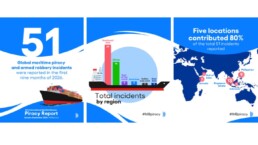
Maritime piracy incidents remain at historic lows despite Somali piracy concerns
The ICC International Maritime Bureau (IMB) has reported the lowest level (51) of piracy and armed robbery incidents since 1992 in the first nine…

Piraeus Port Authority main sponsor of Ferry Shipping Summit 2026
With the participation of more than 200 delegates from several European countries, the Ferry Shipping Summit 2026 took place on 8–9 October 2026 in…

EuroDry announces order for the construction of a third modern 82,000 DWT Kamsarmax Bulk Carrier
EuroDry , an owner and operator of drybulk vessels and provider of seaborne transportation for drybulk cargoes, announced that it has signed a…

India urges Russia, Ukraine to protect Black Sea shipping
India has urged both Russia and Ukraine to ensure safe passage for commercial shipping through the Black Sea as attacks on merchant vessels put…

PD Ports strengthens its commitment to the River Tees with multi-million pound Marine investment
PD Ports has officially opened a new multi-million-pound Marine facility on the banks of the River Tees, reinforcing its long-term commitment to the…

Maritime leaders head to Shanghai for the Annual Summit 2026
Shared seas, shifting horizons Maritime trade stands at a turning point. The rules-based order on which shipping has long depended is under…
Indian Register of Shipping grants type approval to Medha Energy’s 92 kWh LTO Lithium-Ion battery system
Indian Register of Shippinghas successfully completed the Type Approval process for the 92 kWh Lithium-Ion Battery System developed by M/s Medha…

KLine opens a Singapore New Hub for Consolidated Ship Management and Maritime Talenτ
Three Companies, One Roof — Singapore's New Hub for Consolidated Ship Management and Maritime Talenτ A ceremony for around 280 guests sets the stage…
ASA explores measures to Safeguard Free and Safe Navigation at Critical International Maritime Chokepoints
The Asian Shipowners’ Association which accounts for 56% of the world’s fleet capacity and consists of China, Cook Islands, Hong Kong, Japan, Korea…
Subscribe to our newsletter!
if you dont want to swim alone in the ocean of news, sign up for the newsletter, and you will receive daily all the important news of world shipping!
