Maritime leaders head to Shanghai for the Annual Summit 2026

Shared seas, shifting horizons
Maritime trade stands at a turning point. The rules-based order on which shipping has long depended is under extreme pressure. Trade patterns and key commodity value chains are being disrupted not only by armed conflicts that threaten the core principles of international law but also by rising protectionism and regional concentration.
The same geopolitical strife behind these developments is also being felt within the sector’s governing body, the International Maritime Organization (IMO), extending regulatory uncertainty. At the same time, zero-emission fuels, automation, and AI are reshaping how
the industry operates. Preparing for this future means planning across multiple scenarios, identifying and managing risks, upgrading infrastructure, and retraining and upskilling maritime professionals.
When global institutions stall, new forms of leadership are needed. Individual companies, cross-value-chain collaborations, national governments, and regional cooperation are driving decarbonisation, improving seafarer well-being, and addressing governance gaps. While these first-mover actions deserve recognition, they are not enough on their own to drive lasting change. A global industry needs sector-wide alignment and institutional capacity to governtransformative technologies while protecting maritime security and human development.
Trade in a time of rupture
The patterns and drivers behind global trade are shifting. The shift is characterised by rising protectionism, greater concentration, and increased regionalisation, as evidenced by escalating tariffs, faster growth in large economies, and trade among developing economies driving growth. Notably, AI-enabling goods, such as semiconductor equipment, have quickly become a major driver of trade, accounting for over half of total global trade growth in 2025. This signifies a more complex and less predictable trade landscape in the years to come, defined by the pace, trajectory, and interplay among underlying geopolitical, demographic, and technological developments.
Between the Russia-Ukraine conflict, the Strait of Hormuz crisis, Houthi attacks in the Red Sea, and the rising tensions around the Panama Canal, hostilities at maritime chokepoints and key naval regions have shifted from isolated, localised events to a broader trend. This is testing the resilience of existing institutions and threatening the stability of key commodity value chains, such as energy, fertiliser, and food. For shipping, the new geopolitical reality presents consequences that go beyond shifting trade flows and added costs. Transit fees, ship bans, and closures of the passage in the Strait of Hormuz crisis have put the freedom of navigation, a fundamental principle of international law, in jeopardy. While Iran contends that the strait is governed by the regime of ‘innocent passage’, whereby coastal states retain broad authority over navigation through their territorial waters, most of the international community maintains that the right of ‘transit passage’ applies instead.
The safety of navigation is also under significant strain. Between February and April alone, 21 confirmed attacks on commercial ships resulted in multiple deaths. As of this August, at least 6,000 seafarers aboard roughly 500 vessels were still stranded in the Strait of Hormuz.
The energy crises spurred by these conflicts are generating a strong policy response, ranging from emergency measures, such as releasing oil reserves and fast-tracking overland pipelines, to deep structural shifts. Across the board, national energy policy priorities have shifted to incorporate competitiveness and supply chain resilience, resulting in wide-ranging efforts to diversify domestic energy mixes and placing alternative energy at the centre of geopolitical competition. Earlier this year, the European Union initiated a revision of its energy security framework to better address the rise of new energy sources and hybrid threats.
In a bid to bypass chokepoints and cut travel times, the first regular container shipping service connecting Europe and Asia through the Arctic was launched this August. Enabled by the melting ice sheet, traffic through the region has been expanding, despite pledges from several European shipping companies not to use the routes due to geopolitical concerns, safety hazards, and potential ecosystem disruptions.
Meanwhile, in the Black Sea, the protracted Russia-Ukraine conflict has resulted in dozens of strikes on grain-carrying vessels, echoing the pattern of critical value chain disruption observed in the
Strait of Hormuz. It has also driven the proliferation of substandard shipping, with an estimated 10- 20% of all global tankers operating as a parallel fleet that employs non-transparent actions. Beyond exposing the sector’s critical vulnerabilities, such as the susceptibility of automatic identification systems to spoofing, this presents systemic risks ranging from market disruption to major human
and environmental disasters. The maritime sector, however, is starting to respond. This year, the IMO approved new guidelines to deter the misuse of flags, while 14 countries around the Baltic and the North Sea agreed to step up their security and control measures. Still, deceptive practices continue to be widely adopted by an emerging parallel fleet, often outpacing these fragmented responses.
Leading by example
New forms of collaborative leadership among countries, or “coalitions of the willing”, are emerging in areas ranging from defence to climate action and AI, aiming to fill governance gaps and drive progress despite political setbacks and multilateral negotiation deadlocks. In the European Union, eight member states recently formed an Early Movers Coalition to accelerate sustainable aviation fuel uptake, prompting calls to establish a similar mechanism for the maritime sector.
Despite deep structural uncertainty, industry initiatives and cross-value-chain collaborations are similarly abundant. Amid concurrent crises, maritime leaders are seeking to increase the integrity and the attractiveness of global shipping. A new task force, established at last year’s Global Maritime Forum Annual Summit in Antwerp, aims to identify and collectively address gaps in maritime governance, while strengthening industry accountability to effectively reduce the space in which deceptive practices can operate.
Meanwhile, the All Aboard Alliance 2030 Strategy aims to make careers at sea safer, more attractive, and more committed to seafarer well-being. That ambition is already bringing companies together to co-design shared global standards for what good, better, and best look like at sea. Turning emerging global ambitions into local practice, the port of Amsterdam developed guidelines to facilitate seafarers’ access to shore leave and, along with local logistics provider De Koperen Ploeg, launched a shore leave pilot programme offering seafarers one free return trip per vessel call.
Significant progress has also been made in building out value chains for alternative fuels. Around 30 ports now offer methanol bunkering, biomethane bunkering volumes are surging, and an increasing number of ports are planning to bunker ammonia. A series of new commercial partnerships resulted in a large-scale offtake for green ammonia, the first binding e-methanol offtake, the first commercial
seagoing voyage on ammonia, and the first four green corridors either in or approaching operation. While showcasing industry leadership, many of these first deployments were enabled by ambitious regional and national policy measures, such as the pooling mechanism within the FuelEU Maritime and Singapore’s work to aggregate early fuel demand.
Examples of first-mover action can be observed in many regions, but attention is increasingly turning
to China for lessons in scaling emerging technologies. While the rest of the world is grappling with how
to progress beyond pilots and first deployments and tackle the persistent fuel cost gap, China enjoys
a sizeable cost, speed, and scale advantage across multiple technology pathways. The majority of the global green methanol capacity, the world’s first large-scale ammonia plants, and many of the most powerful battery-powered vessels are all found in China. The country also hosts around 60 automated port terminals and aims to deploy around 100 smart vessels by 2027. China’s 15th five-year plan for 2026- 2030 makes it clear that this momentum is set to continue, further cementing shipping, shipbuilding, and maritime logistics as priorities and designating AI as a core driver of economic transformation.
Actions by ambitious companies, governments, and coalitions of the willing have been a driving force for progress during this period of profound uncertainty for the sector and the world at large. But on their own, these first-mover actions are insufficient for lasting change. In a global industry, a smooth transition that preserves general safety, security, and environmental protection can only be achieved through sector-wide alignment, and the IMO is best positioned to deliver it.
Equipping the sector for the future
Despite significant progress, a trillion-dollar-plus investment gap still stands in the way of achieving
the sector’s climate goals. At the same time, more than 800,000 seafarers will need to be trained
to operate on alternative fuels by the mid-2030s. These long-term investments must be made amid deep market, policy, and technology uncertainty, in which rapid technological breakthroughs, a complex regulatory environment, and market disruptions shape both operational patterns and strategic decisions.
The mix of potential decarbonisation pathways is constantly evolving. In addition to progress on alternative fuels, feasibility studies and port partnerships are exploring the potential of nuclear power, and advances in solid-state batteries are on the horizon that could double the feasible range. The resulting complexity of the decarbonisation landscape broadens opportunities to capture a first-mover advantage, but also increases the risks of delayed or diverted investment, capital lock-in, and path dependencies that could undermine the transition.
AI capabilities are accelerating and reaching more people than ever. In shipping, the technology could potentially help lower emissions through efficiency measures, reduce operational costs through predictive maintenance, and improve onboard safety through the rollout of autonomous vessels. The first wave of implementation is already underway, with shipping companies announcing investments
in AI to support decarbonisation and improve performance. However, the technology’s potential
comes with wide-reaching risks. Autonomous vessels pose safety and cybersecurity concerns and require large-scale investments in both assets and training infrastructure. AI-driven optimisation, while reducing costs, can itself be expensive to implement and maintain. More broadly, the accelerating pace of AI comes with risks of economic disruption, job displacement, and the erosion of human judgment and critical thinking. More emphasis is now on managing security risks, but despite progress, the consensus is that institutional capacity to govern AI remains lacking, and safety benchmarks are spotty.
Responding to the shifting landscape, the IMO is forging ahead to strengthen the existing frameworks, including approving the final interim guidelines for seafarer training on several fuels and the guidelines on the registration of ships, adopting a safety framework for autonomous vessels, and launching a new initiative on seafarer fatigue.
However, regulatory developments have themselves been a major source of uncertainty. Following the decision to postpone the adoption of the Net-Zero Framework in October 2025, the design and timeline
of the mid-term measures to deliver on the IMO’s 2023 GHG Strategy remain undecided. This April, a majority of the IMO Member States expressed support for the Net-Zero Framework but left the door open for changes that could generate more consensus. Proposed changes range from eliminating the economic instrument to introducing a levy. These would result in drastically different transition trajectories, while a further delay or limited ambition could stall investments and pave the way for a patchwork of national and regional regulations, increasing the financial and administrative burden on the sector.
In a parallel development that strengthens global environmental stewardship, the High Seas Treaty—a global framework to protect biodiversity in international waters—entered into force in January 2026. Among other things, it enables the creation of marine protected areas and mandates environmental impact assessments for certain activities. Both the potential business implications and the scale
of the sector’s impact on biodiversity are poorly understood, and a lot can be gained by taking a proactive stance.
Thriving in a constantly shifting environment requires planning across multiple scenarios, managing compounding risks, scanning the technology horizons, and strengthening resilience. But perhaps more importantly, it requires embracing a sense of agency and shifting from merely adapting to the future to actively shaping it.
Key questions
- How can maritime leaders plan for the long term when supply chains and operating conditions are shaped by geopolitical instability, regulatory uncertainty, and disruptive technologies?
- How can the sector best prepare for technological shifts while ensuring that the workforce is equipped to thrive in a rapidly changing environment?
- What can be learned from China’s experiences in rapid deployment of technologies at scale, and what are the implications of regional differences in the pace and scale of the transition?
- How can public-private collaboration and coalitions of the willing strengthen transparency, responsible behaviour at sea, and confidence in the global maritime trade?
- How can the Global Maritime Forum community advocate for stringent policy frameworks and lead the maritime sector beyond regulatory compliance, to set the standards that will define a robust and competitive industry?



Related News.

5th CSN Greece ICT Conference, Athens 19th November 2026 “Intelligent Skies, Secure Seas: The AI Impact on ICT” – Save the date
About the Conference The 5th CSN Greece Shipping ICT Conference, titled “Intelligent Skies, Secure Seas: The AI Impact on ICT”, will take place on…
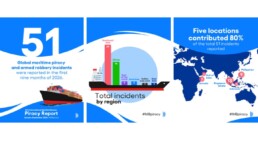
Maritime piracy incidents remain at historic lows despite Somali piracy concerns
The ICC International Maritime Bureau (IMB) has reported the lowest level (51) of piracy and armed robbery incidents since 1992 in the first nine…
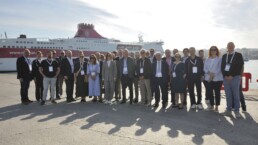
Piraeus Port Authority main sponsor of Ferry Shipping Summit 2026
With the participation of more than 200 delegates from several European countries, the Ferry Shipping Summit 2026 took place on 8–9 October 2026 in…

EuroDry announces order for the construction of a third modern 82,000 DWT Kamsarmax Bulk Carrier
EuroDry , an owner and operator of drybulk vessels and provider of seaborne transportation for drybulk cargoes, announced that it has signed a…

India urges Russia, Ukraine to protect Black Sea shipping
India has urged both Russia and Ukraine to ensure safe passage for commercial shipping through the Black Sea as attacks on merchant vessels put…
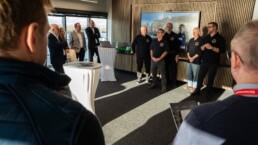
PD Ports strengthens its commitment to the River Tees with multi-million pound Marine investment
PD Ports has officially opened a new multi-million-pound Marine facility on the banks of the River Tees, reinforcing its long-term commitment to the…
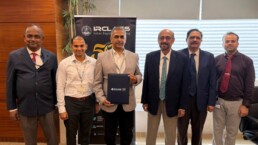
Indian Register of Shipping grants type approval to Medha Energy’s 92 kWh LTO Lithium-Ion battery system
Indian Register of Shippinghas successfully completed the Type Approval process for the 92 kWh Lithium-Ion Battery System developed by M/s Medha…

KLine opens a Singapore New Hub for Consolidated Ship Management and Maritime Talenτ
Three Companies, One Roof — Singapore's New Hub for Consolidated Ship Management and Maritime Talenτ A ceremony for around 280 guests sets the stage…
ASA explores measures to Safeguard Free and Safe Navigation at Critical International Maritime Chokepoints
The Asian Shipowners’ Association which accounts for 56% of the world’s fleet capacity and consists of China, Cook Islands, Hong Kong, Japan, Korea…
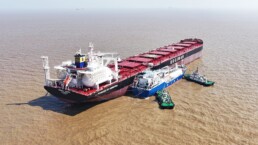
World’s First Commercial Ship-to-Ship Green Ammonia Bunkering Completed in Zhoushan, Zhejiang, China
On October 13, 2026, the world’s first commercial ship-to-ship bunkering of green ammonia fuel was completed at an anchorage in Zhoushan Port,…
Subscribe to our newsletter!
if you dont want to swim alone in the ocean of news, sign up for the newsletter, and you will receive daily all the important news of world shipping!
