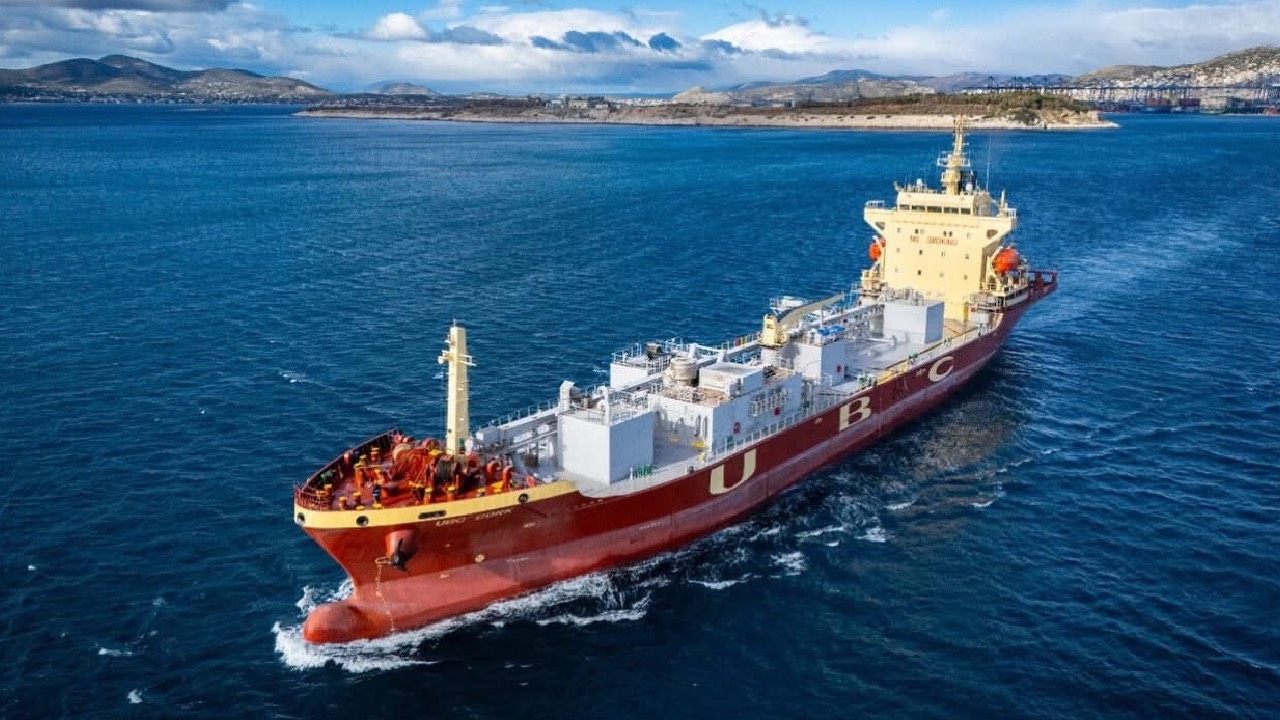

Captured carbon on cement-carrying ship to serve as limestone input at Heidelberg Materials pioneering cement plant in Brevik, Norway
Seabound, a UK-based leader in marine carbon capture, has launched a first-of-its-kind onboard carbon capture project in partnership with Hartmann Group (“Hartmann”), Heidelberg Materials Northern Europe, and InterMaritime Group (“InterMaritime”). The solution equips the UBC Cork, a 5,700 gross tonne (GT) cement-carrying ship owned by Hartmann and managed by InterMaritime, with Seabound’s compact carbon capture system. The captured carbon — bound in limestone and thus stored safely onboard will be offloaded at the Port of Brevik, Norway, and used in Heidelberg Materials’ Brevik cement plant. Recently inaugurated, this world-first industrial-scale carbon capture facility in the cement industry will produce net-zero concrete.
Marine shipping accounts for nearly 3% of global CO₂ emissions, making it one of the most carbon-intensive and difficult-to-decarbonize sectors. In April, the International Maritime Organization (IMO) introduced a global carbon price of up to $380 per tonne of CO₂, further adding pressure to shipowners. With few scalable alternatives to heavy fuel oil and existing efficiency measures proving insufficient, shipowners and global brands are seeking viable solutions to cut maritime emissions and meet ambitious climate goals.
Seabound’s containerized carbon capture system uses calcium looping technology to capture up to 95% of CO₂ and 98% of sulphur emissions from ship exhaust. The process uses calcium hydroxide, derived from calcium oxide and commonly known as slaked lime, to absorb CO₂ and convert it into limestone that is stored onboard until returning to port. The containerized system allows for easy installation with minimal vessel modification and is suitable for all vessel types. This design decouples carbon capture from post-processing, resulting in lower energy requirements, faster deployment, and reduced cost compared to traditional liquefied CO₂ systems.
“We’re proud to partner with industry leaders like Heidelberg Materials and Hartmann to deliver scalable carbon capture solutions,” said Alisha Fredriksson, CEO and Co-founder of Seabound. “We’re especially excited to be advancing this work in Brevik, a strategic location that’s rapidly establishing itself as a global hub for CCS with Heidelberg’s world-first facility and the Northern Lights pick up point. Together, we’re demonstrating how onboard carbon capture can accelerate emissions reductions in carbon-intensive sectors.”
The carbon captured on the UBC Cork will be offloaded as limestone at Heidelberg Materials’ Brevik plant, where it will serve as an input in the production of carbon captured cement, which enables net-zero concrete. The Brevik CCS facility is already operational, capturing 400,000 tons of CO2 annually. CO2 transport and storage are provided by Northern Lights, the world’s first cross-border CO₂ storage hub beneath the North Sea. As part of its Net Zero strategy, Heidelberg Materials is committed to decarbonising their maritime transport and supply chain, targeting a substantial reduction in CO₂ emissions from 2020 levels.
“Shipping cement is emissions-intensive, and Seabound’s system gives us a clear path to reduce those Scope 3 emissions while enhancing our circular use of captured CO₂,” said Lars Erik Marcussen, Project Manager, Logistics at Heidelberg Materials Northern Europe. “This project brings us one step closer to also decarbonising the logistics/transport part of our operations.”
The collaboration marks a significant step forward, setting the stage for deeper cooperation between the partners. Heidelberg Materials aims to reduce its Scope 3 emissions from maritime transport by using a variety of methods — including Seabound’s carbon capture technology — to accelerate its path to net-zero. Meanwhile, Hartmann’s early adoption provides crucial operational expertise and strategically positions the company to meet evolving regulatory demands. Together, Seabound and Hartmann are committed to expanding carbon capture solutions throughout Hartmann’s fleet, driving meaningful decarbonisation in maritime shipping.
“Hartmann is committed to embracing and investing in environmentally friendly technologies that reduce our maritime carbon footprint and promote sustainability,” said Captain Jayant Singh, Director, Pool Manager Operations at Hartmann Group. “By integrating innovative, eco-conscious solutions into our ship owning operations, we aim to contribute positively to the environment while delivering long-term value to the maritime industry and all of our stakeholders.”
“This collaboration will play a key role in advancing carbon capture technology and accelerating its adoption in the shipping industry, marking a critical step toward realising a low-emission future for maritime transport,” added Dieter Rohdenburg, CEO of Intership Navigation Co. Ltd., a member of InterMaritime.
The project is co-funded by the Eurostars partnership on Innovative SMEs which is part of Horizon Europe through the Cyprus Research and Innovation Foundation. This funding supports collaborative R&D projects that drive innovation in a range of industries, including maritime transport. The consortium of funding recipients supporting this initiative includes the Cyprus Marine and Maritime Institute (“CMMI”), a centre of excellence in maritime research with an interest in advancing new decarbonisation technologies.
Seabound completed its first onboard carbon capture pilot with Lomar Shipping and Hapag Lloyd, successfully capturing CO₂ at ~80% efficiency onboard a 3,200 twenty-foot equivalent unit (TEU) container vessel. The company also showcased its technology for port-based emissions capture alongside STAX Engineering at an event in the Port of Long Beach, California in April. Building on this momentum, Seabound is currently building its first full-scale systems to be delivered initially to Hartmann and used in the transport of Heidelberg Materials’ cement from the Brevik plant. Seabound is expanding its presence in Europe and leveraging favourable regulatory conditions to accelerate maritime decarbonisation.
Seabound is on a mission to capture 100 million tonnes of CO₂ annually by 2040, representing 10% of the global shipping sector’s emissions. The company continues to engage shipowners, cargo companies, and industrial players across the supply chain to expand adoption and maximize impact. For more information visit www.seabound.co or contact press@seabound.co.



Related News.
ISLAND OIL: Unveiling of the Sculpture “Cyprus’s Journey Through the Ages” in Protaras – A Tribute and Landmark to Cyprus’s Historical Memory and Cultural Heritage
In a modest ceremony marked by a moving atmosphere, the sculpture “Cyprus’s Journey Through the Ages”, created by acclaimed Cypriot sculptor…
World Maritime Day 2026 from Policy to Practice – powering Maritime Excellence
Global regulations will deliver safer, more resilient shipping when they are implemented worldwide. The international maritime community marks…

Diana Shipping announces Time Charter Contract for m/v DSI Polaris with Dai An Ocean Shipping
Diana Shipping , a global shipping company specializing in the ownership and bareboat charter-in of dry bulk vessels, announced that, through a…

Chief Economists Expect Global Economy to Stabilize, but Fiscal Constraints, Rising Living Costs and AI Investment Uncertainty Threaten Growth
The global economy is stabilizing, but the fiscal support that cushioned successive shocks since 2020 is unlikely to play the same role in the year…
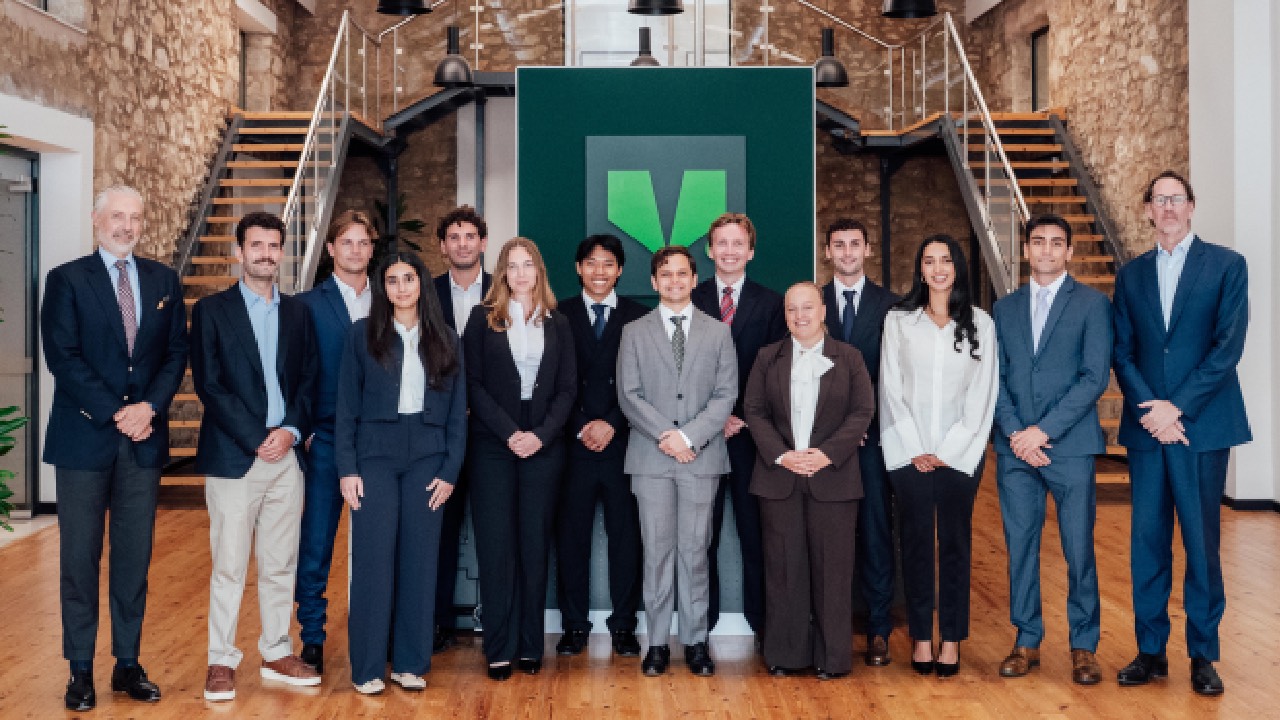
V. welcomes its new graduate cohort as programme expands across the group
Twelve graduates from nine nationalities join 11th year of V.’s expanded international management programme. V., the global ship manager and marine…
From Policy to Practice: Why Seafarers Are the Key to Maritime Excellence
The shipping industry is no stranger to regulation. Seafarers and ship operators work within a vast framework of international conventions, national…

Intermodal Report – Week 38 2026
Please find below the Intermodal market report for week 38 2026. Intermodal Report Week 38 2026 Market Insight By Nikos Tagoulis, Head of…

Allied – Weekly Market Review – Week 38
Please find below the Allied Weekly Report for Week 38 | 2026 ALLIED - Weekly Market Report- Week 38
Record year on the Northeast Passage but Arctic shipping remains very limited
In 2025, a record 103 transit voyages were made via the Northeast Passage. However, this is still equivalent to only around a day and a half of…

[xclusiv] S&P Report 21th September 2026
Please find below the [xclusiv] latest Weekly S&P Report [xclusiv] 2026_09_21 Market Commentary: VLCCs: Freight Boom Reprices the Fleet The VLCC…
Subscribe to our newsletter!
if you dont want to swim alone in the ocean of news, sign up for the newsletter, and you will receive daily all the important news of world shipping!
