

The global shipping industry faces the prospect of “decarbonisation déjà vu” as it braces for overlapping climate regulations that could leave shipowners footing the bill twice, warns EmissionLink Managing Director Philippos Ioulianou, part of Columbia Group.
With the International Maritime Organisation (IMO) preparing to implement its net-zero targets from 2027 and the EU’s FuelEU Maritime regulation already in motion, owners and operators are being forced to navigate diverging frameworks, timelines, and enforcement mechanisms — all aimed at the same goal: decarbonising the fleet.
“On paper, the objectives are aligned. In practice, shipowners are being pulled in different directions with conflicting demands,” said Mr Ioulianou. “They are being asked to invest in reporting systems, new fuels, and compliance capacity — often without the necessary infrastructure or clarity on which technologies will prevail.”
A major concern is double reporting, with companies expected to submit nearly identical emissions data in multiple formats to satisfy both regimes. This redundancy is more than a bureaucratic inconvenience; it represents a significant financial and administrative burden.
“If IMO’s system comes into force in 2027 while FuelEU is already active, we risk at least two years of duplicated monitoring, verification, and penalties. This is not only inefficient — it’s costly,” he explained. “Every euro spent on parallel compliance structures gets passed down the value chain to charterers, cargo owners, and ultimately consumers.”
EmissionLink, part of Columbia Group, is calling for urgent action to harmonise international and regional compliance systems. Mutual recognition of verified emissions data between IMO and EU authorities would be a logical first step. An integrated submission platform, allowing owners to report once and comply with both, would go even further in easing the transition.
“We fully support the drive to decarbonise,” he adds. “But regulation must reflect operational realities. Most vessels on the water today will still be trading in 10 to 15 years. Engine conversions to gas, methanol or ammonia are expensive, and global bunkering infrastructure isn’t yet mature enough to support consistent fuel availability.”
The company also warns against focusing solely on fuel-based solutions. “There are technologies that can reduce emissions today,” he said. “But if regulation only incentivises dual-fuel capability, we risk stifling innovation in other critical areas.”
Mr Ioulianou believes the current disruption also presents an opportunity for ship owners that embrace regulatory compliance as a strategic advantage offering sustainability reporting, retrofit guidance, and fuel strategy advisory services. These companies will stand out and the industry must evolve. Competing purely on cost is no longer viable.
He concludes: “But to succeed, we need clarity, not confusion. Without regulatory alignment, shipowners will pay twice for emissions that should only be counted once — and that could actively hinder the path towards decarbonisation.”



Related News.

ISLAND OIL: Unveiling of the Sculpture “Cyprus’s Journey Through the Ages” in Protaras – A Tribute and Landmark to Cyprus’s Historical Memory and Cultural Heritage
In a modest ceremony marked by a moving atmosphere, the sculpture “Cyprus’s Journey Through the Ages”, created by acclaimed Cypriot sculptor…
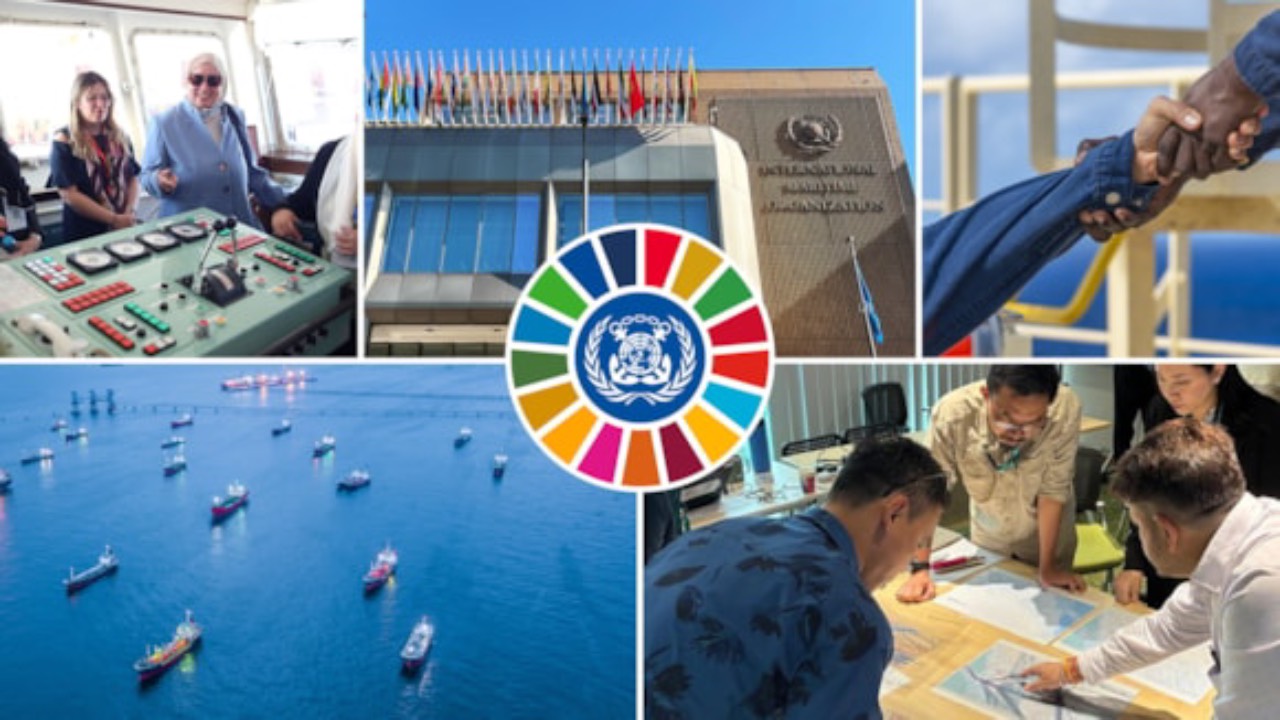
World Maritime Day 2026 from Policy to Practice – powering Maritime Excellence
Global regulations will deliver safer, more resilient shipping when they are implemented worldwide. The international maritime community marks…

Diana Shipping announces Time Charter Contract for m/v DSI Polaris with Dai An Ocean Shipping
Diana Shipping , a global shipping company specializing in the ownership and bareboat charter-in of dry bulk vessels, announced that, through a…

Chief Economists Expect Global Economy to Stabilize, but Fiscal Constraints, Rising Living Costs and AI Investment Uncertainty Threaten Growth
The global economy is stabilizing, but the fiscal support that cushioned successive shocks since 2020 is unlikely to play the same role in the year…

V. welcomes its new graduate cohort as programme expands across the group
Twelve graduates from nine nationalities join 11th year of V.’s expanded international management programme. V., the global ship manager and marine…

From Policy to Practice: Why Seafarers Are the Key to Maritime Excellence
The shipping industry is no stranger to regulation. Seafarers and ship operators work within a vast framework of international conventions, national…

Intermodal Report – Week 38 2026
Please find below the Intermodal market report for week 38 2026. Intermodal Report Week 38 2026 Market Insight By Nikos Tagoulis, Head of…

Allied – Weekly Market Review – Week 38
Please find below the Allied Weekly Report for Week 38 | 2026 ALLIED - Weekly Market Report- Week 38

Record year on the Northeast Passage but Arctic shipping remains very limited
In 2025, a record 103 transit voyages were made via the Northeast Passage. However, this is still equivalent to only around a day and a half of…

[xclusiv] S&P Report 21th September 2026
Please find below the [xclusiv] latest Weekly S&P Report [xclusiv] 2026_09_21 Market Commentary: VLCCs: Freight Boom Reprices the Fleet The VLCC…
Subscribe to our newsletter!
if you dont want to swim alone in the ocean of news, sign up for the newsletter, and you will receive daily all the important news of world shipping!
