
In April 2025, the IMO adopted a global carbon pricing mechanism for shipping, to take effect in 2028, with a $100-per-tonne levy on CO₂ emissions above targets. Aimed at achieving net-zero by 2050, the agreement also highlights the critical role of seafarers. Meanwhile, the EU has already implemented a more advanced system: maritime transport has been included in the EU Emissions Trading System (ETS) since January 2024, with full coverage by 2026. In parallel, the FuelEU Maritime Regulation—effective from 2025—targets an 80% reduction in greenhouse gas intensity from marine fuels by 2050.
Together with our global sister organization, the International Transport Workers’ Federation (ITF), we welcome this first-ever legally binding global framework to reduce greenhouse gas (GHG) emissions from shipping. At the same time, we urge the EU to carefully assess how the IMO framework interacts with the Maritime ETS and FuelEU Maritime, to prevent duplicative or conflicting systems and ensure a level playing field.
Ports at the Heart of Global and Regional Transition
The IMO’s decision to pursue net-zero emissions from global shipping by 2050 marks a significant and welcome step in the decarbonisation of the sector—one that the ETF and the port workforce have long been preparing for. In recent dialogues with the European Commission, it was acknowledged that such international developments could have major implications for the EU Maritime ETS. Now that a global framework is materialising, it is essential that the EU re-evaluates how its regional instruments align with this evolving landscape.
This development holds particular weight for EU ports. The ETF has consistently voiced concerns about the risks posed by the EU ETS in its current form—notably the potential for business and carbon leakage, where transshipment and shipping activities could shift to non-EU ports. A globally coordinated measure like the one adopted by the IMO has the potential to rebalance competition and reduce these risks, creating a fairer environment for EU ports to remain both climate-responsible and economically viable.
The EU must now ensure that its Maritime ETS and FuelEU Maritime Regulation interact coherently with the IMO framework. Avoiding overlapping or conflicting systems is crucial to prevent unnecessary strain on ports, operators, and workers. This transition is a clear opportunity—but one that requires close coordination between regional and global policies, and a commitment to inclusive dialogue with social partners and stakeholders.
A Just Transition for Maritime Workers
The establishment of the IMO Net-Zero Fund and the introduction of a global emissions pricing mechanism from 2028 mark a fundamental shift in how the maritime sector tackles climate change. As the industry moves toward alternative fuels and advanced technologies, the working lives of seafarers will be significantly affected. To ensure that this transformation delivers decent work opportunities, it must be managed in a just, equitable, and holistic way. Adequate resources must be allocated for training, technology transfer, and capacity building, with a firm guarantee that all maritime professionals have access to paid reskilling and equal opportunities to acquire new skills. With investment in the green and digital transition expected to grow rapidly, it is crucial that industry decision-makers engage meaningfully with workers. Seafarers must not only be included—they must be at the heart of shaping this transition.
The ETF stands ready to work in close cooperation with social partners, governments, and industry stakeholders to ensure that the transition to a greener maritime sector is not only ambitious but also fair and inclusive. All workers—whether at sea or in ports—must be fully equipped to lead this change. Their rights must be protected, their skills recognised, and their voices heard in shaping the future of a decarbonised global shipping industry. By placing workers at the centre of this transformation, we can build a sustainable maritime sector that delivers for both people and the planet.
Source: European Transport Workers’ Federation



Related News.
Columbia Group calls for greater focus on retaining women at sea as second She Beyond Conference takes place
Columbia Group has called on the maritime industry to create a future where women can thrive, progress and lead at sea, as it celebrated the second…
Neptune Group Welcomes “NIKOS TRAVLOS”
The new vessel proudly bears the name of Neptune's founder, who laid the foundation for the creation and enduring evolution of the Group. Her…

Wildcat Defense enters into exclusive agreement to acquire Fraser Shipyards
American family firm takes the next step in its strategy to rebuild U.S. shipbuilding and repair capacity, following its offer for Austal USA.…
Kawasaki signs strategic partnership MOU with Romania’s Transgaz for Onshore Hydrogen Gas Transport
Establishing a model for large-scale hydrogen supply and transport via pipelines Kawasaki Heavy Industries, announced at the Romania–Japan…

UK P&I Club and TT Club secure regulatory approval for Thomas Miller acquisition
The UK P&I Club and TT Club announce the successful completion of their joint acquisition of the Thomas Miller Holdings group, marking a major…
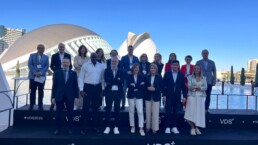
Valenciaport presents its Sandbox at PEIC’26 as a tool to bridge the gap between innovation and implementation
The opening session featured a discussion between Valenciaport President Mar Chao and Valenciaport Foundation Director Antonio Torregrosa. The…
Major investments strengthen Gothenburg RoRo Terminal
Expanded terminal areas, new rail connections and modernised quays are among the investments that have strengthened Gothenburg RoRo Terminal in…

ABP appoints key roles in the Humber
Associated British Ports has made two key appointments at its container terminals strengthening its unitised operations at the ports of Immingham…
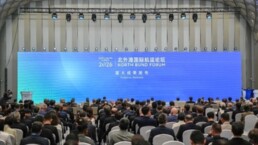
Xinhua Silk Road 2026 North Bund Forum unveils 20 shipping-related achievements
The 2026 North Bund Forum opened in Shanghai on October 20 with 20 key shipping-related achievements spanning international cooperation, green…
Ports encouraged to prepare now for advanced nuclear in maritime and clean energy
New joint Lloyd’s Register and British Ports Association paper sets out a practical readiness pathway for ports considering nuclear-powered vessels,…
Subscribe to our newsletter!
if you dont want to swim alone in the ocean of news, sign up for the newsletter, and you will receive daily all the important news of world shipping!
