
Political Tensions and Tariffs Pose Challenges for U.S. Dining Chains Abroad
In a rapidly evolving global market, major U.S. dining chains like Starbucks and McDonald’s are facing a new wave of challenges as anti-American sentiment emerges due to President Donald Trump’s tariff measures. This sentiment, fueled by political tensions and economic policies, poses a significant risk to these companies’ overseas operations, which constitute a substantial portion of their revenue.
Last year, both Starbucks and McDonald’s experienced notable sales declines following the Israel-Palestine conflict. Claims that these companies supported Israel led to widespread boycott movements by Palestinian supporters across the globe. This situation highlighted how international politics can directly impact consumer behavior and brand perception.
Now, with President Trump’s extensive reciprocal tariff measures in place, there is growing concern that American dining companies may once again face backlash from boycott movements. Peter Saleh, an analyst at BTIG, emphasized the potential financial impact, stating, “Dining companies such as McDonald’s, Starbucks, Domino’s, and Yum Brands (parent company of KFC and Pizza Hut) could suffer significant losses due to customer departures driven by anti-American sentiment.”
The global presence of these brands underscores the potential repercussions. Last year, McDonald’s generated nearly 60% of its sales from overseas markets. Similarly, Starbucks and Yum Brands each derived around 20% of their sales internationally (as of 2023), while Domino’s had an estimated 7%. The interconnectedness of global markets means that any decline in international sales could have far-reaching consequences for these companies.
Tesla has also faced backlash due to discontent with President Trump and Elon Musk’s political statements. In the first quarter of this year alone, Tesla’s global sales dropped by 13%, with a staggering 45.9% decline in Europe. Chris Versace, Chief Investment Officer of Tematica Research, warned that similar situations could arise for other prominent American brands: “Overseas boycott movements have been triggered by CEO Musk’s political statements and interventions.”
As these companies prepare to announce their earnings in the coming weeks, Saleh noted that it will be crucial to confirm whether the growing discontent with American brands is reflected in their financial performance. Additionally, there are concerns about potential obstacles in overseas business expansion due to retaliatory measures against Trump’s tariffs. Some countries may reject or delay business approvals for American brands as a form of retaliation.
This poses a significant challenge for American dining companies seeking growth opportunities abroad amid stagnant domestic consumer demand. For instance, McDonald’s aims to increase its global store count to over 50 thousand by 2027 while Starbucks plans to secure 9 thousand stores in China this year. Taco Bell has also identified overseas business as a “next-generation growth engine,” with plans to expand its international presence significantly by 2030.
The broader economic implications are equally concerning. Goldman Sachs estimates that boycotts against American brands overseas could reduce the U.S. GDP by 0.1% to 0.3% this year—equivalent to an economic loss ranging from $28 billion to $83 billion.
Source : Businesskorea



Related News.

ISLAND OIL: Unveiling of the Sculpture “Cyprus’s Journey Through the Ages” in Protaras – A Tribute and Landmark to Cyprus’s Historical Memory and Cultural Heritage
In a modest ceremony marked by a moving atmosphere, the sculpture “Cyprus’s Journey Through the Ages”, created by acclaimed Cypriot sculptor…
World Maritime Day 2026 from Policy to Practice – powering Maritime Excellence
Global regulations will deliver safer, more resilient shipping when they are implemented worldwide. The international maritime community marks…

Diana Shipping announces Time Charter Contract for m/v DSI Polaris with Dai An Ocean Shipping
Diana Shipping , a global shipping company specializing in the ownership and bareboat charter-in of dry bulk vessels, announced that, through a…

Chief Economists Expect Global Economy to Stabilize, but Fiscal Constraints, Rising Living Costs and AI Investment Uncertainty Threaten Growth
The global economy is stabilizing, but the fiscal support that cushioned successive shocks since 2020 is unlikely to play the same role in the year…
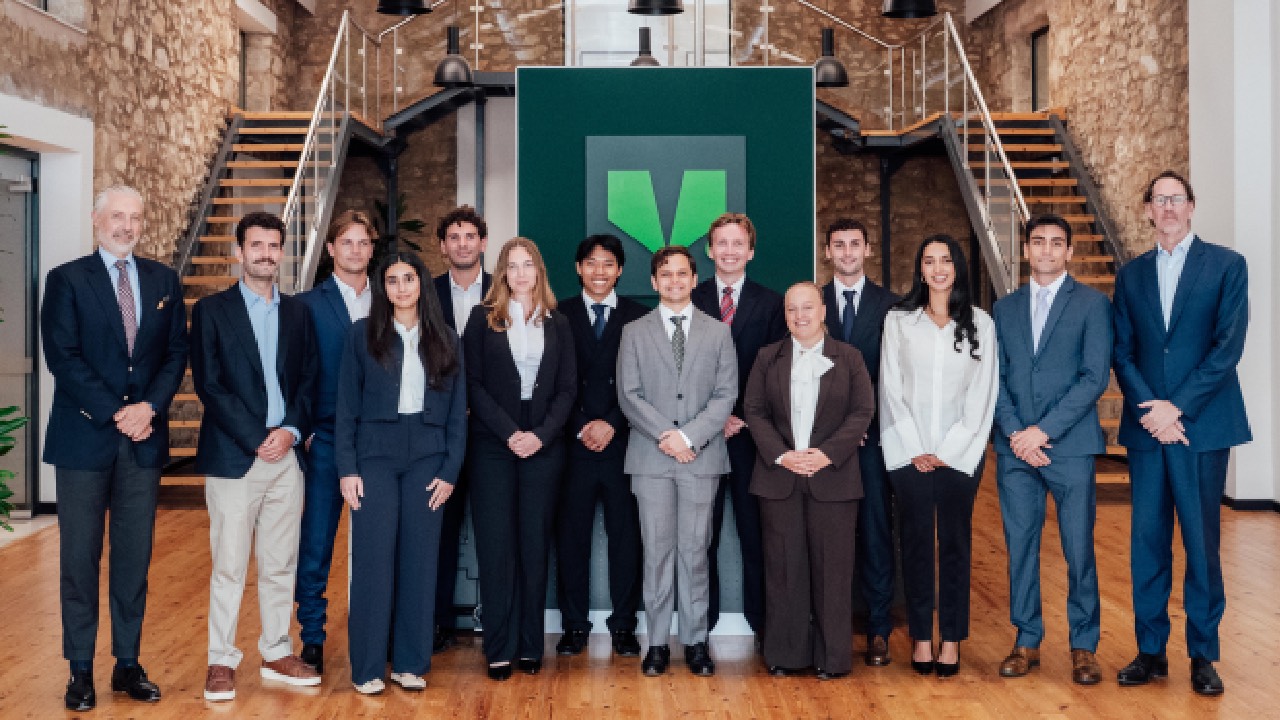
V. welcomes its new graduate cohort as programme expands across the group
Twelve graduates from nine nationalities join 11th year of V.’s expanded international management programme. V., the global ship manager and marine…

From Policy to Practice: Why Seafarers Are the Key to Maritime Excellence
The shipping industry is no stranger to regulation. Seafarers and ship operators work within a vast framework of international conventions, national…

Intermodal Report – Week 38 2026
Please find below the Intermodal market report for week 38 2026. Intermodal Report Week 38 2026 Market Insight By Nikos Tagoulis, Head of…

Allied – Weekly Market Review – Week 38
Please find below the Allied Weekly Report for Week 38 | 2026 ALLIED - Weekly Market Report- Week 38

Record year on the Northeast Passage but Arctic shipping remains very limited
In 2025, a record 103 transit voyages were made via the Northeast Passage. However, this is still equivalent to only around a day and a half of…

[xclusiv] S&P Report 21th September 2026
Please find below the [xclusiv] latest Weekly S&P Report [xclusiv] 2026_09_21 Market Commentary: VLCCs: Freight Boom Reprices the Fleet The VLCC…
Subscribe to our newsletter!
if you dont want to swim alone in the ocean of news, sign up for the newsletter, and you will receive daily all the important news of world shipping!
