UN Shipping Body must agree ambitious new action to cut climate-heating shipping emissions
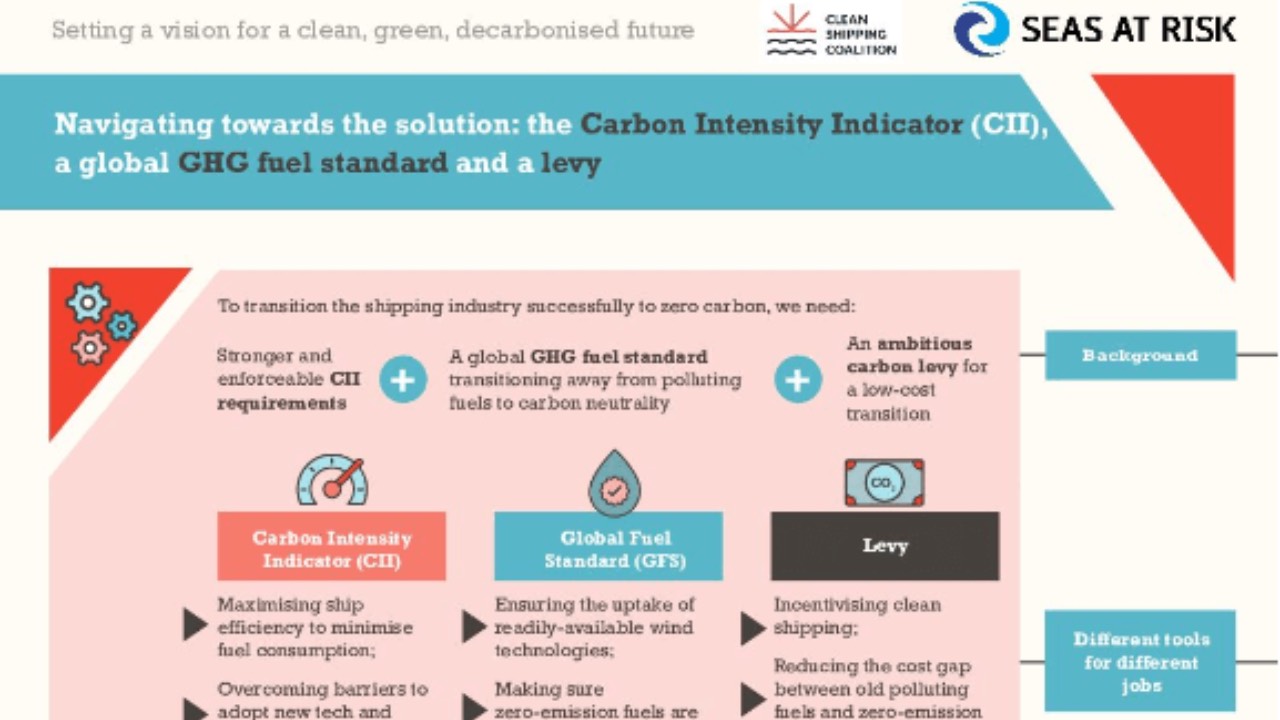

As this week’s crucial International Maritime Organization meeting on the reduction of climate heating emissions from the shipping sector (Intersessional Working Group on Reduction of Greenhouse Gas Emissions from Ships, ISWG-GHG 18) begins, the Clean Shipping Coalition called for the UN shipping body to agree on:
- Global Fuel/Energy Standards: Clear, enforceable fuel/energy standards will catalyse the transition to clean energy. By incentivizing early investment in wind power and zero-GHG fuels, these standards will reduce emissions and spur the creation of green jobs and resilient economies worldwide.
- Equitable Implementation of a Pollution Fee: Holding polluters accountable via a greenhouse gas emission levy would provide a clear market signal to drive emission reductions and ensure a just and equitable transition to clean shipping. The resulting revenue can be used to support vulnerable nations and ensure all can play a part in the energy transition.
“IMO member states meeting to discuss the shipping sector’s contribution to the climate crisis must agree an ambitious set of new climate measures, including a global zero- and near-zero GHG fuel standard and a levy on ship fuel to drive emission reductions and ensure a just climate transition for international shipping”, said Delaine McCullough, Ocean Conservancy’s Shipping Emissions Policy Manager and President of the Clean Shipping Coalition. “But this will only tackle half of shipping’s climate problem. To keep the cost of the shipping energy transition down and ensure that emission cuts happen quickly enough to meet the IMO’s 2030 and 2040 climate goals, these measures must be aligned with an ambitious, transparent and enforceable energy efficiency measure. To build a more ocean-friendly shipping industry, member states must ensure that both the fuel standard and levy align with the concurrent revision of the IMO’s Carbon Intensity Indicator, a measure designed to force more efficient and less GHG-intensive shipping”.
“The International Maritime Organization’s (IMO) revision of its Carbon Intensity Indicator, a metric for measuring and regulating ships’ carbon emissions, provides an opportunity to slash the shipping industry’s outsized contribution to the climate crisis by putting in place ambitious regulation that will ensure that ships get from A to B more slowly and efficiently and is essential for meeting the IMO’s 2030 emission-reduction targets in the most cost effective way”, said McCullough. “During this week’s meeting, IMO Member States must ensure that the agreement on a global fuel standard and levy is aligned with a strong Carbon Intensity Indicator, ahead of April’s Intersessional Working Group on Air Pollution and Energy Efficiency, in order to set of transparent, ambitious and enforceable new requirements for the efficient operation of ships. This is how we build a more ocean-friendly industry.”
“2025 is a make-or-break year for shipping to clean up its act”, said Anaïs Rios, Shipping Policy Officer, Seas At Risk. “Current IMO talks revolve around the adoption of an ambitious levy, accelerating the shift to clean, zero-emission fuels and prioritising energy-efficient vessels. Striving for a high levy must unlock investments to uptake wind propulsion technology – harnessing the only true zero-emitting fuel that is readily available at the high seas: wind. It’s time for the shipping dinosaurs to leave the fossil fuel era behind and embrace real solutions for the well-being of the people and the planet.”
“Member states need to get their act together and decide once and for all what kind of fuels and energy they want to incentivise”, said Constance Dijkstra, IMO Policy Manager at Transport & Environment. “We are two months away from the April deadline, and there is still no agreement as to what a clean fuel is. Achieving shipping’s transition from fossil fuels must go through an immediate shift to energy efficiency and a gradual uptake of fuel from renewable energy, but early incentives for both are an absolute must if we want to get to near-zero by 2050.”



Related News.

ISLAND OIL: Unveiling of the Sculpture “Cyprus’s Journey Through the Ages” in Protaras – A Tribute and Landmark to Cyprus’s Historical Memory and Cultural Heritage
In a modest ceremony marked by a moving atmosphere, the sculpture “Cyprus’s Journey Through the Ages”, created by acclaimed Cypriot sculptor…
World Maritime Day 2026 from Policy to Practice – powering Maritime Excellence
Global regulations will deliver safer, more resilient shipping when they are implemented worldwide. The international maritime community marks…

Diana Shipping announces Time Charter Contract for m/v DSI Polaris with Dai An Ocean Shipping
Diana Shipping , a global shipping company specializing in the ownership and bareboat charter-in of dry bulk vessels, announced that, through a…

Chief Economists Expect Global Economy to Stabilize, but Fiscal Constraints, Rising Living Costs and AI Investment Uncertainty Threaten Growth
The global economy is stabilizing, but the fiscal support that cushioned successive shocks since 2020 is unlikely to play the same role in the year…

V. welcomes its new graduate cohort as programme expands across the group
Twelve graduates from nine nationalities join 11th year of V.’s expanded international management programme. V., the global ship manager and marine…

From Policy to Practice: Why Seafarers Are the Key to Maritime Excellence
The shipping industry is no stranger to regulation. Seafarers and ship operators work within a vast framework of international conventions, national…

Intermodal Report – Week 38 2026
Please find below the Intermodal market report for week 38 2026. Intermodal Report Week 38 2026 Market Insight By Nikos Tagoulis, Head of…

Allied – Weekly Market Review – Week 38
Please find below the Allied Weekly Report for Week 38 | 2026 ALLIED - Weekly Market Report- Week 38

Record year on the Northeast Passage but Arctic shipping remains very limited
In 2025, a record 103 transit voyages were made via the Northeast Passage. However, this is still equivalent to only around a day and a half of…

[xclusiv] S&P Report 21th September 2026
Please find below the [xclusiv] latest Weekly S&P Report [xclusiv] 2026_09_21 Market Commentary: VLCCs: Freight Boom Reprices the Fleet The VLCC…
Subscribe to our newsletter!
if you dont want to swim alone in the ocean of news, sign up for the newsletter, and you will receive daily all the important news of world shipping!
