Samsung Heavy Industries partners with Amogy for Eco-friendly Maritime Innovations
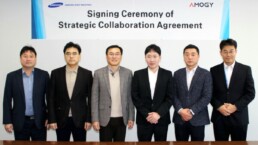

Strategic Cooperation Agreement aims to develop next-generation Ammonia Fuel Cells for Shipping
Samsung Heavy Industries has signed a strategic cooperation agreement (SCA) with U.S.-based tech venture Amogy to develop next-generation ammonia fuel cells, marking a pivotal move towards sustainable energy solutions in the shipping industry.
Samsung Heavy Industries, a global leader in shipbuilding, is embarking on this collaboration to spearhead the development of ammonia power packs optimized for large vessels. This initiative, announced on Feb. 7, is part of a broader strategy to secure a competitive edge in ammonia and eco-friendly ship propulsion technology. Amogy, known for its innovative ammonia cracking technology, will play a crucial role in this partnership. Their expertise in decomposing ammonia to produce hydrogen is vital for the development of ammonia power packs applicable to both land-based and marine generators.
The collaboration between these two industry leaders is set to focus on creating a comprehensive value chain solution, ranging from offshore ammonia production to its utilization. Samsung Heavy Industries is also developing an ammonia floating storage and regasification unit (FSRU), which will facilitate the supply of ammonia from offshore to onshore, further enhancing the infrastructure needed for this new fuel source.
Kim Kyung-hee, vice president of Samsung Heavy Industries, emphasized the strategic importance of this agreement, stating, “With this technological agreement, Samsung Heavy Industries will accelerate its efforts to strengthen eco-friendly competitiveness in the shipbuilding and marine sectors.” He further added, “We will work to advance the era of carbon-free maritime transport through collaboration from product development to demonstration and application.”
The significance of ammonia as a potential alternative fuel lies in its high hydrogen content and its ability to be stored and transported more easily than hydrogen gas. When produced from renewable resources, ammonia can offer a carbon-free energy source, making it an attractive option for reducing the environmental impact of the shipping industry, which is a notable contributor to global greenhouse gas emissions.
This partnership is not only a testament to the ongoing technological advancements in marine propulsion but also a reflection of the industry’s shift towards innovation and sustainability. As the maritime sector moves towards the post-LNG era, the development of ammonia fuel cells represents a critical step in the transition to zero-emission solutions.
Source : Businesskorea



Related News.

Navigating the Multi-Orbit Era: In Conversation with Intellian’s Jon Harrison at SMM 2026
At SMM 2026 in Hamburg, the rapid evolution of maritime satellite communications took centre stage. Across the exhibition halls, discussions among…

Cyprus ports need joint energy and investment strategy, shipping agents chief says
Cyprus needs a coordinated strategy for shipping, energy and environmental protection to support port investment and modernisation, Cyprus shipping…

MASO Public Affairs introduces MASO Regulatory Intelligence
A new subscription service helping businesses understand what is changing and what it means for them MASO Public Affairs introduces MASO Regulatory…

Anglo-Eastern helps turn CMBTECH’s ammonia ambition into an operational reality
From early feasibility study and risk-based design to newbuilding supervision, crew readiness and technical management, Anglo-Eastern drew on its…

Escalation of attacks threatens to derail recovery in Middle East oil exports
World oil demand is forecast to fall by 2.5 mb/d y-o-y in 4Q26 and 2.6 mb/d on average in 2026. As the Iran war manifests itself through restricted…

New study finds shipping pays twice its share to EU ETS earmarked revenues should triple to help build market for sustainable fuels and technologies
Shipping is responsible for around 10% of EU ETS emissions but pays almost 20% of the ETS bill. Unlike other sectors, it has never received free…

MSARC strengthens maritime mass rescue readiness through training and national live exercise off Dakar, Senegal
Joint MSARC–FHAS programme combines three days of SAR training with a national multi-agency live exercise The Maritime Search and Rescue Council ,…

Sogese report deliveries are still being delayed as container freight rates fluctuate
FOR IMPORTERS Spot rates into the Mediterranean are back at January levels, Far East to Europe reliability sits at pandemic lows, and nearly…

Glencore begins trading on Australian Securities Exchange
Glencore has begun trading on the Australian Securities Exchange under the ASX code GLC. Gary Nagle, Glencore’s CEO, said it was an exciting day for…

BIMCO Shipping Number of the Week
Suez Canal container ship transits exceed 50% of pre-disruption levels "During the first two weeks of October, weekly container ship capacity…
Subscribe to our newsletter!
if you dont want to swim alone in the ocean of news, sign up for the newsletter, and you will receive daily all the important news of world shipping!
