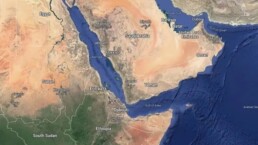

The Houthis have turned extortion into a structured business, offering shipowners a ‘customer-relations’ email address to negotiate payments for safe passage
The Red Sea, a vital artery for global trade, has become a battleground for modern piracy that blends technology, geopolitics, and commerce. Yemen’s Houthi group has adopted a novel approach to leverage their strategic position, demanding payments from shipping companies for safe passage. This scheme, orchestrated through emails and black-market payment channels, is reshaping maritime trade and posing significant global challenges, as reported by The Economist.
In a blend of militancy and bureaucracy, the Houthis have institutionalised their extortion practices by providing shipowners with a “customer-relations” email address to negotiate payments. For those navigating the perilous waters of the Red Sea, the options are grim: pay, risk attacks, or take a longer, costlier route.
Armed with advanced missiles and drones, the Houthis can target vessels with precision, creating an air of inevitability around these payments. The Economist estimates that the group is collecting up to $2 billion annually through this extortion model.
While many Western companies resist paying these fees, opting to reroute vessels around Africa, the detours come with steep costs. Longer journeys increase transit times and fuel consumption, pushing up expenses for businesses and consumers alike. In contrast, countries like China have taken a pragmatic stance, reportedly increasing their share of Red Sea shipping by agreeing to pay the Houthis for safe passage.
Impact on global trade
The repercussions of this maritime extortion are immense. Cargo volumes in the Red Sea have plummeted, with some estimates pointing to a 70 per cent decline. Western shipping companies’ reluctance to comply has led to a surge in navigation through the Cape of Good Hope, adding time and costs to shipments. This shift has disrupted supply chains and created opportunities for operators under less restrictive flags to dominate Red Sea traffic, the report noted.
The indirect costs of the Houthis’ activities are even starker. The report estimates that the additional expenses from rerouting, delays, and fuel consumption amount to $175 billion annually, a financial burden ultimately passed on to end consumers.
What is the Red Sea crisis?
Since November 2023, Yemen’s Houthi militias have carried out multiple assaults on cargo ships in the Red Sea. This vital maritime corridor, the fastest link between Asia and Europe via the Suez Canal, has become increasingly perilous. Many vessels now opt for the longer route around the Cape of Good Hope, which increases shipping costs and delivery times.
This crisis comes amid lingering economic challenges, including the aftermath of the pandemic, the ongoing Russia-Ukraine conflict, and a global slowdown.
The Red Sea, which handles approximately 30 per cent of global container traffic, is facing an unprecedented disruption. By March 2024, traffic through the Suez Canal and the Bab El-Mandeb Strait had dropped by 50 per cent, while navigation via the Cape of Good Hope had doubled.
Extortion as a self-sustaining business model
The Houthis’ extortion model is particularly troubling due to its sustainability. The group’s ability to generate revenue through maritime operations funds their military capabilities and broader influence in Yemen and the region.
While their actions have drawn widespread criticism, the root causes cannot be ignored. Yemen’s ongoing conflict — driven by poverty, geopolitical rivalries, and years of foreign intervention — has provided fertile ground for such activities. The lack of a coordinated global response has exacerbated the crisis.
The Houthis’ success in monetising maritime insecurity sets a dangerous precedent. By exploiting vulnerabilities in global trade, they have created a model that could inspire other militant groups. This alarming trend could extend beyond shipping to other industries like air travel, especially as geopolitical risks continue to rise, the report warned.
Source: Business Standard



Related News.
India joins ISF Verify, bringing trusted digital certification within reach of 30 per cent of the global seafarer workforce
Agreement with the world’s second-largest seafarer supply country marks a major milestone for global digital certification. The Directorate General…

OpenGate Capital to acquire Maersk Training, the Global Safety Training and Gas-Safety Services Business of Maersk
OpenGate Capital, a global private equity firm, announced today that it has signed a definitive agreement to acquire Maersk Training and its…

Can AI Save the Planet? Planet Classroom examines AI’s Climate Impact, Energy Demands and Clean Energy Solutions
C. M. (Cathy) Rubin and The Nest Campus CEO Peter Gilmer explore AI's growing environmental footprint, billions in climate investment, and the…

Smart Port Market Size to be valued at USD 23.10 Billion by 2034; Increasing Volume of International Maritime Trade to Boost Market Development: Fortune Business Insights™
The global smart port market size was valued at USD 3.4 billion in 2025 and is expected to be worth USD 4.2 billion in 2026. The market is projected…
Closer cooperation with India can strengthen Danish shipping
Minister of Business and Competitiveness Martin Lidegaard is leading a Danish business delegation to India. Green shipping is among the…

IRClass Academy and PIP Makassar strengthen Executive Maritime Capability through IMPDP 2026
Indian Register of Shipping , through its professional training and development arm IRClass Academy, has further strengthened its engagement in…

MOL, Sharp, IOM Implement Solar Panel Donation Project
Move Will Enhance Living Conditions in Power-short Areas of Kenya Mitsui O.S.K. Lines, announced the donation of solar power panels to communities in…

Intermodal Report Week 44 2026
Pls find below the Intermodal Report - Week 44 2026 Intermodal Report Week 44 2026

Allied Weekly Market Review Week 44
Pls find below the Allied - Weekly Market Review - Week 44 ALLIED - Weekly Market Report- Week 44

Nor-Shipping partners with Marketing in Maritime to deliver Marketing & Communications day and awards in 2027
Nor-Shipping is partnering with Marketing in Maritime to deliver a dedicated Marketing & Communications Day and awards initiative at the 2027…
Subscribe to our newsletter!
if you dont want to swim alone in the ocean of news, sign up for the newsletter, and you will receive daily all the important news of world shipping!
