Zodiac adventures in Antarctica
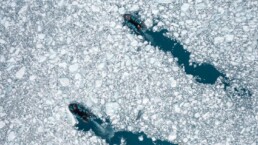

Sail to the White Continent with Swan Hellenic; your adventures will often involve a Zodiac boat. You’ll travel ashore on one each time you set off on exciting expeditions, and you’ll get to explore the Antarctic seas on special Zodiac cruises too. Read on to find out more about these boats and what to expect.
Understanding Zodiac Boats: Essential Vessels for Antarctic Expeditions
Zodiacs are large, heavy-duty inflatable boats. These tough rubber crafts are well suited for polar regions, and can easily push through icy Antarctic waters. Zodiacs have thick, flat undersides, which mean their landings are safe and stable, and they’re known for their exceptional maneuverability. Passengers sit on the edges of the boat, and you’ll soon see there’s nothing quite like racing past towering glaciers and creaking icebergs on a Zodiac!
Why Zodiacs are Ideal for Antarctic Cruises
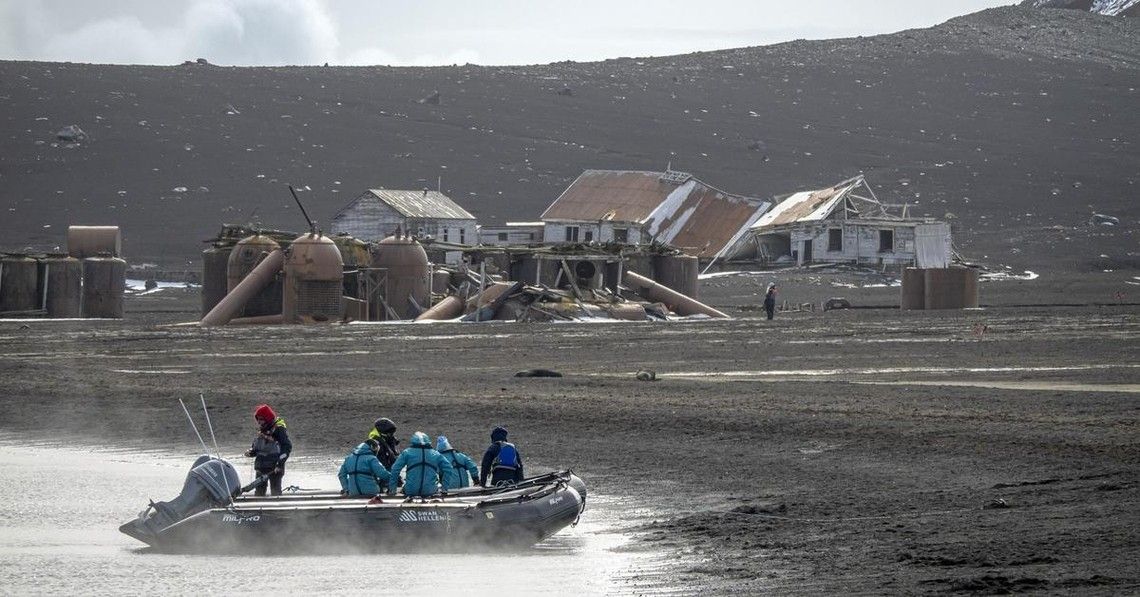
A Zodiac will transport you ashore for landings, where you’ll get to explore Antarctica on foot. You’ll definitely need to wear waterproof boots and trousers for this, as these are what’s known as “wet landings” – the boat will push up onto the beach, and you’ll step into the water and walk up onto the shore.
What to Expect on a Zodiac Expedition in Antarctica
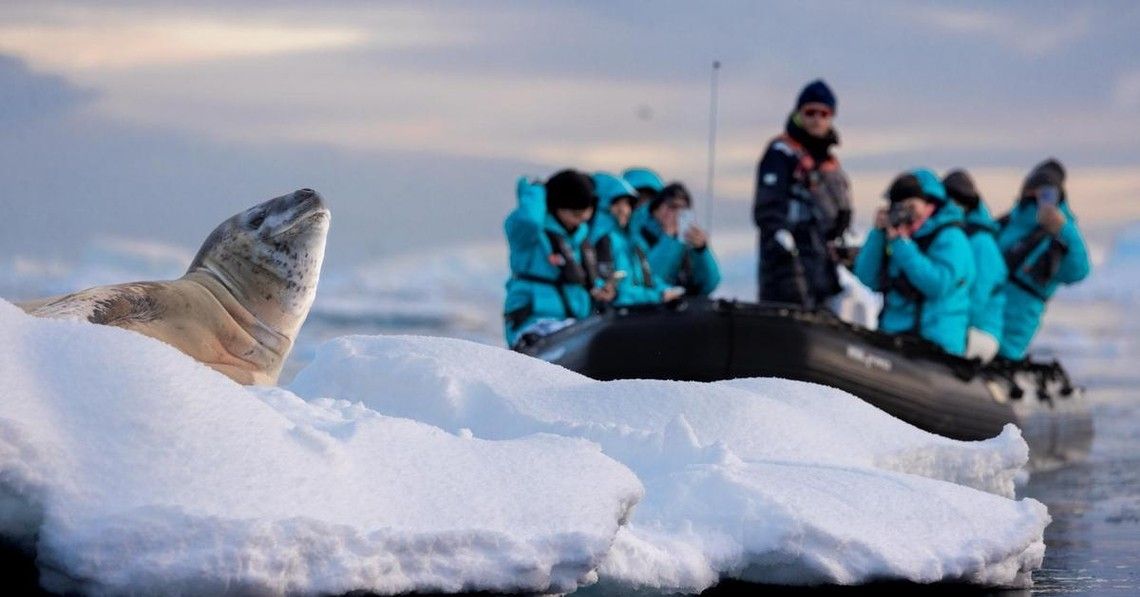
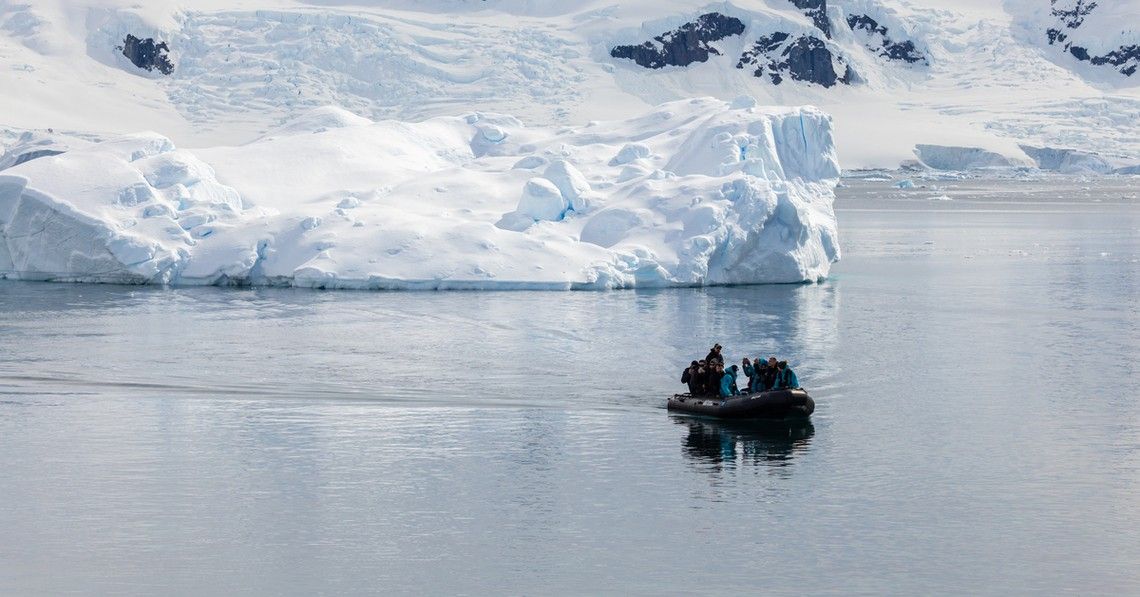
As well as land expeditions, you’ll also have the chance to embark on exhilarating Zodiac adventures. You’ll explore the Antarctic’s frigid seas, sailing close to breath-taking ice formations and icebergs, and visiting rarely seen bays and remote coves. You’ll get to watch out for wildlife too, such as penguins, seals, and whales. Plus, there’ll be a knowledgeable guide on each expedition, who’ll be happy to answer questions and share interesting insights.
What to wear on a Zodiac Expedition in Antarctica
It’s important to stay warm and dry when you’re exploring in Antarctica. It’s extremely cold, and traveling on a Zodiac can be pretty windy, which can make you feel even colder! Plus, the Antarctic weather conditions might be wet, and you could get splashed by icy waves. For Zodiac cruises, you need to wear multiple layers to keep you warm, as you’ll be sat still for a while and your body won’t produce any extra heat. And you’ll need a waterproof outer layer (waterproof shoes, pants, parka, and gloves) to keep you dry. Try to leave no gaps for water or wind to sneak their way in, and wear your waterproof pants over your boots, pull your hood over your head, and tuck your gloves into your coat!
Safety Measures for Zodiac Expeditions in Antarctica
Zodiacs are extremely safe and have been designed so they’re almost impossible to flip or sink. Our Antarctic expedition guides are highly-trained, so they are experts at handling these boats, and always travel at a safe speeds. All passengers wear life jackets when they’re on board Zodiacs, and in the unlikely event that the guide driving the boat falls overboard, the engine will automatically stop.
How easy is it to board a Zodiac?
Embarking is usually easy because your expedition team use a set of wooden steps to help you board. Plus, there will be people to support you as you step onto the boat. When you disembark, you’ll usually just slide your legs over the edge of the Zodiac and walk to shore. Things are slightly trickier in bad weather, but there will always be people to help you, and if the weather’s too rough, the trip will be postponed or cancelled.
Do I have to use Zodiacs?
No, but this will mean you’ll have to stay on board your ship for the whole cruise. Zodiacs are used for all land excursions, so if you don’t want to use them, you won’t be able to explore. However, it’s your trip and what you choose to do is totally up to you. If you choose to give Zodiacs a miss, we’re sure you’ll still have a wonderful time sailing with us!
Frequently Asked Questions
What is a Zodiac boat, and why is it used in Antarctica?
A Zodiac is a lightweight, inflatable boat designed for navigating icy waters and rugged coastlines. Its durability and maneuverability make it ideal for exploring the remote and pristine regions of Antarctica.
Are Zodiac expeditions safe for all travelers?
Yes, Zodiac expeditions are designed with safety as a priority. Passengers are equipped with life jackets, and expeditions are led by trained guides who ensure the safety of all participants.
What should I wear during a Zodiac expedition?
Dress in warm, waterproof layers, including insulated gloves, hats, and sturdy, non-slip boots. Protective clothing is essential to stay dry and comfortable in the Antarctic conditions.
What wildlife can I see during a Zodiac expedition?
Zodiac expeditions offer close encounters with Antarctic wildlife such as penguins, seals, and various seabirds. Depending on the season, you may also spot whales in the surrounding waters.
How long do Zodiac expeditions typically last?
Zodiac excursions generally last between 1 to 3 hours, depending on the weather, itinerary, and points of interest. Guides aim to provide an enriching experience while ensuring passenger comfort.
Source: Swan Hellenic



Related News.

Navigating the Multi-Orbit Era: In Conversation with Intellian’s Jon Harrison at SMM 2026
At SMM 2026 in Hamburg, the rapid evolution of maritime satellite communications took centre stage. Across the exhibition halls, discussions among…

Cyprus ports need joint energy and investment strategy, shipping agents chief says
Cyprus needs a coordinated strategy for shipping, energy and environmental protection to support port investment and modernisation, Cyprus shipping…

MASO Public Affairs introduces MASO Regulatory Intelligence
A new subscription service helping businesses understand what is changing and what it means for them MASO Public Affairs introduces MASO Regulatory…

Anglo-Eastern helps turn CMBTECH’s ammonia ambition into an operational reality
From early feasibility study and risk-based design to newbuilding supervision, crew readiness and technical management, Anglo-Eastern drew on its…

Escalation of attacks threatens to derail recovery in Middle East oil exports
World oil demand is forecast to fall by 2.5 mb/d y-o-y in 4Q26 and 2.6 mb/d on average in 2026. As the Iran war manifests itself through restricted…

New study finds shipping pays twice its share to EU ETS earmarked revenues should triple to help build market for sustainable fuels and technologies
Shipping is responsible for around 10% of EU ETS emissions but pays almost 20% of the ETS bill. Unlike other sectors, it has never received free…

MSARC strengthens maritime mass rescue readiness through training and national live exercise off Dakar, Senegal
Joint MSARC–FHAS programme combines three days of SAR training with a national multi-agency live exercise The Maritime Search and Rescue Council ,…

Sogese report deliveries are still being delayed as container freight rates fluctuate
FOR IMPORTERS Spot rates into the Mediterranean are back at January levels, Far East to Europe reliability sits at pandemic lows, and nearly…

Glencore begins trading on Australian Securities Exchange
Glencore has begun trading on the Australian Securities Exchange under the ASX code GLC. Gary Nagle, Glencore’s CEO, said it was an exciting day for…

BIMCO Shipping Number of the Week
Suez Canal container ship transits exceed 50% of pre-disruption levels "During the first two weeks of October, weekly container ship capacity…
Subscribe to our newsletter!
if you dont want to swim alone in the ocean of news, sign up for the newsletter, and you will receive daily all the important news of world shipping!
