S. Korean shipbuilders to benefit as steam turbine LNG carrier phase-out speeds up
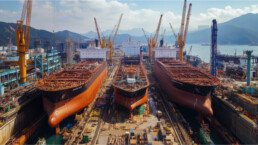

The retirement of aging steam turbine liquefied natural gas (LNG) carriers is accelerating as LNG freight rates continue to decline. This year alone, 12 steam turbine LNG carriers have been scrapped and sold for dismantling after failing to secure new charter agreements. Industry experts anticipate that dozens more of these vessels may enter the market by early next year. As the transition to next-generation LNG carriers gathers pace, South Korean shipbuilders, renowned for their expertise in LNG carrier construction, are poised to reinforce their global leadership.
According to industry sources, SK Shipping recently sold four LNG carriers, each 24 to 25 years old, for $13.8 million (approximately 19.3 billion won) per vessel. The ships were sold at scrap value after failing to attract new buyers. While the specific shipbreaking facility responsible for dismantling the vessels was not disclosed, the ships sold include the SK Summit, SK Supreme, SK Splendor, and SK Stellar. These vessels, which had been under long-term charter contracts with Korea Gas Corporation—a state-run LNG importer—were sold as-is while anchored in Singapore, ahead of their contracts’ scheduled expiration at year-end.
Steam turbine LNG carriers, powered by marine diesel engines running on bunker C oil, represent the first generation of LNG carriers. They are smaller and less fuel-efficient compared to modern LNG carriers, leaving them increasingly marginalized in the charter market. The steep decline in LNG freight rates has further expedited their phase-out. Rates have dropped sharply due to a surge in LNG carrier orders prompted by the Russia-Ukraine war and a recent mild winter, which reduced global demand.
DAOL Investment & Securities Research Center reported that short-haul LNG freight rates on transatlantic routes fell by 40% last week to $15,000 per day, while long-haul rates dropped by 30% to $21,000 per day. Daily rates for steam turbine LNG carriers plummeted to just $7,000—well below their operating costs.
UK-based maritime data provider Clarksons Research estimates there are approximately 230 steam turbine LNG carriers still in operation worldwide, comprising about 30% of the global LNG fleet. Choi Kwang-sik, an analyst at DAOL Investment & Securities, projects that over 30 of these vessels could be put up for sale by the end of the year. He noted that the expiration of long-term charter agreements is likely to push more carriers into the shipbreaking market, with two to three vessels expected to be dismantled each month in 2024.
In South Korea, H-LINE Shipping and Hyundai LNG Shipping operate six and nine steam turbine LNG carriers, respectively, while Pan Ocean has reportedly divested a number of low-margin LNG carriers. HMM, which exited the LNG sector in 2014 by selling its LNG division, no longer owns any LNG vessels.
A shipping industry official commented, “The phase-out of steam turbine LNG carriers reflects a broader global trend. These older vessels are losing their competitive edge, and amid declining freight rates, they are naturally being replaced by more efficient, modern carriers.”
Source: The Chosun Daily



Related News.

Navigating the Multi-Orbit Era: In Conversation with Intellian’s Jon Harrison at SMM 2026
At SMM 2026 in Hamburg, the rapid evolution of maritime satellite communications took centre stage. Across the exhibition halls, discussions among…

Cyprus ports need joint energy and investment strategy, shipping agents chief says
Cyprus needs a coordinated strategy for shipping, energy and environmental protection to support port investment and modernisation, Cyprus shipping…

MASO Public Affairs introduces MASO Regulatory Intelligence
A new subscription service helping businesses understand what is changing and what it means for them MASO Public Affairs introduces MASO Regulatory…

Anglo-Eastern helps turn CMBTECH’s ammonia ambition into an operational reality
From early feasibility study and risk-based design to newbuilding supervision, crew readiness and technical management, Anglo-Eastern drew on its…

Escalation of attacks threatens to derail recovery in Middle East oil exports
World oil demand is forecast to fall by 2.5 mb/d y-o-y in 4Q26 and 2.6 mb/d on average in 2026. As the Iran war manifests itself through restricted…

New study finds shipping pays twice its share to EU ETS earmarked revenues should triple to help build market for sustainable fuels and technologies
Shipping is responsible for around 10% of EU ETS emissions but pays almost 20% of the ETS bill. Unlike other sectors, it has never received free…

MSARC strengthens maritime mass rescue readiness through training and national live exercise off Dakar, Senegal
Joint MSARC–FHAS programme combines three days of SAR training with a national multi-agency live exercise The Maritime Search and Rescue Council ,…

Sogese report deliveries are still being delayed as container freight rates fluctuate
FOR IMPORTERS Spot rates into the Mediterranean are back at January levels, Far East to Europe reliability sits at pandemic lows, and nearly…

Glencore begins trading on Australian Securities Exchange
Glencore has begun trading on the Australian Securities Exchange under the ASX code GLC. Gary Nagle, Glencore’s CEO, said it was an exciting day for…

BIMCO Shipping Number of the Week
Suez Canal container ship transits exceed 50% of pre-disruption levels "During the first two weeks of October, weekly container ship capacity…
Subscribe to our newsletter!
if you dont want to swim alone in the ocean of news, sign up for the newsletter, and you will receive daily all the important news of world shipping!
