Mood in the wind sector is brightening up further – industry representatives are more optimistic about the development of global business conditions for wind energy

December 10, 2024
Credit: Hamburg Messe und Congress 
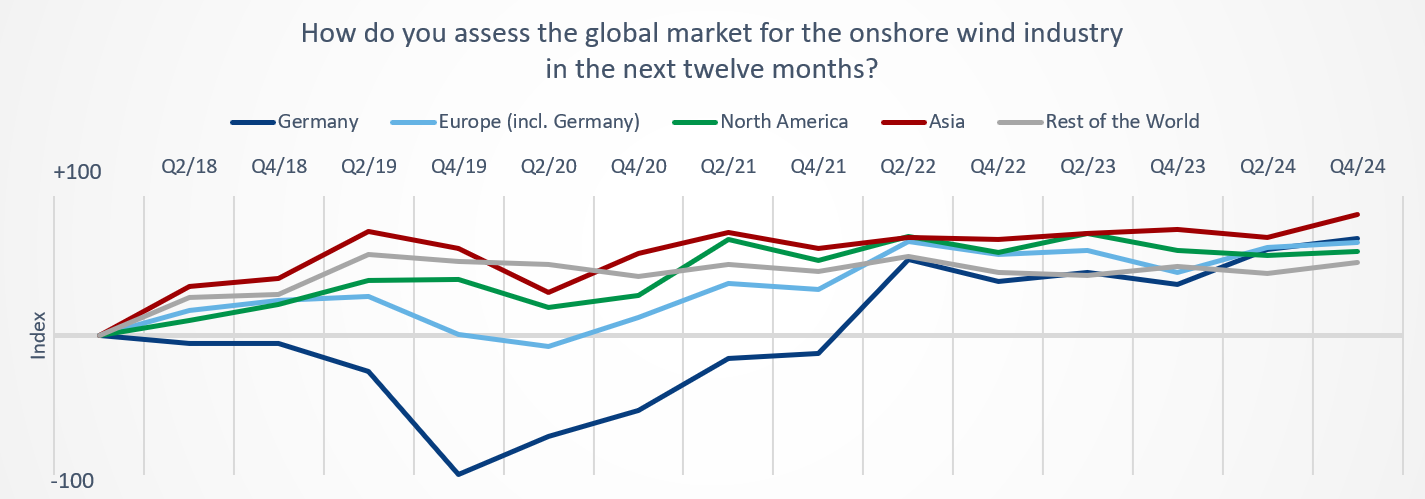
The 14th edition of the WindEnergy trend:index (WEtix) reveals that the mood in the wind energy market is brightening further in the longer term in both, the onshore and offshore segments, a fact that marks a return to the optimistic trends seen before last year. Compiled at six-month intervals since 2018, and issued by the global flagship fair WindEnergy Hamburg in collaboration with wind:research, a leading market research institute for wind energy, the survey also shows that the economic environment in the Asian market is now seen in a markedly better light than in the remaining regions of the world, with Asia’s onshore segment receiving the best marks ever. Permitting and regulatory matters as well as grid expansion, and in particular, the costs in the offshore segment continue to be major challenges for the industry. Furthermore, turbines are getting larger and larger, and they are doing so faster than previously anticipated.

Market participants are currently viewing the development of both the onshore and offshore segments in Germany with mixed feelings. While respondents are assessing the prospects for the German onshore wind energy market in the next 12 months better than ever in this survey, the mood for the offshore segment has darkened for the same period, while still clearly remaining in the positive range. As for the longer term, the industry is more optimistic about the developments in both segments now than last spring. The picture looks quite different for the European market, where the mood is cautiously positive for the onshore segment while trending slightly downwards for offshore in the shorter as well as the longer term.

Figure 1: Assessment of the global market for onshore wind energy within the next twelve months
© Hamburg Messe und Congress

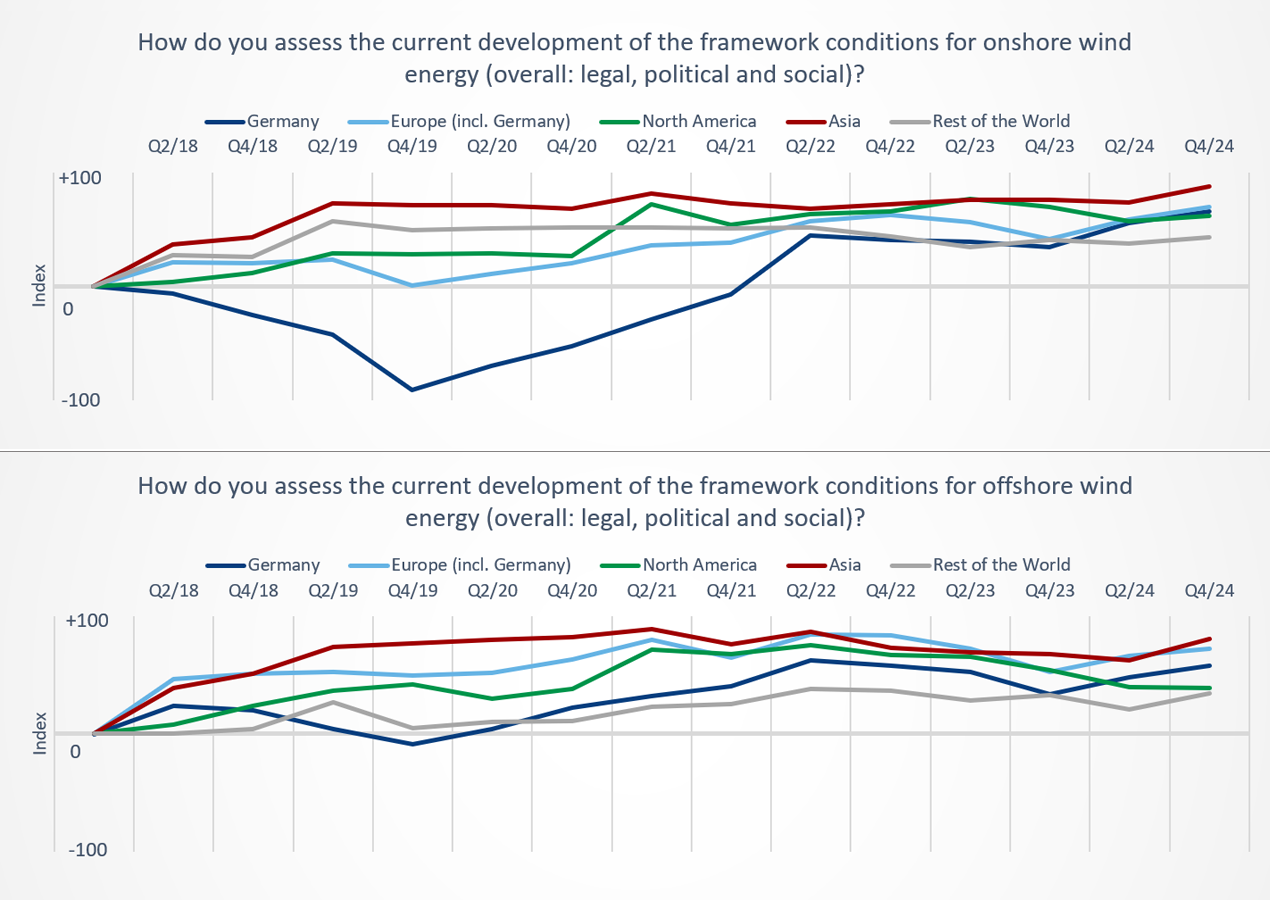
A development echoed in the remaining world regions. At the same time, there are growing discrepancies between the assessments of the legal, political and social business environment on the one hand, and of the individual markets – especially so in the offshore segment – on the other.
Despite mostly positive opinions voiced about business conditions, the current survey indicates a slightly negative trend in assessments of the global offshore wind industry markets. All regions received poorer marks for the next twelve-month period, if still at a high positive level. With the exception of the European market, assessments by respondents regarding the offshore segment have taken a turn in the positive direction for the longer-term prospects. Asia is far ahead of the remaining world regions, once more increasing its distance from the European market significantly.

Figure 2: Development of the business environment for onshore and offshore wind energy
© Hamburg Messe und Congress

Persistent obstacles to the energy transition: Grid expansion and permitting procedures

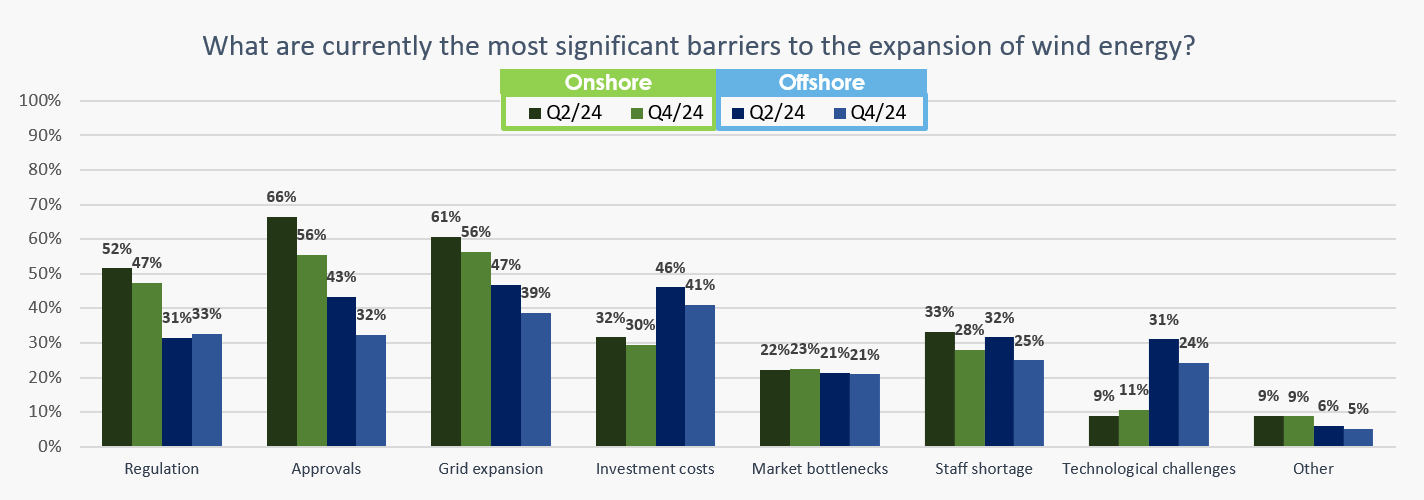
Permitting, pending grid upgrades and regulatory hurdles continue to be the biggest obstacles to further progress in onshore wind energy. Yet, assessments – including those relating to investment costs, personnel shortages and other factors – have eased slightly or even markedly since the previous issue of the WEtix report; in other words, the hurdles are being perceived as being less problematic.

Figure 3: Challenges for onshore and offshore expansion
© Hamburg Messe und Congress

Similarly, grid infrastructure and permitting, along with investment costs, are considered as the greatest obstacles getting in the way of further wind energy developments in the offshore segment. What is more, the technical challenges are much bigger offshore than onshore. Nevertheless, in this portion of the survey curves are pointing downwards in most fields, indicating a positive development.

Turbine power by 2030: offshore keeps growing, onshore stagnates

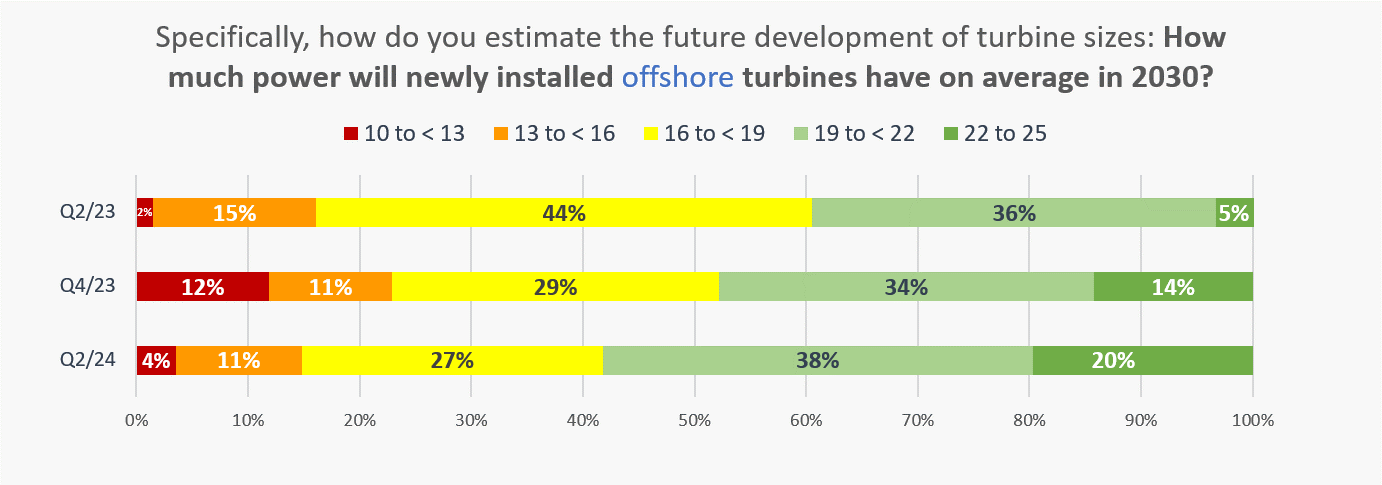
Answers from industry stakeholders to the questions addressing the average expected output power of newly installed turbines by 2030 are quite unanimous: Turbine sizes in the offshore segment will continue to grow to reach a new record 19.37 MW on average. Meanwhile, forecasts for the size of onshore turbines average at around 8.55 MW as before. In general, capacity expectations in this segment are significantly above current values, as the survey reveals: More than 45 per cent of respondents expect an average output per onshore turbine of at least 9 MW eventually.

Figure 4: Development of turbine output in the offshore segment.
© Hamburg Messe und Congress

All the results of the survey are now available on the WindEnergy Hamburg website at https://www.windenergyhamburg.com/wetix.

Source: Hamburg Messe und Congress

Related News.

Subscribe to our newsletter!

if you dont want to swim alone in the ocean of news, sign up for the newsletter, and you will receive daily all the important news of world shipping!

* indicates required
Consent *
By submitting this form you agree to receive Email Marketing

Design & Development by P.KAN.DESIGNER

Design & Development by P.KAN.DESIGNER

Privacy Preference Center