

The shipping industry, responsible for transporting approximately 90% of the world’s goods, is a fundamental part of the global economy. Yet, it also contributes significantly to climate change and the transfer of invasive species. To address this during COP29, Jotun took part in a panel discussion titled “Navigating the Future: Bridging Shipping, Biodiversity, and Decarbonization.” The importance of hull performance and marine coatings in driving sustainable change within the shipping industry got its needed attention.
Dr. Christer Øpstad, Global R&D Director of Fouling Protection in Jotun was invited to participate in this important conversation due to its nearly a century of exploring and disrupting how vessels perform in water. This long-standing commitment has positioned the company at the forefront of efforts to reduce shipping’s carbon emissions and protecting biodiversity. During The United Nations Climate Change Conference, COP29, in Baku, Azerbaijan, Jotun and other participants got the opportunity to educate, spread awareness and inspire global, national and local communities, as well as organisations, the shipping industry and policy makers.
Linking biofouling, biodiversity, and emissions
“From our perspective, biodiversity and climate are directly interlinked through biofouling,” said Øpstad on stage in Baku.
Biofouling can result in the introduction of invasive species that threaten local ecosystems. According to recent studies, up to 70% of bioinvasions are connected to fouled ship hulls (https://www.ipbes.net/IASmediarelease). Invasive species, such as the Pacific Oyster, have already caused significant harm to local marine life, especially along the coast of Norway, where Øpstad grew up.
“When I grew up on the coast of Norway, we used to play in the shallows without worry, but today, children can no longer run into the water barefoot. They need to wear protective shoes because of razor-sharp mussels everywhere, a direct result of the Pacific Oyster’s invasion,” he said. This example underscores the need to address biofouling not just as an environmental issue, but as one that affects human lives and local communities.
In addition to posing a biosecurity risk, biofouling can also increase a ship’s carbon emissions. The International Maritime Organization (IMO) have reported that even small amounts of fouling can increase emissions by up to 19%.
“Considering that shipping accounts for about 3% of global emissions, this is a major concern. By keeping hulls clean, we can largely avoid these additional emissions and biosecurity risks,” Øpstad emphasized.
Creating awareness is key
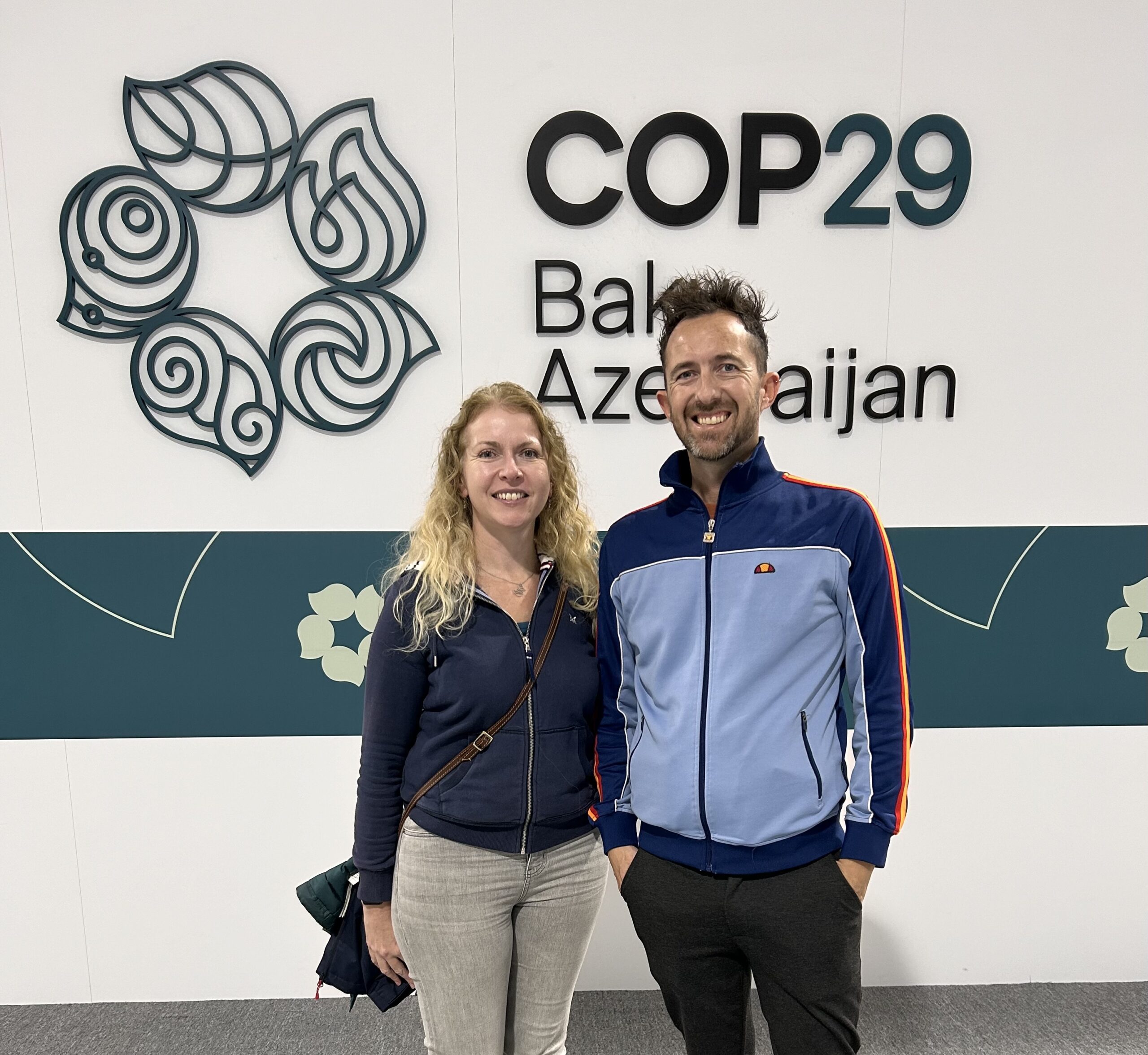
The panel discussion was held at the Ocean Pavilion in the Blue Zone at COP29. The panel was moderated by Simon Walmsley from UN Foundation, and besides Jotun it also included Anna Larsson from the World Shipping Council, Rakhi Kasat from The National Oceanic and Atmospheric Administration (NOAA) and Noelle Young from Island Innovation’s Caribbean Climate Justice Leaders Academy.
The mixture of organisations as well as different competences and perpectives in the panel, brought a wider understanding of both issues and solutions to the table. The importance of shipping, both economically and socially, was agreed on, and from that basis the conversation investigated the possibilities that lays both above and below the water surface.
“We can’t change shipping, but we can change the impact of what shipping does, both in terms of climate change and biodiversity,” Øpstad noted.
According to Øpstad, the key to this change lies in collaboration across the industry, as well as raising awareness about the consequences of biofouling. According to a recent study conducted by Jotun, two-thirds of industry stakeholders lack awareness about the real-world impacts of biofouling.
“It just shows that in addition to developing technologies and solutions, we also need to work together in raising the awareness, ensuring stakeholders understand the consequences and how they fit into the bigger picture.”
Global and local approach needed
The shipping industry operates on various scales – from global and regional shipping routes to local operations. And the local perspective is a bit underspoken in terms of how the shipping industry is spreading invasive species, according to Øpstad.
“The example with the Pacific Oyster, and also the spread of Sea Vomit in Norway, has had a dramatic impact on local communities. The most significant vector for the spread of invasive species is local operations, but regulations can’t fix this problem because it’s already in our local waters. We need to work with local players as local commercial and private operators are key to preventing further spread. Ensuring that vessels are kept clean and that operators take responsibility for their role in preventing biofouling is critical, and we need to ensure that operators are aware of the role they play and that they can take steps to mitigate further spread”.
The challenges posed by biofouling, emissions, and biodiversity are complex and require multifaceted solutions. Øpstad highlights that no single technology or solution will suffice.
“We cannot solve this with one technology or one single solution. We need to work across a variety of different technologies and options,” he explained on stage.
Collaboration across sectors – academia and industry
The need for cross-sector collaboration was a recurring theme at COP29. Øpstad noted that bringing together industry players, policymakers, and academics is essential for driving real change. “Innovation and technology development in the industry are focused on end-user perspectives, but academia often takes a broader, more fundamental approach,” he says.
By combining the expertise of these two sectors, Øpstad believes that creative power and innovative strength can be harnessed to accelerate progress. He explains, “When we combine the practical needs of industry with the broader perspectives of academia, we can advance much faster and address big problems more effectively.”
Moreover, he highlighted the importance of connecting students and future professionals to real-world challenges. “We need to motivate those who will be the future scientists and professionals to be part of the change.” Engaging the next generation is vital for ensuring that the industry remains committed to sustainability long-term.
The importance of discussions
“COP29 was an absolute fantastic event – in terms of both the size and the ripple effects it has on the climate discussions. It has always been on our radar, of course, as the most pivotable climate change conference that is. The diverse panel really gave us some interesting perspectives, and we feel inspired after the event and are looking forward to continuing these conversations,” said Jessica Doyle, Global Sales Director Shipping in Jotun.
Jotun were invited to be a part of this panel through its partnership with Sustainable Shipping Initiative – a collective of leaders, working to drive change and a more sustainable maritime industry.
“It is key to be able to highlight this issue and set the stage at important forums like COP29. All climate eyes are directed at this conference during these weeks – and much of this is low-hanging fruits in terms of the impact a clean hull can make, with parts of the solution already here. We hope we were able to both educate and create awareness on this extremely important topic, as we need regulators and policy makers to set the scene for a cleaner shipping industry,” she said, before concluding.
“Our Clean shipping commitment is not only a commitment to protect biodiversity, cut carbon emissions and preserve fuel for the industry, but also a commitment to be a clear voice, and educate as well as creating awareness on the topic.”



Related News.

Navigating the Multi-Orbit Era: In Conversation with Intellian’s Jon Harrison at SMM 2026
At SMM 2026 in Hamburg, the rapid evolution of maritime satellite communications took centre stage. Across the exhibition halls, discussions among…
Cyprus ports need joint energy and investment strategy, shipping agents chief says
Cyprus needs a coordinated strategy for shipping, energy and environmental protection to support port investment and modernisation, Cyprus shipping…

MASO Public Affairs introduces MASO Regulatory Intelligence
A new subscription service helping businesses understand what is changing and what it means for them MASO Public Affairs introduces MASO Regulatory…
Anglo-Eastern helps turn CMBTECH’s ammonia ambition into an operational reality
From early feasibility study and risk-based design to newbuilding supervision, crew readiness and technical management, Anglo-Eastern drew on its…

Escalation of attacks threatens to derail recovery in Middle East oil exports
World oil demand is forecast to fall by 2.5 mb/d y-o-y in 4Q26 and 2.6 mb/d on average in 2026. As the Iran war manifests itself through restricted…
New study finds shipping pays twice its share to EU ETS earmarked revenues should triple to help build market for sustainable fuels and technologies
Shipping is responsible for around 10% of EU ETS emissions but pays almost 20% of the ETS bill. Unlike other sectors, it has never received free…
MSARC strengthens maritime mass rescue readiness through training and national live exercise off Dakar, Senegal
Joint MSARC–FHAS programme combines three days of SAR training with a national multi-agency live exercise The Maritime Search and Rescue Council ,…
Sogese report deliveries are still being delayed as container freight rates fluctuate
FOR IMPORTERS Spot rates into the Mediterranean are back at January levels, Far East to Europe reliability sits at pandemic lows, and nearly…

Glencore begins trading on Australian Securities Exchange
Glencore has begun trading on the Australian Securities Exchange under the ASX code GLC. Gary Nagle, Glencore’s CEO, said it was an exciting day for…
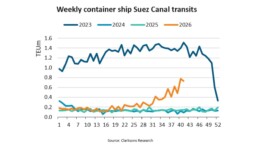
BIMCO Shipping Number of the Week
Suez Canal container ship transits exceed 50% of pre-disruption levels "During the first two weeks of October, weekly container ship capacity…
Subscribe to our newsletter!
if you dont want to swim alone in the ocean of news, sign up for the newsletter, and you will receive daily all the important news of world shipping!
