Enhancing fuel efficiency and profitability in fishing how Hefring Marine’s IMAS system revolutionises operations
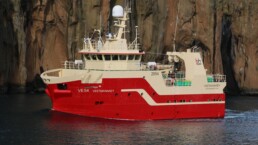

Margins are often tight in the fishing industry with fuel costs representing one of the largest expenses for vessel owners. With the ever-fluctuating price of fuel and the growing pressure to operate more sustainably, optimising fuel efficiency is no longer just a best practice – it’s a necessity for the survival of many fishing businesses. At the forefront of this movement, Hefring Marine’s Intelligent Marine Assistance System (IMAS) is emerging as a game-changer, helping fishermen reduce fuel consumption while increasing profitability.
The fuel efficiency challenge in modern fishing
Fishing vessels, by their very nature, face unique fuel challenges. Operating for long hours at sea, often in unpredictable conditions, can lead to significant fuel waste. From idling in search of fish schools to navigating through rough waters, fuel consumption can skyrocket if not managed effectively. This is compounded by the need to maintain optimal speeds and manoeuvrability to ensure both efficiency and the safety of the crew.
Traditional methods of improving fuel efficiency often rely on manual observation and experience. While the expertise of seasoned shipmasters is invaluable, even the most experienced captain can struggle with the dynamic and complex nature of fuel management. This is where technology steps in to offer a significant advantage.
How Hefring Marine’s IMAS System is transforming operations
Hefring Marine’s IMAS system is designed to address the core issues of fuel efficiency by providing real-time data and insights that allow captains to make informed decisions. The system combines advanced sensors, AI-driven analytics, and intuitive user interfaces to deliver actionable recommendations that optimise vessel performance.
Real time data for smarter guidance
One of the standout features of the IMAS system is its ability to analyse a wide range of operational data in real time. By monitoring variables such as speed, engine load, weather conditions, and fuel consumption, the system can provide instant feedback to the captain on the most efficient speed for the current conditions, helping to reduce unnecessary fuel burn but also ensures that the vessel operates within optimal parameters for both safety and efficiency.
For example, the IMAS system can suggest slight adjustments in speed or heading based on real-time wave and wind data, enabling the vessel to cut through water more smoothly and efficiently. Over time, these small adjustments can lead to significant fuel savings.
Predictive maintenance to minimise downtime
Fuel efficiency isn’t just about how you operate the vessel, it’s also about ensuring that the vessel is in peak condition. The IMAS system offers predictive maintenance alerts, flagging potential issues before they escalate into costly repairs or breakdowns. By keeping the vessel operating at its best, shipmasters can avoid the additional fuel costs associated with operating under strain or having to divert for emergency repairs.
Moreover, a well-maintained engine operates more efficiently, consuming less fuel and reducing emissions. The IMAS system ensures that captains are always aware of the health of their engines, allowing them to take proactive measures that keep operations running smoothly.
Data driven insights for long-term planning
Beyond the immediate fuel savings that come from real-time adjustments, the IMAS system also offers long-term insights through its comprehensive data logging and analytics. Captains and fleet managers can review past voyages, identifying patterns in fuel consumption and operational inefficiencies. These insights can then be used to plan future voyages more effectively, such as optimising fishing schedules or making decisions about when to upgrade equipment.
By providing detailed reports on fuel consumption and vessel performance, the IMAS system empowers shipmasters with the data they need to continuously refine their operations. This data-driven approach allows for ongoing improvements that compound over time, resulting in more profitable and sustainable fishing operations.
Improving the sustainability of coastal fisheries with IMAS
Hefring Marine works with numerous companies and organisations around the world that use the IMAS system to increase the economy of the fleet, reduce fuel consumption and reduce the carbon footprint. The system is currently in use in 14 countries by hundreds of professional users who, at the time of writing, have relied on the system’s guidance in 34,000 trips, sailing 400,000 nautical miles for 40,000 hours. Every 30 days, 1500 to 2000 trips are added to this data set, so the distance will soon be around 20 trips around the Earth. This data includes information on the operation of inshore fishing and lobster boats. Hefring Marine has worked with boat owners’ associations to collect and process data on whether and how much fuel consumption can be reduced and thus increase the sustainability of these fisheries. The result is decisive, it is possible to reduce fuel consumption and thus the carbon footprint by up to 20%, which in this case is equivalent to up to two million litres in fuel savings per year, which results in a reduction in the carbon footprint of over 5,000 tons.
The future of fishing with Hefring Marine
As the fishing industry continues to evolve, the integration of advanced technologies like the IMAS system will become increasingly essential. Shipmasters who embrace these innovations will be better positioned to navigate the challenges of rising fuel costs, stricter environmental regulations, and the need for greater profitability.
Hefring Marine is committed to supporting fishermen in this journey by continuously refining and enhancing the IMAS system. With a focus on sustainability, safety, and profitability, Hefring Marine is helping to shape the future of fishing – one that is more efficient, more sustainable, and more profitable for all involved.
The demands of the modern fishing industry require shipmasters to think beyond traditional methods of fuel management. By leveraging advanced technologies like Hefring Marine’s IMAS system, fishermen can enhance fuel efficiency, reduce operational costs, and increase profitability – all while contributing to a more sustainable future for the industry. Whether you’re managing a single vessel or an entire fleet, the IMAS system offers the tools you need to optimise your operations and secure a more prosperous future.



Related News.

Navigating the Multi-Orbit Era: In Conversation with Intellian’s Jon Harrison at SMM 2026
At SMM 2026 in Hamburg, the rapid evolution of maritime satellite communications took centre stage. Across the exhibition halls, discussions among…

Cyprus ports need joint energy and investment strategy, shipping agents chief says
Cyprus needs a coordinated strategy for shipping, energy and environmental protection to support port investment and modernisation, Cyprus shipping…

MASO Public Affairs introduces MASO Regulatory Intelligence
A new subscription service helping businesses understand what is changing and what it means for them MASO Public Affairs introduces MASO Regulatory…

Anglo-Eastern helps turn CMBTECH’s ammonia ambition into an operational reality
From early feasibility study and risk-based design to newbuilding supervision, crew readiness and technical management, Anglo-Eastern drew on its…

Escalation of attacks threatens to derail recovery in Middle East oil exports
World oil demand is forecast to fall by 2.5 mb/d y-o-y in 4Q26 and 2.6 mb/d on average in 2026. As the Iran war manifests itself through restricted…

New study finds shipping pays twice its share to EU ETS earmarked revenues should triple to help build market for sustainable fuels and technologies
Shipping is responsible for around 10% of EU ETS emissions but pays almost 20% of the ETS bill. Unlike other sectors, it has never received free…

MSARC strengthens maritime mass rescue readiness through training and national live exercise off Dakar, Senegal
Joint MSARC–FHAS programme combines three days of SAR training with a national multi-agency live exercise The Maritime Search and Rescue Council ,…

Sogese report deliveries are still being delayed as container freight rates fluctuate
FOR IMPORTERS Spot rates into the Mediterranean are back at January levels, Far East to Europe reliability sits at pandemic lows, and nearly…

Glencore begins trading on Australian Securities Exchange
Glencore has begun trading on the Australian Securities Exchange under the ASX code GLC. Gary Nagle, Glencore’s CEO, said it was an exciting day for…

BIMCO Shipping Number of the Week
Suez Canal container ship transits exceed 50% of pre-disruption levels "During the first two weeks of October, weekly container ship capacity…
Subscribe to our newsletter!
if you dont want to swim alone in the ocean of news, sign up for the newsletter, and you will receive daily all the important news of world shipping!
