

It is clear that our industry needs mechanisms that can bridge the transition from fossil-based to low emissions fuels without causing inflationary pressure and while maintaining competitive fairness.
Shipping most effective and greenest form of transportation
Close to 90% of all trade is ocean based. Moving goods by sea is by far the most effective and environmentally friendly mode of transportation.
However, given the scale of ocean-based trade, it comes with a significant greenhouse gas footprint. In total, close to 3% of the world’s greenhouse gases (GHGs) are emitted from seagoing vessels. And if we look beyond shipping, the global supply chain accounts for 11%.
The good news is that bold actions have been taken across the value chain in the last few years by liners, energy providers and cargo owners. The first five vessels with dual-fuel methanol engines are in operation today with more than 175 methanol-capable container vessels on order by the industry.
This is important because a vessel built today will sail the oceans for another 20 to 25 years. Other low emission fuel types will also join the fuel mix of the future; biomethane, biodiesel and ammonia.
Clearly, the low emission container shipping demand is there and so is the will and the roadmaps to get us to net zero. The future of net-zero shipping must at the same time be financially sustainable.
We can no longer ignore that we need a pricing mechanism to close the gap between fossil and green fuels and at the same time de-risks investments and helps scale up the production of low emission fuels for maritime use.
Otherwise, the much-needed scaling and acceleration of the fuel production will not happen.
IMO meetings ideal chances to close shipping’s fuel pricing gap
The 82nd & 83rd sessions of the United Nations International Maritime Organization’s (IMO) Marine Environment Protection Committee taking place in London in October 2024 and April 2025 offer the ideal opportunities to make sure that we steer towards closing this price gap.
If IMO member states agree around ambitious mid term measures, they will accelerate the urgent transition in shipping, if not they will slow it down precisely when it’s more necessary.
Not acting now risks losing a remarkable chance at influencing a truly global regulation to remove the cost barrier to decarbonizing shipping and, by extension, the global supply chain. Not reaching an ambitious pricing mechanism now when most needed will slow the green transition in shipping and we will not be able to reach decarbonisation goals in time.
UN Secretary General Antonio Gueterres recently said, “We need an exit ramp off the highway to climate hell. The truth is that we have control of the wheel.”
Furthering this analogy when it comes to shipping, the IMO and its member states have the control of the wheel, the brakes and the throttle.
The ongoing negotiations around the GHG strategy thus have the potential to either significantly accelerate the reduction of carbon intensity and emissions, or to decelerate these efforts.
Applying a greenhouse gas pricing mechanism based on market prices could have an undesired inflationary impact especially for developing countries.
‘Feebate’ needed to spread extra green fuel costs
Therefore, we need a ‘feebate’ that takes the extra cost of green fuels and spreads it across fossil fuels. The idea is to collect just enough money to offset the price differential without massively increasing transport costs. It’s doable.
The World Shipping Council, on behalf of the container lines, has proposed to IMO the so-called Green Balance Mechanism.
This proposal would reward deep GHG reductions, as only fuels with a well-to-wake reduction of carbon intensity equal or superior to 65% will receive allocations. In other words, the higher the emissions, the bigger the fee, and the deeper the reduction beyond 65%, the greater the reward.
Furthermore, any measure should include an element to support a just transition, climate mitigation and energy transition in developing countries and growing economies.
Since shipping was excluded from the Paris Agreement we have continuously urged the IMO and its member states to act – and the IMO makes clear that it is committed to reducing GHG emissions as the regulatory body for the sector.
Shipping needs a clear regulatory framework
The shipping industry cannot establish a robust GHG market mechanism without a global, formal and clear regulatory framework.
It is truly remarkable to see an industry coming together and jointly urge the IMO member states to take decisive actions and seize this exceptional opportunity to make a lasting change.
For the industry to shift from being part of the climate problem to becoming an integral part of the solution, we need effective regulations from the IMO.
The decision made by the IMO member states now will stay with us in 2050 and beyond. There is no time to waste and the pace of the green transition is firmly in their hands.
Source: World Economic Forum



Related News.

ISLAND OIL: Unveiling of the Sculpture “Cyprus’s Journey Through the Ages” in Protaras – A Tribute and Landmark to Cyprus’s Historical Memory and Cultural Heritage
In a modest ceremony marked by a moving atmosphere, the sculpture “Cyprus’s Journey Through the Ages”, created by acclaimed Cypriot sculptor…
World Maritime Day 2026 from Policy to Practice – powering Maritime Excellence
Global regulations will deliver safer, more resilient shipping when they are implemented worldwide. The international maritime community marks…

Diana Shipping announces Time Charter Contract for m/v DSI Polaris with Dai An Ocean Shipping
Diana Shipping , a global shipping company specializing in the ownership and bareboat charter-in of dry bulk vessels, announced that, through a…
Chief Economists Expect Global Economy to Stabilize, but Fiscal Constraints, Rising Living Costs and AI Investment Uncertainty Threaten Growth
The global economy is stabilizing, but the fiscal support that cushioned successive shocks since 2020 is unlikely to play the same role in the year…
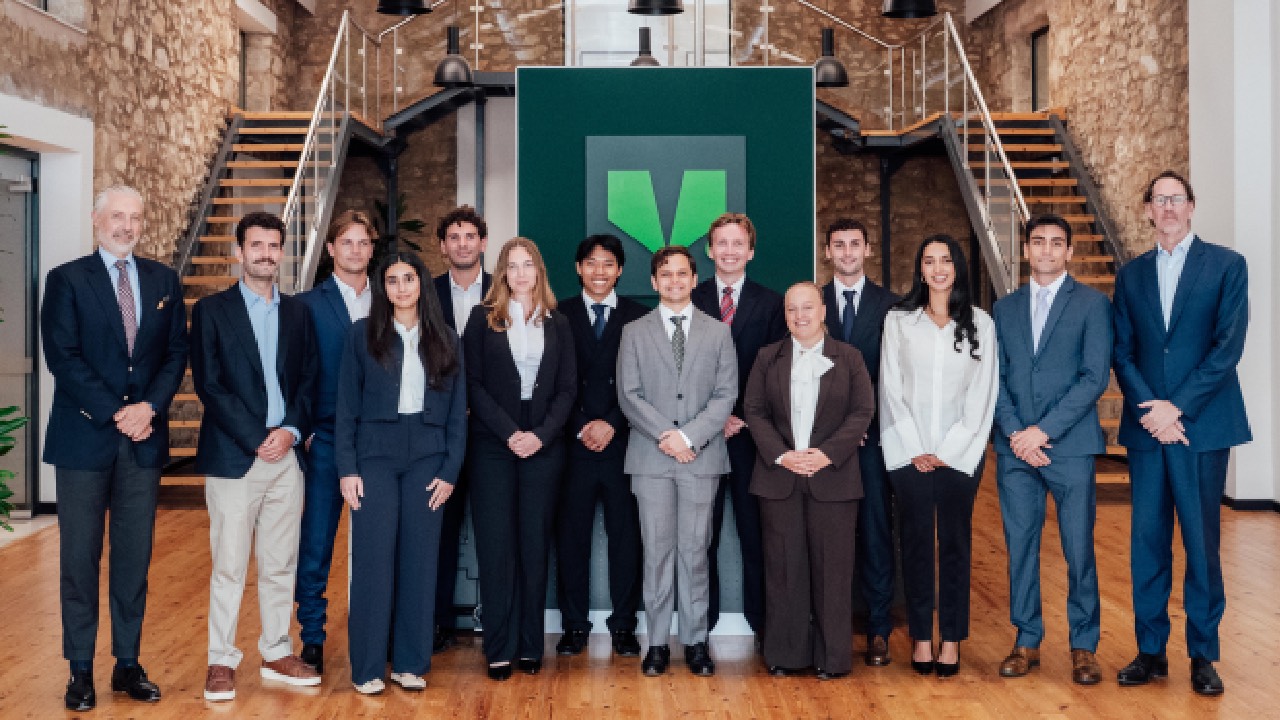
V. welcomes its new graduate cohort as programme expands across the group
Twelve graduates from nine nationalities join 11th year of V.’s expanded international management programme. V., the global ship manager and marine…

From Policy to Practice: Why Seafarers Are the Key to Maritime Excellence
The shipping industry is no stranger to regulation. Seafarers and ship operators work within a vast framework of international conventions, national…

Intermodal Report – Week 38 2026
Please find below the Intermodal market report for week 38 2026. Intermodal Report Week 38 2026 Market Insight By Nikos Tagoulis, Head of…

Allied – Weekly Market Review – Week 38
Please find below the Allied Weekly Report for Week 38 | 2026 ALLIED - Weekly Market Report- Week 38

Record year on the Northeast Passage but Arctic shipping remains very limited
In 2025, a record 103 transit voyages were made via the Northeast Passage. However, this is still equivalent to only around a day and a half of…

[xclusiv] S&P Report 21th September 2026
Please find below the [xclusiv] latest Weekly S&P Report [xclusiv] 2026_09_21 Market Commentary: VLCCs: Freight Boom Reprices the Fleet The VLCC…
Subscribe to our newsletter!
if you dont want to swim alone in the ocean of news, sign up for the newsletter, and you will receive daily all the important news of world shipping!
