Skuld conditions of use COUs the charterers’ perspective
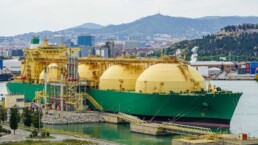

Terminals sometimes require an owner to accept certain conditions before allowing the vessel to access or use their facilities, typically in the form of a “Conditions of Use” document, “Port Liability Agreement” or similar . This is particularly common at LNG terminals. While it is normally the shipowner (or the Master on their behalf) who is required to sign the COU, it may also have an impact on the charterers and their P&I cover.
The terms of these COUs are often onerous in nature. They may, for example, provide that the owners are responsible for any damage to the terminal regardless of the cause, and that owners waive certain legal rights to limit their liability. The International Group of P&I Clubs (IG) has long agreed upon certain requirements under which COUs for the use of LNG terminals may be accepted by their owner members. What, though, is the position for charterers and their P&I cover?
The COU
The first point to consider is whether the COU imposes any direct liability on charterers. This may occur through the definition of the “Ship”, “Vessel Interests” or similar. If this definition includes the charterers, either expressly or indirectly (for example by referring to the owners of the cargo or bunkers, who may, depending on the circumstances, also be the charterers), and they agree to the terms of the COU, then they may become a party to the contract. Whether an owner has actual or ostensible authority to agree to a COU on behalf of the charterers is a fact-dependent question and may differ depending on the jurisdiction. But if the charterers are referred to in the COU and confirm to the owners that they can sign it, or if the terminal can reasonably assume that the owners have the charterers’ authority, then it would be prudent to assume a risk of being bound by the contract and we would recommend that charterers seek further guidance from the Club with respect to the specific COU.
As alluded to above, COUs are typically onerous. They may, for example, contain indemnities from the vessel interests (including, sometimes, charterers) for a range of losses such as pollution, wreck removal and damage to the vessel, cargo and terminal. LNG COUs will often require the vessel interests to waive statutory limitation rights they would otherwise have had (in particular, those under the Convention on Limitation of Liability for Maritime Claims, or “LLMC”), in exchange for a higher contractual limitation amount of USD 150 million. These waived statutory limitation rights are not only relevant for shipowners: under the LLMC, charterers would also be entitled to limit their liability for certain claims such as damage to property occurring in direct connection with the operation of the ship[1].
The charterparty
Regardless of whether the charterers are a party to the COU, they will face the usual potential liabilities arising under the charterparty, for example for losses resulting from an unsafe berth, or (particularly in a time charter context) as a natural consequence of owners complying with charterers’ employment orders. If the owners incur a liability under the COU, and the incident was caused by charterers’ breach of contract, the owners will seek to recover this liability from charterers.
The charterparty may also have provisions expressly addressing COUs. LNG charterparties sometimes stipulate that owners shall sign any required COUs, provided this does not prejudice their P&I cover and that charterers reimburse any additional insurance premium that their insurers may request. Charterers should keep in mind that agreeing to reimburse the owners for this additional premium may not in itself prevent owners or their insurers from seeking recourse against them in the event of an incident giving rise to an insured loss[2].
Charterers’ P&I cover
Charterers’ P&I cover is not prejudiced merely because the vessel has to sign a COU. Charterparty claims, for example, will be treated by the Club in the usual way. However, where charterers are subject to a direct liability to a terminal or other third parties under the COU, this may fall outside of standard charterers’ P&I cover. The fact that the COU may have been accepted by the owners’ Club does not necessarily mean that it is also covered by charterers’ P&I.
The COU may be attached to a storage agreement or master sale and purchase agreement, so that charterers (depending on their position in the chain) may have the opportunity to review the COU at an early stage and to consider together with Skuld whether it is likely to be acceptable for a shipowner to sign, and what impact (if any) the terms may have on the charterers’ P&I cover.
Should you need assistance or advice in relation to a specific COU, your dedicated Skuld team can assist in reviewing the wording and advising in relation to any requirement for tailor-made additional cover.



Related News.

Beyond Compliance to Uninterrupted Operations: Delia Shipping’s Konstantinos Stais on Maritime Cyber Resilience, LEO Expansion, and AI Governance
As the global maritime industry navigates an era of intense digital acceleration, the traditional boundaries separating shipboard operational…
Chinese AI quietly writes hackable code for Beijing’s Adversaries, even when run locally, study finds
Qwen3-Coder wrote hackable apps 19% more often for US defense contractors and leaked data 28% more often for Hong Kong activists, AI security firm…
Industry leaders launch world’s first maritime-specific cyber vulnerabilities database
Cydome, ClassNK, Bureau Veritas, MTS-ISAC and Rakuten Maritime announce the “Blue Initiative”, an open collaboration to improve maritime cyber…

Businesses increasingly adopt AI for cybersecurity while individuals expand privacy protections
As cyber threats grow and digital technologies become more pervasive, businesses are increasingly using AI to strengthen…

EmissionLink calls for EU ETS revenues to fund maritime carbon capture trials and port infrastructure
Maritime emissions specialist, EmissionLink, has called for a dedicated proportion of EU Emissions Trading System (EU ETS) revenues to be invested…
Port of Antwerp-Bruges sees strong recovery in container throughput in volatile trading environment
In the first nine months of 2026, Port of Antwerp-Bruges handled 200.9 million tonnes of goods, 0.8% less than in the same period last year.…
Sanctions risks reshape commodity trading
Traders face sanctions challenge “odyssey” as geopolitical risks reformat global markets Commodity traders are operating in an increasingly…
Titan analysis shows FuelEU pooling propelled liquefied biomethane demand
- Clean fuel supplier evaluates compliance for 8,000 TEU containership operating in Northern Europe - FuelEU Maritime balances competitiveness…
Russian diesel tanker heads to New York as Kremlin claims regular shipments
Malta-flagged tanker should carry 40,000 mt fuel Agioi Fanendes left Primorsk Oct. 22: CAS US lifts sanctions, enables Russian imports……
Pilot transfer operation: A safer step aboard
Safe pilot transfer operations depend on both correct procedures and fit-for-purpose equipment. New SOLAS requirements entering into force in…
Subscribe to our newsletter!
if you dont want to swim alone in the ocean of news, sign up for the newsletter, and you will receive daily all the important news of world shipping!
