Increased collision risk in Chinese waters
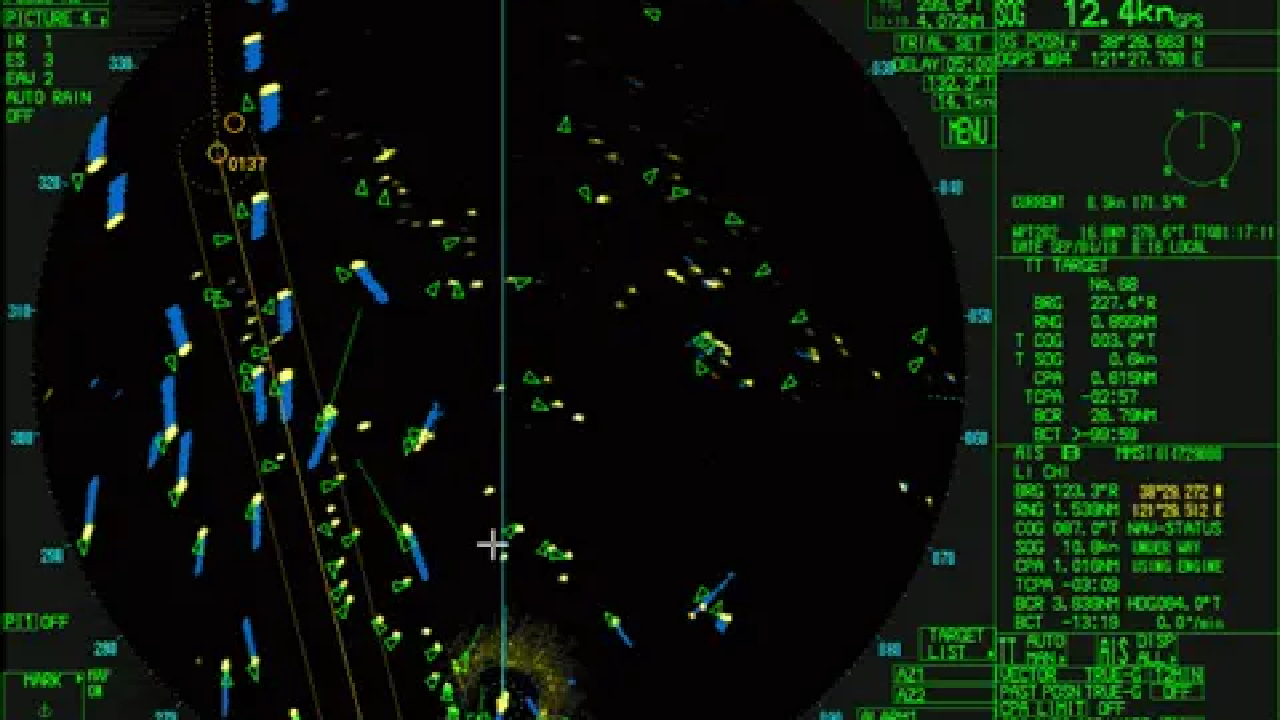

With China’s seasonal fishing ban coming to an end, ship operators and Masters are advised to take extra precautions due to the increased number of fishing vessels in Chinese waters.
Every year we handle claims of collisions between merchant and fishing vessels in Chinese waters. Given the significant size and momentum differences between merchant vessels and fishing boats, such incidents can lead to extensive damage and loss of life. Data from China MSA reveals that from 2019 to 2021, collisions between merchant and fishing vessels resulted in the deaths of 248 fishermen.
In many cases, watchkeepers aboard merchant vessels may not even realize that they have collided with fishing boats, as illustrated in the case study referred to in this article.
More vessels, more risk
According to the 2023 notice of the Ministry of Agriculture and Rural Affairs of China, the fishing ban in the East and South China Sea between latitudes 26◦ 30’ N and 12◦ N was lifted on 16 August 2024. The ban for the Bohai Sea and Yellow Sea North of latitude 35◦ will end on 1 September 2024, while the ban for the Yellow Sea and East China Sea between latitudes 35◦ N and 26◦ 30’ N, will end on 16 September 2024. This will lead to higher numbers of fishing vessels in the region, increasing the risk of collisions.
Typical collision causes
-
High speed in high traffic areas: Often, vessels proceed at high speed, and their engines are not ready for immediate maneuvering. This can result in reduced time for decision making and greater damage if collision happens.
-
Lack of attention or resources: Watchkeepers on merchant vessels may be occupied with other tasks and the manning may be inadequate. Moreover, the crew on fishing vessels may not have the appropriate certificates and may be engaged in fishing activities instead of in navigation.
-
High reliance on AIS: Fishing vessels in China are often equipped with AIS, however it may be inoperative or transmitting incorrect information. Onboard merchant vessels, with AIS overlay on RADARs or ECDIS, the Officer of the Watch (OOW) will often rely more on AIS instead of using radar plotting. AIS can complement but not replace target tracking on ARPA / RADAR for collision avoidance.
-
Communication challenges: Attempts to communicate with fishing vessels via VHF radio, ALDIS lamp or sound signals may fail due to language barriers or insufficient watchkeeping level of fishing vessels.
-
Last-minute actions: Merchant vessels sometimes leave it to the last minute before taking avoiding action. This can result in a collision, for example if the helm order given is not enough to achieve a large rate of turn.
Merchant vessels may also face claims for damaging fishing nets. Fishing nets are difficult to detect as they may be poorly marked. Nighttime detection of the nets may be easier if they display lights. Day time visual sighting, on the other hand, can be a real challenge. Nets with radar reflectors can be useful, but this is not a common practice. We understand the use of AIS markers is increasing. This may also clutter the RADAR and the AIS display.
Recommendations
-
Voyage planning: Attentions shall be given to the designated fishing zones and the high risk areas (HRAs), as recognized by China MSA (Chinese circular; English translation) and various provincial MSAs, such as the 39 HRAs within the coastal waters of Shandong Province identified by Shandong MSA (Chinese circular) in 2023.
-
Bridge team composition: We recommend increasing bridge watchkeeping level in advance to ensure that the OOW has sufficient assistance at night as well as during day. Other onboard activities should be planned to ensure that the bridge team are well rested for navigation-related duties.
-
Safe speed: In areas with high fishing activity, vessels should proceed at a safe speed with engines ready for maneuvering. The OOW should be empowered to adjust the speed as necessary.
-
Use of RADAR/ARPA: Make full use of radar and sound fog signal when navigating in fog, even when no fishing boats are sighted on the radar. The use of radar can be vital when navigating in these waters. General practice of long ranges scanning using the S-band radar to identify clusters of fishing fleet and using the X-band on small range for collision avoidance can be effective.
-
Keeping clear of clusters: Where OOW is able to detect a cluster of fishing boats, it is advisable to alter course well in advance to avoid navigating through it.
-
Attracting attention of fishing boats: To gain the attention of fishing boats, use of light and sound signals may be more effective as establishing contact via VHF might be challenging.
Source: GARD



Related News.

ISLAND OIL: Unveiling of the Sculpture “Cyprus’s Journey Through the Ages” in Protaras – A Tribute and Landmark to Cyprus’s Historical Memory and Cultural Heritage
In a modest ceremony marked by a moving atmosphere, the sculpture “Cyprus’s Journey Through the Ages”, created by acclaimed Cypriot sculptor…
World Maritime Day 2026 from Policy to Practice – powering Maritime Excellence
Global regulations will deliver safer, more resilient shipping when they are implemented worldwide. The international maritime community marks…

Diana Shipping announces Time Charter Contract for m/v DSI Polaris with Dai An Ocean Shipping
Diana Shipping , a global shipping company specializing in the ownership and bareboat charter-in of dry bulk vessels, announced that, through a…

Chief Economists Expect Global Economy to Stabilize, but Fiscal Constraints, Rising Living Costs and AI Investment Uncertainty Threaten Growth
The global economy is stabilizing, but the fiscal support that cushioned successive shocks since 2020 is unlikely to play the same role in the year…

V. welcomes its new graduate cohort as programme expands across the group
Twelve graduates from nine nationalities join 11th year of V.’s expanded international management programme. V., the global ship manager and marine…

From Policy to Practice: Why Seafarers Are the Key to Maritime Excellence
The shipping industry is no stranger to regulation. Seafarers and ship operators work within a vast framework of international conventions, national…

Intermodal Report – Week 38 2026
Please find below the Intermodal market report for week 38 2026. Intermodal Report Week 38 2026 Market Insight By Nikos Tagoulis, Head of…

Allied – Weekly Market Review – Week 38
Please find below the Allied Weekly Report for Week 38 | 2026 ALLIED - Weekly Market Report- Week 38

Record year on the Northeast Passage but Arctic shipping remains very limited
In 2025, a record 103 transit voyages were made via the Northeast Passage. However, this is still equivalent to only around a day and a half of…

[xclusiv] S&P Report 21th September 2026
Please find below the [xclusiv] latest Weekly S&P Report [xclusiv] 2026_09_21 Market Commentary: VLCCs: Freight Boom Reprices the Fleet The VLCC…
Subscribe to our newsletter!
if you dont want to swim alone in the ocean of news, sign up for the newsletter, and you will receive daily all the important news of world shipping!
