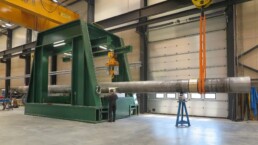

In the maritime industry, the integrity of a vessel’s propulsion system is essential/paramount. If not addressed promptly, a bent shaft can lead to significant downtime, costly repairs, and even more severe long-term damage. This is where the innovative technique of cold straightening comes into play, offering a lifeline to ships worldwide.
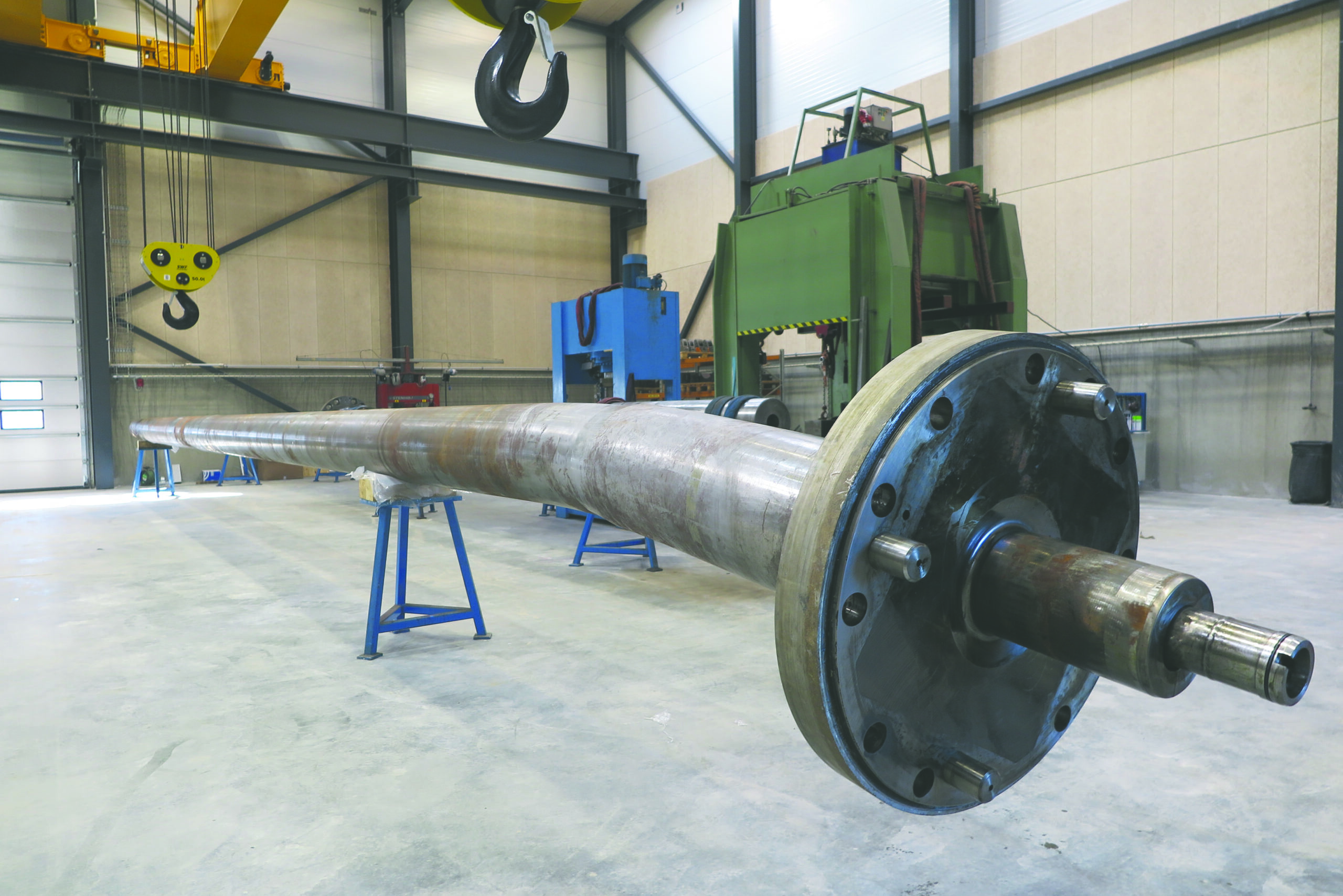
Cold straightening is a specialized process that restores bent shafts to their original condition without the need for heat. MarineShaft, a leader in this field, specializes in the technique, which is fully approved by all major classification societies. Their method involves the use of a hydraulic press capable of exerting up to 8,000 tonnes of force, straightening shafts ranging from 20 mm to 1,500 mm in diameter, regardless of length. The work is truly craftsmanship and requires years of know-how and training.
MarineShaft’s pioneering expertise in cold straightening is backed by years of experience. Their service has been recognized since 1972 when Bureau Veritas first approved their cold straightening method.

The advantages of cold straightening are numerous and include:
- Permanent Repair: Classified as a permanent solution, the process returns shafts to a near-new condition, with a maximum deviation of just 5/100 mm.
- Speed: Often, repairs can be completed within 24-48 hours, minimizing downtime.
- Cost-Effectiveness: It is a more economical alternative to manufacturing new shafts.
- Material Integrity: The metallurgy of the shaft material remains unaltered, ensuring longevity.
- Environmental Impact: Cold straightening is an eco-friendly option, significantly reducing CO2 emissions compared to new production.
MarineShaft’s services have a global reach, with shafts being straightened from all corners of the world. The universal approval of their technique means that wherever a vessel suffers propeller or rudder damage, cold straightening often emerges as the most profitable solution. MarineShaft is based in Denmark and receives rudder and propulsion equipment from all over the world.
MarineShaft offers a large variety of repair services both in-house and on-site. However, cold straightening is only performed in-house. MarineShaft prides itself on its in-house cold straightening capabilities, ensuring that every repair is up to the highest standards of quality and precision. The fully equipped workshop ensures fast access to other repairs that may be needed, such as laser cladding, lathe machining, and raw materials in stock for the replacement of liners, etc. MarineShaft’s comprehensive inventory includes a 27-meter lathe, 200-ton lifting capacity, and two laser cladding units.
Approximately 100-200 shafts are cold straightened by per year. Even minor deflection can cause huge damage to the vessel’s operation.

Reference cases
A straightening job this summer was for the famous National Geographic Explorer, which sails in the waters of Antarctica in wintertime and the Arctic in summertime.
The vessel was in drydock in Denmark when on-site run-out measurements revealed deflection to both propeller and intermediate push rods measuring about 12 meters in length and Ø90mm in diameter.
The push rods were sent to MarineShaft workshop in Hirtshals for cold straightening.

This repair case also included manufacturing new push rod assembling flanges, and the advantage of in-house facilities came to bear with raw materials in stock for fast manufacturing. The intermediate push rod was also modified with bonze liners, which were delivered from the manufacturer. In only 4 days the work was completed and with class approval from the involved classification society DNV.
One of the worst bendings MarineShaft has repaired was a bent propeller shaft belonging to the ferry Paglia Orba, that a few years back damaged its propeller equipment due to a casualty.
The almost 19-metre-long propeller shaft had a deflection of 7.7 degrees – almost 250 mm out of centerline at the worst area. The intermediate shaft and twine tubes were also cold straightened. In this case additional repair of bearing journals was carried out by laser cladding. Another in-house repair method.
MarineShaft’s cold straightening method is not only environmentally friendly and cost-effective but also time efficient. It’s a decision that keeps vessels operational and profitable, underscoring the company’s commitment to providing top-tier service with minimal disruption to their clients’ operations.



Related News.
Navigating the Multi-Orbit Era: In Conversation with Intellian’s Jon Harrison at SMM 2026
At SMM 2026 in Hamburg, the rapid evolution of maritime satellite communications took centre stage. Across the exhibition halls, discussions among…
Cyprus ports need joint energy and investment strategy, shipping agents chief says
Cyprus needs a coordinated strategy for shipping, energy and environmental protection to support port investment and modernisation, Cyprus shipping…

MASO Public Affairs introduces MASO Regulatory Intelligence
A new subscription service helping businesses understand what is changing and what it means for them MASO Public Affairs introduces MASO Regulatory…
Anglo-Eastern helps turn CMBTECH’s ammonia ambition into an operational reality
From early feasibility study and risk-based design to newbuilding supervision, crew readiness and technical management, Anglo-Eastern drew on its…

Escalation of attacks threatens to derail recovery in Middle East oil exports
World oil demand is forecast to fall by 2.5 mb/d y-o-y in 4Q26 and 2.6 mb/d on average in 2026. As the Iran war manifests itself through restricted…
New study finds shipping pays twice its share to EU ETS earmarked revenues should triple to help build market for sustainable fuels and technologies
Shipping is responsible for around 10% of EU ETS emissions but pays almost 20% of the ETS bill. Unlike other sectors, it has never received free…
MSARC strengthens maritime mass rescue readiness through training and national live exercise off Dakar, Senegal
Joint MSARC–FHAS programme combines three days of SAR training with a national multi-agency live exercise The Maritime Search and Rescue Council ,…
Sogese report deliveries are still being delayed as container freight rates fluctuate
FOR IMPORTERS Spot rates into the Mediterranean are back at January levels, Far East to Europe reliability sits at pandemic lows, and nearly…
Glencore begins trading on Australian Securities Exchange
Glencore has begun trading on the Australian Securities Exchange under the ASX code GLC. Gary Nagle, Glencore’s CEO, said it was an exciting day for…
BIMCO Shipping Number of the Week
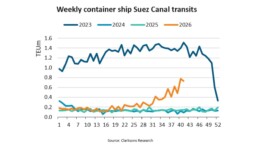
Suez Canal container ship transits exceed 50% of pre-disruption levels "During the first two weeks of October, weekly container ship capacity…
Subscribe to our newsletter!
if you dont want to swim alone in the ocean of news, sign up for the newsletter, and you will receive daily all the important news of world shipping!
