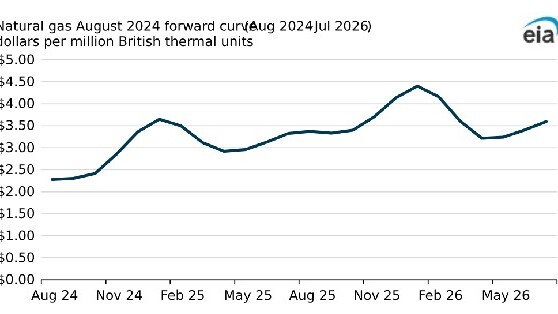

The natural gas futures market is a marketplace where standardized contracts for the future delivery of set natural gas volumes are traded. Most natural gas futures are bought and sold in the New York Mercantile Exchange (NYMEX) and the Intercontinental Exchange (ICE). Futures contracts allow participants to manage their exposure to market volatility by locking in a price today for a future purchase or a future sale of a physical commodity.
Natural gas futures contracts settle both physically and financially. Although other commodity futures might only have a financial obligation, this marketplace also bears the responsibility of physical delivery. A buyer must agree to receive natural gas at a future date at a specified location for a predetermined price, while a seller agrees to deliver the natural gas under these terms. However, less than 2% of NYMEX contracts are physically delivered.
Why do people trade natural gas futures contracts?
The first natural gas futures contracts began trading at NYMEX in 1990, allowing producers, consumers, and financial traders to hedge against price volatility at the Henry Hub in Louisiana. Natural gas producers face uncertainty over their future revenue from sales, so they may sell a futures contract now to lock in a natural gas sales price for a future date. Similarly, natural gas consumers may buy futures contracts now to lock in a price for delivery at a time when they anticipate the price may be higher. Additionally, financial traders who typically do not have any direct interest in buying or selling natural gas also buy or sell futures contracts to gain financial exposure to commodities, to diversify financial portfolios, or for other reasons.
What are some common futures market pricing dynamics?
Futures traded for the month immediately following the current month are referred to as front-month contracts, or Contract 1 futures. At the time of publication, August 2024 is the front-month contract. Natural gas futures contracts expire about 3–5 business days before the start of the front month.
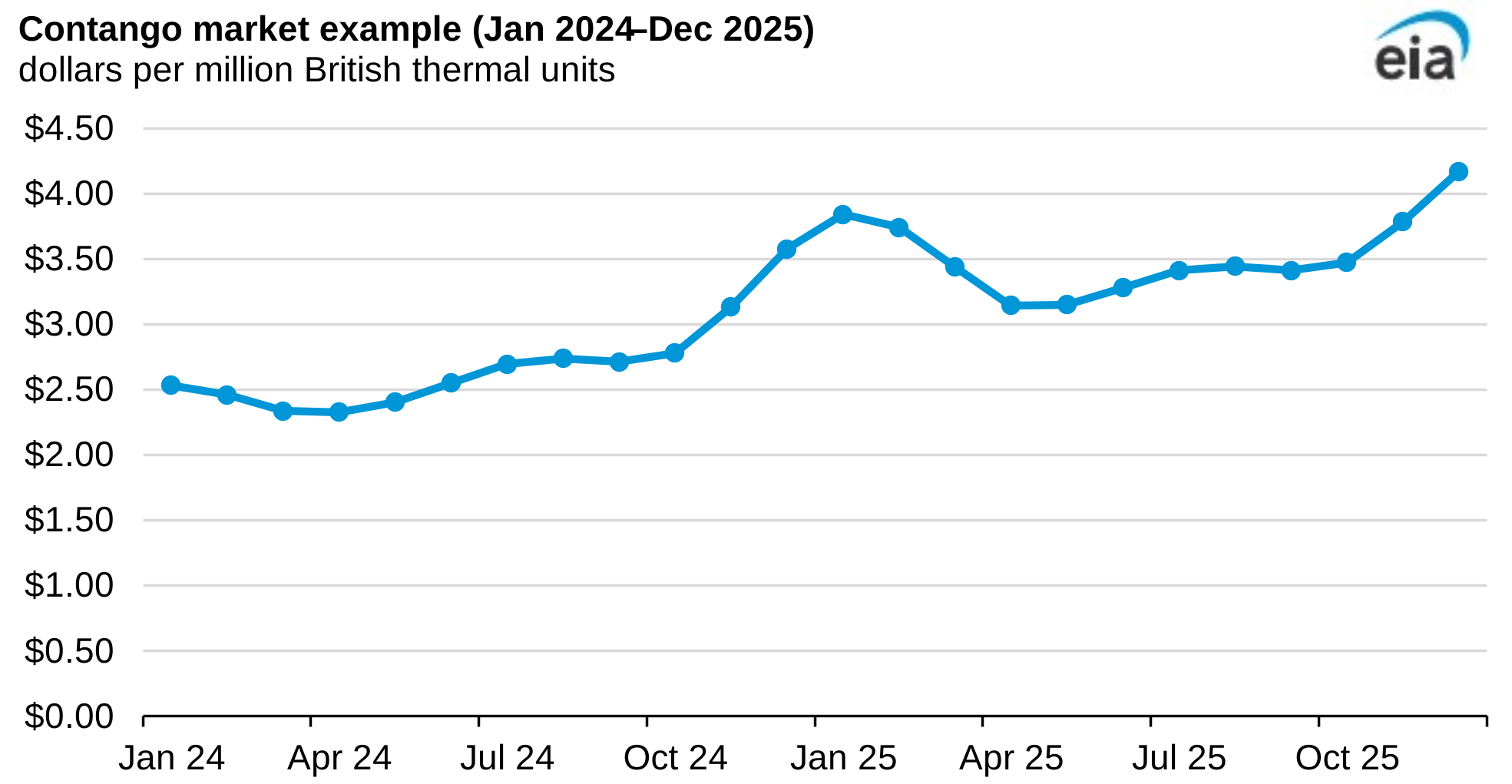
Note: Average prices based on daily NYMEX closing price for 1st–22nd of December 2023.
- The futures market forward curve displays the closing prices of linked individual monthly contracts across various months into the future. If futures prices increase over time compared with the current price, the market is referred to as being in a state of contango.
- Conversely, the market is said to be in a state of backwardation when future prices are lower than the current price.
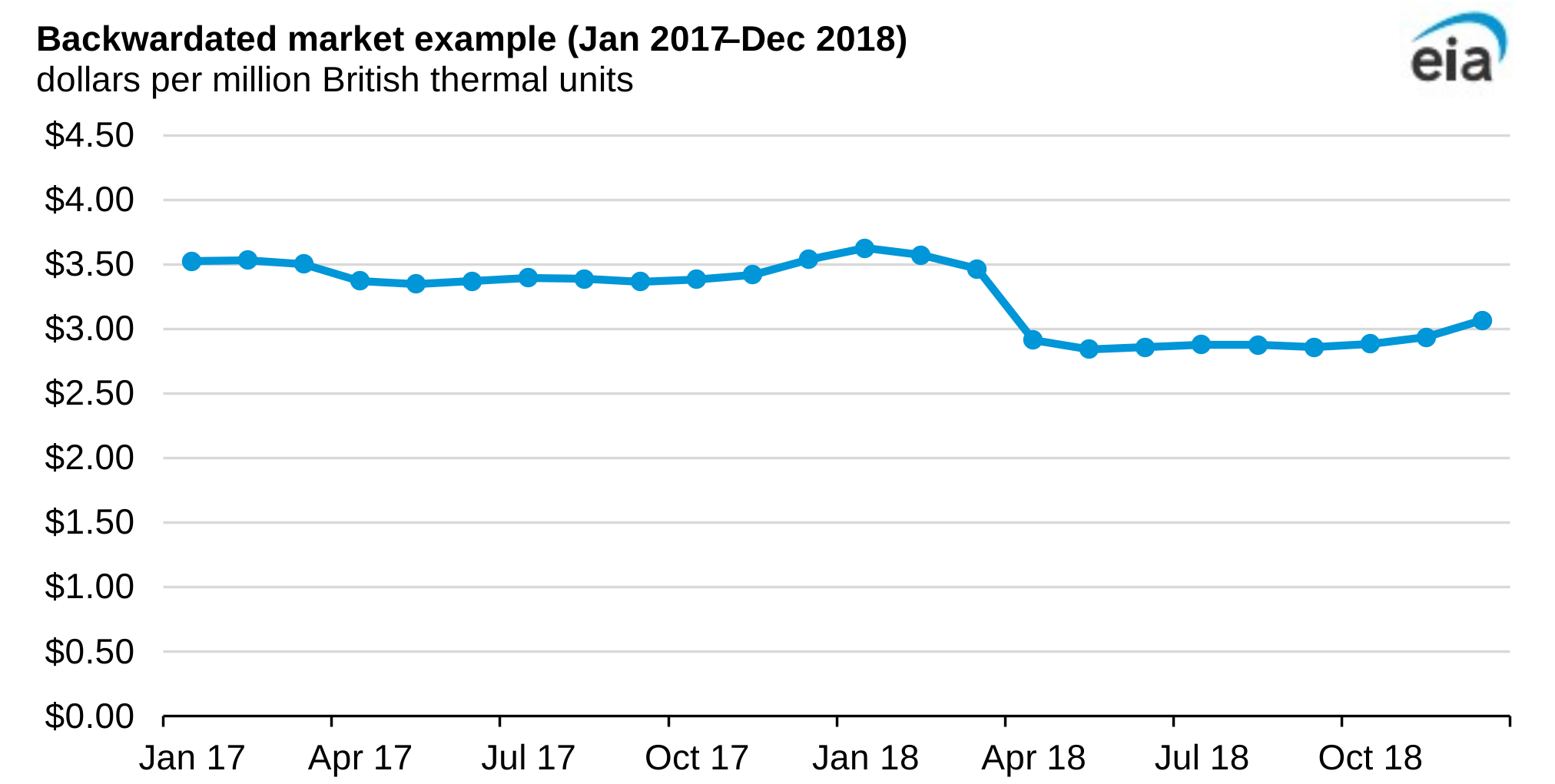
Note: Average prices based on daily NYMEX closing price for 1st–22nd of December 2016.
Many commodities have a natural contango to their futures curve with prices for longer-dated contracts being higher than for those closer to delivery. This futures curve represents both storage costs and the costs of capital associated with tying up funds in advance of delivery. A commodity futures market showing backwardation suggests tighter supply or stronger demand today relative to the future. Market participants can be willing to pay a higher price for near-term delivery instead of waiting to pay a lower price for delivery in the future.
What influences directionality of the natural gas futures curve?
The natural gas market can exhibit both contango and backwardation. The same general factors that affect today’s price of natural gas can also affect buying and selling of longer-dated futures contracts.
The major supply-side factors affecting natural gas prices are domestic production and imports. The major demand-side factors affecting natural gas prices are:
- Variations in temperatures
- Macroeconomic activity
- Natural gas exports
- Availability and prices of other fuels
Storage volumes help balance the market. Stored natural gas can be used when demand outpaces supply and built when supply outpaces demand. For that reason, storage behaves as a source of both supply and demand within the natural gas futures market.
The shape of the forward curve is also contingent on its starting point. If today’s prices are atypically high or low, the resulting curve will be comparably steeper going forward in contracts. Increased natural gas demand or reduced supply in the short term can cause large changes in natural gas prices, especially during the wintertime.
How is the natural gas futures curve today?
The natural gas futures market is presently in contango. The market currently indicates higher natural gas prices for next winter (Dec 2024–Mar 2025), increasing even further (+82%) through winter 2025–26. Overall, this contango reflects a market expectation for demand to surpass supply over that period. In particular, we project that the natural gas surplus to the five-year (2019–23) average will decrease with slowing production, while demand will increase as new liquefied natural gas terminals come on line.
Source: EIA principal contributor Andrew Iraola



Related News.

ISLAND OIL: Unveiling of the Sculpture “Cyprus’s Journey Through the Ages” in Protaras – A Tribute and Landmark to Cyprus’s Historical Memory and Cultural Heritage
In a modest ceremony marked by a moving atmosphere, the sculpture “Cyprus’s Journey Through the Ages”, created by acclaimed Cypriot sculptor…

World Maritime Day 2026 from Policy to Practice – powering Maritime Excellence
Global regulations will deliver safer, more resilient shipping when they are implemented worldwide. The international maritime community marks…

Diana Shipping announces Time Charter Contract for m/v DSI Polaris with Dai An Ocean Shipping
Diana Shipping , a global shipping company specializing in the ownership and bareboat charter-in of dry bulk vessels, announced that, through a…

Chief Economists Expect Global Economy to Stabilize, but Fiscal Constraints, Rising Living Costs and AI Investment Uncertainty Threaten Growth
The global economy is stabilizing, but the fiscal support that cushioned successive shocks since 2020 is unlikely to play the same role in the year…
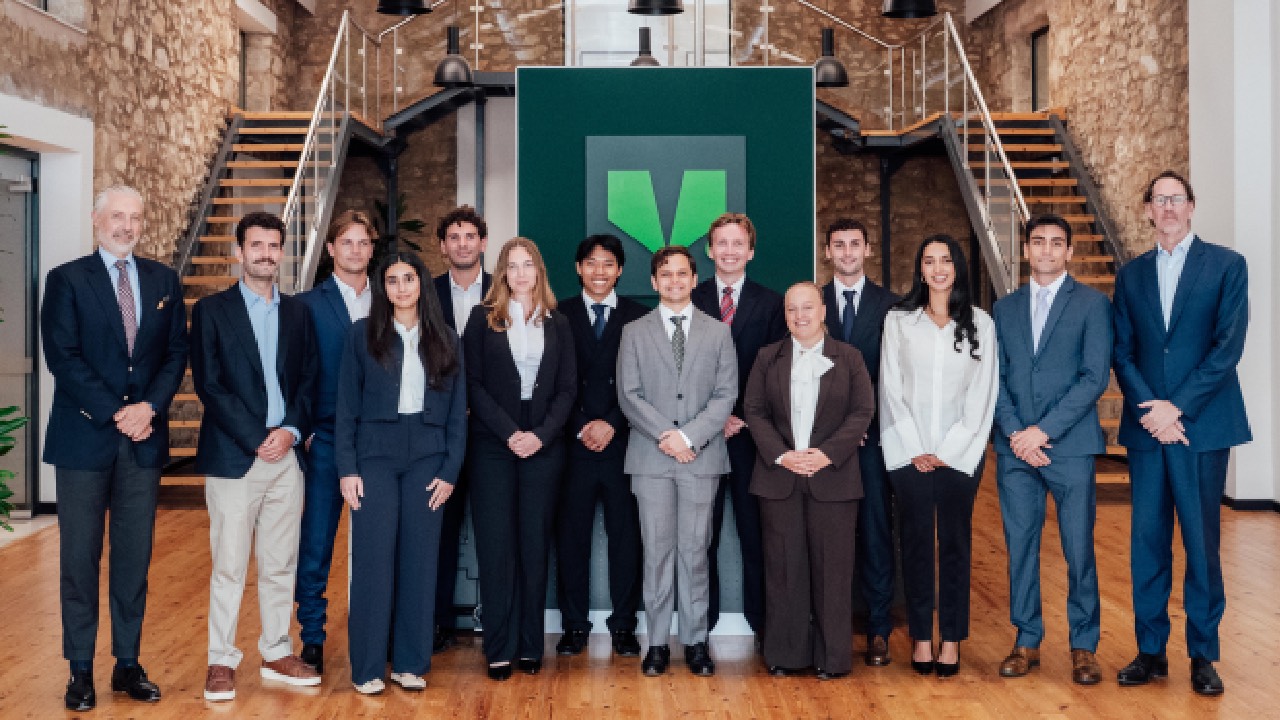
V. welcomes its new graduate cohort as programme expands across the group
Twelve graduates from nine nationalities join 11th year of V.’s expanded international management programme. V., the global ship manager and marine…

From Policy to Practice: Why Seafarers Are the Key to Maritime Excellence
The shipping industry is no stranger to regulation. Seafarers and ship operators work within a vast framework of international conventions, national…

Intermodal Report – Week 38 2026
Please find below the Intermodal market report for week 38 2026. Intermodal Report Week 38 2026 Market Insight By Nikos Tagoulis, Head of…

Allied – Weekly Market Review – Week 38
Please find below the Allied Weekly Report for Week 38 | 2026 ALLIED - Weekly Market Report- Week 38

Record year on the Northeast Passage but Arctic shipping remains very limited
In 2025, a record 103 transit voyages were made via the Northeast Passage. However, this is still equivalent to only around a day and a half of…

[xclusiv] S&P Report 21th September 2026
Please find below the [xclusiv] latest Weekly S&P Report [xclusiv] 2026_09_21 Market Commentary: VLCCs: Freight Boom Reprices the Fleet The VLCC…
Subscribe to our newsletter!
if you dont want to swim alone in the ocean of news, sign up for the newsletter, and you will receive daily all the important news of world shipping!
