HD Hyundai Heavy Industries takes bold step in localising eco-friendly dual-fuel ship engines
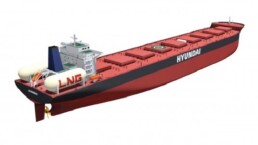

HD Hyundai Heavy Industries has embarked on a groundbreaking “localization project” aimed at developing dual-fuel engines that utilize both oil and liquefied natural gas (LNG). This initiative marks a significant shift for the company, which seeks to capitalize on the increasing added value of eco-friendly ship engines and reduce its reliance on foreign suppliers.
According to the shipbuilding industry on July 26, HD Hyundai Heavy Industries has set an ambitious goal to develop its own dual-fuel engines, including those powered by ammonia. Industry analysts suggest that HD Korea Shipbuilding & Offshore Engineering’s recent acquisition of STX Heavy Industries is a strategic move to secure the necessary capabilities for engine development. “HD Korea Shipbuilding & Offshore Engineering’s acquisition of STX Heavy Industries is largely aimed at securing capabilities related to engine development,” noted one industry analyst.
STX Heavy Industries is renowned for its advanced technology in dual-fuel engines, as well as LNG and LPG engines. This acquisition is expected to bolster HD Hyundai Heavy Industries’ efforts to localize these critical components. The company has already made strides in this direction, having successfully localized four electric engines for use within ships.
The push for “engine independence” is a growing trend among shipbuilders, who aim to maximize margins in the construction of eco-friendly ships. Currently, the market for LNG-oil dual-fuel engines is dominated by MAN, a subsidiary of Germany’s Volkswagen Group, and Switzerland’s WinGD. These dual-fuel engines take about 10% longer to manufacture compared to conventional oil engines, which typically require 12-14 months. Additionally, they are approximately 20% more expensive and require a fuel supply system, adding about 30% to the engine’s price.
Beyond engines, the localization of cargo hold technology for eco-friendly ships is also a key focus for shipbuilders. Traditional cargo holds, primarily used for oil, required only simple storage solutions. However, the cargo holds of eco-friendly ships, which need to compress LNG or convert hydrogen into ammonia for storage, demand a high level of technology, thereby increasing their added value. The current cargo hold market is effectively monopolized by France’s GTT. In response, companies like HD Hyundai Heavy Industries are attempting to localize technologies with relatively lower entry barriers. Recently, they succeeded in localizing cargo holds for LNG bunkering ships and are installing them on their own vessels.
The global emphasis on reducing carbon emissions and the push for eco-friendly technologies in various industries, including maritime, is driving the demand for cleaner ship engines. International regulations, such as the International Maritime Organization’s (IMO) 2020 sulfur cap and future targets for reducing greenhouse gas emissions, are further accelerating this trend.
Source: Businesskorea



Related News.

Navigating the Multi-Orbit Era: In Conversation with Intellian’s Jon Harrison at SMM 2026
At SMM 2026 in Hamburg, the rapid evolution of maritime satellite communications took centre stage. Across the exhibition halls, discussions among…
Cyprus ports need joint energy and investment strategy, shipping agents chief says
Cyprus needs a coordinated strategy for shipping, energy and environmental protection to support port investment and modernisation, Cyprus shipping…

MASO Public Affairs introduces MASO Regulatory Intelligence
A new subscription service helping businesses understand what is changing and what it means for them MASO Public Affairs introduces MASO Regulatory…
Anglo-Eastern helps turn CMBTECH’s ammonia ambition into an operational reality
From early feasibility study and risk-based design to newbuilding supervision, crew readiness and technical management, Anglo-Eastern drew on its…

Escalation of attacks threatens to derail recovery in Middle East oil exports
World oil demand is forecast to fall by 2.5 mb/d y-o-y in 4Q26 and 2.6 mb/d on average in 2026. As the Iran war manifests itself through restricted…
New study finds shipping pays twice its share to EU ETS earmarked revenues should triple to help build market for sustainable fuels and technologies
Shipping is responsible for around 10% of EU ETS emissions but pays almost 20% of the ETS bill. Unlike other sectors, it has never received free…

MSARC strengthens maritime mass rescue readiness through training and national live exercise off Dakar, Senegal
Joint MSARC–FHAS programme combines three days of SAR training with a national multi-agency live exercise The Maritime Search and Rescue Council ,…
Sogese report deliveries are still being delayed as container freight rates fluctuate
FOR IMPORTERS Spot rates into the Mediterranean are back at January levels, Far East to Europe reliability sits at pandemic lows, and nearly…
Glencore begins trading on Australian Securities Exchange
Glencore has begun trading on the Australian Securities Exchange under the ASX code GLC. Gary Nagle, Glencore’s CEO, said it was an exciting day for…
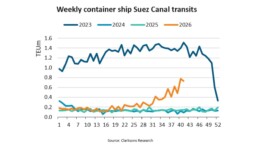
BIMCO Shipping Number of the Week
Suez Canal container ship transits exceed 50% of pre-disruption levels "During the first two weeks of October, weekly container ship capacity…
Subscribe to our newsletter!
if you dont want to swim alone in the ocean of news, sign up for the newsletter, and you will receive daily all the important news of world shipping!
