More Panama Canal vessel transits fail to lift bunker sales
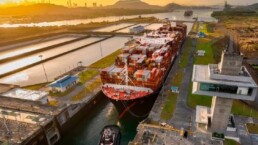

Panama’s bunker fuel sales dropped by 3% in June despite more vessel transits, industry sources said.
The Panama Canal Authority raised the number of daily vessel transits from 27 in May to 32 in June, hoping to collect more in transit fees, but also alleviate shipping delays.
The number of bunker calls also rose last month, as more ships passed by Balboa and Cristobal on their way to transit the canal. But shorter waiting times by either side of the canal meant that transiting ships picked up smaller stems. This contributed to dent bunker sales volumes.
“The vessels are not waiting for a long time between their arrival and their transit time, which causes a decrease in bunker delivery,” an operations manager at Waterfront Maritime Services said.
When ships experience longer waiting times at a transit point, they often need to run auxiliary engines and generators to maintain essential onboard systems such as lighting, air conditioning and cargo management. These operations require fuel, leading to increased fuel consumption.
During longer waits, ships may take advantage of the downtime to bunker larger quantities of fuel, anticipating extended voyages without further stops.
The average waiting time in May was 3.8 days, which decreased to 1.5 days in June, as per data released by the Panama Canal Authority.
Ships waiting at the canal use about 15% of the fuel they typically use while sailing, according to one estimate. For a ship that normally uses 50 mt/day when sailing, this means it uses about 7.5 mt/day while waiting.
With less waiting time in June, the total fuel used during these waiting periods could theoretically lead to a reduction of around 13,000 mt in fuel consumption.
The Panama Canal Authority said it implemented an auction system in November to manage increased demand and allocate slots better. However, this system also generates substantial revenue, which can be seen as an additional motive behind its introduction. It requires all vessels to secure a booking, adding a layer of cost and uncertainty for shipping firms.
The introduction of the auction system has made it more challenging for shipping firms to secure transit slots, resulting in fewer transits than previously anticipated.
Although the number of ships calling for bunkering has increased, the complexities and costs associated with booking transit slots have led to a lower-than-expected number of vessels arriving at the port, which has impacted overall fuel purchases, senior operations manager at ship agent C Fernie said.
Global bunker supplier Monjasa has redeployed its bunker tanker Monjasa Thunder from West Africa to Panama in response to the changes in transit slots.
“We believe that the [bunker sales] figures are primarily due to seasonality, but also the fact that shippers can only adapt to the increased number of Canal transits over time since new trade patterns have been established since the start of the restrictions,” communications director at Monjasa Thorstein Andreasen said.
Source: ENGINE by Debarati Bhattacharjee



Related News.

The Swedish Club marks official opening of New York office
The Swedish Club has officially opened its new office in New York City, marking an important step in the Club’s continued development across the…
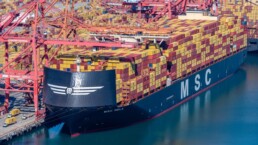
Port of Long Beach breaks all-time cargo record in September
The Port of Long Beach achieved its busiest month in its 115-year history by moving nearly 1 million container units in September, a milestone fueled…

TD34 Forward Freight Agreement trades outpace TD3C in debut week as market seeks greater Gulf freight cover
The launch of the Forward Freight Agreement for the Baltic’s TD34 route by Intercontinental Exchange (ICE) has seen near-record volumes since its…

Black Sea Steel Flows Weaken as Shipping Risks Rise
Recorded Black Sea steel loadings declined sharply in Q3 2026. Volumes, including scrap, fell 65.6% y/y to 0.65 Mt across 51 voyages, compared with…

Fincantieri accelerates Robotics and Physical AI to Build the Shipyard of the Future
Fincantieri, a global leader in high-complexity shipbuilding, is accelerating the transformation of its shipyards through the integration of…
Advanced Navigation is bringing the World’s Most Complex Navigation Technology to Huntsville, Alabama
The race to deploy autonomous systems is exposing a critical constraint: production of the vital navigation technology required is not keeping pace…
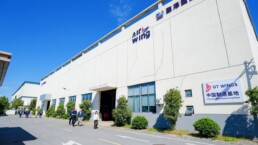
GT Wings expands product range with launch of new lightweight AirWingTMS to reduce emissions for smaller vessels
GT Wings has announced the latest addition to its wind- assisted propulsion product range, AirWingTMS, a new compact and lightweight Jet Sail…
LD Armateurs’ world’s largest wind-propelled cargo vessel fitted with Norsepower Rotor sails™
LD Armateurs and Norsepower are proud to announce the completed installation of six Norsepower Rotor Sails™ on board Spirit of Toulouse, the lead…
DEME wins contract for wind turbine installation at the Zeevonk Offshore wind farm
DEME has signed a sizable1 contract for the transportation and installation of 69 wind turbines at the Zeevonk offshore wind farm in the…
MOL Group inaugurated its first biomethane plant in Szarvas
MOL Group has inaugurated its first biomethane plant in Szarvas. As a result of the investment of more than HUF 2.7 billion, the facility can now…
Subscribe to our newsletter!
if you dont want to swim alone in the ocean of news, sign up for the newsletter, and you will receive daily all the important news of world shipping!
