

Even though the steel making process tries to move away from the blast furnace-based route (that depends on iron ore) to the route based on electric arc furnaces that rely heavily on ferrous scrap, the unavailability of ample recycled metal will further support the iron ore trade. Additionally, robust bauxite trade on Capesizes and a low orderbook compared to the aged fleet will continue to strengthen the Capesize charter market in the long run.
There are two prominent processes for making steel:
- Blast furnace (BF): It uses raw materials such as iron ore and coking coal. In this process, iron ores are first reduced to iron, also known as hot metal or pig iron, which is then converted into steel in the basic oxygen furnace.
- Electric arc furnace (EAF): It uses steel scrap to make finished steel.
The steel making industry is trying to switch from the blast furnace route—anchored on iron ore—to the electric arc furnace route, which relies heavily on metal scraps. However, since recycled metal is in short supply, iron ore will continue to be used in increased quantity. As a result, any decline in iron ore trade due to a switch in technology is unlikely to happen soon, and the iron ore trade will continue to grow, supporting Capesize employment.
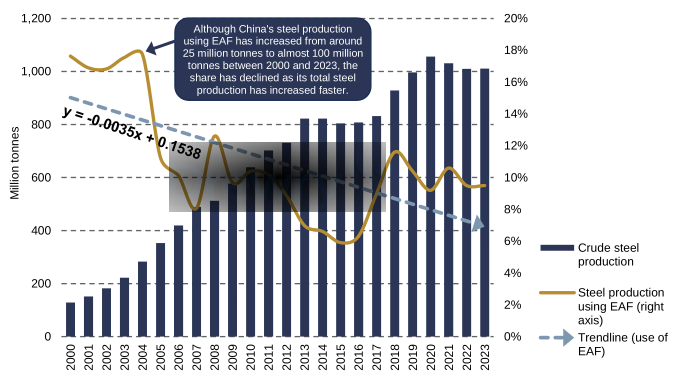
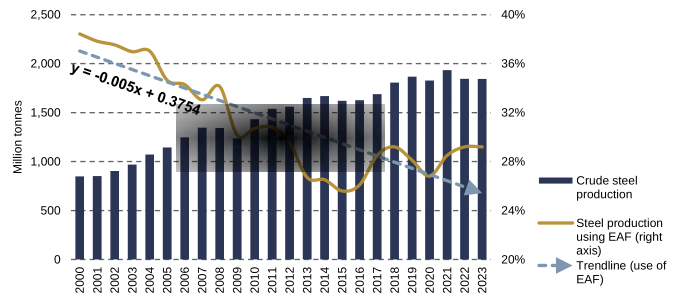
Why is ample scrap not available even when the global crude steel production reached the one-billion tonne mark in 2004?
The availability of ferrous scrap is not adequate since the quantity varies with the life cycles of the steel products, which are sometimes several decades long. As per Worldsteel, the average lifetime of a steel product is around 40 years, making the time lag exceedingly long before the recycling process can occur. Steel demand will continue to grow at a faster rate compared to the supply of scrap generated from the available pool of ‘steel in use’.
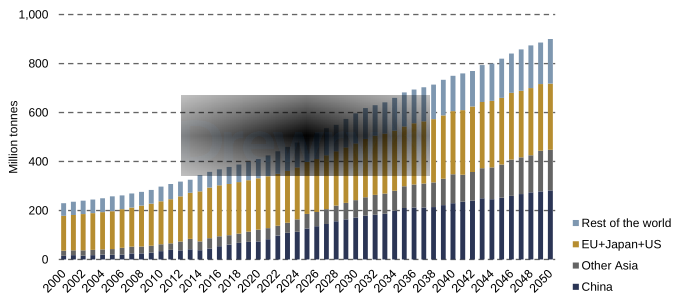
The global availability of end-of-life scrap is projected to increase to around 600 million tonnes by 2030 and to some 900 million tonnes by 2050—an increase of over 300 million tonnes in 20 years. This will mean an addition of 15 million tonnes of scrap annually while steel demand will grow by almost 50-60 million tonnes in the same period, generating the need for more iron ore. Until scrap-based production becomes abundantly available, the demand for iron ore will remain high, and as a result, Capesize earnings will continue to rise.
Capesize demand gets a further boost from increasing shift of bauxite trade towards bigger vessels
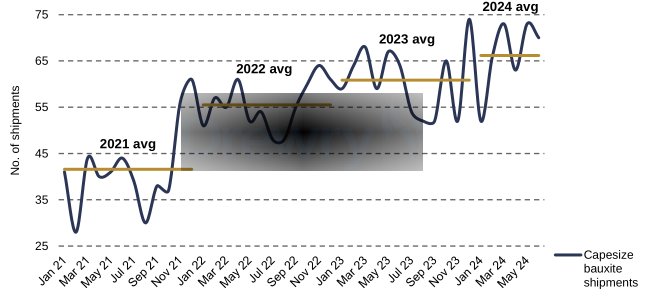
The share of bauxite trade in Capesize employment has increased exponentially over the past few years due to an expansion in demand for aluminium products in China. This is due to the increasing usage of renewable energy, which uses aluminium in solar panels, wind turbines, turbine blades and structural supports in hydroelectric power, advanced battery technologies and EVs.
The employment of these vessels will further strengthen amid the rising use of lighter, versatile and corrosive-free aluminium products in China’s infrastructure sector, aiding the massive surge in demand for bauxite. The metal is shipped on Capesizes on the Guinea-China route.
For a brief period in April, the bauxite trade on Guinea-China had replaced Brazil-China trade as the second largest employer of Capesizes after Australia-China; this phenomenon is likely to happen more often in the coming years.
The Capesize supply could get tight
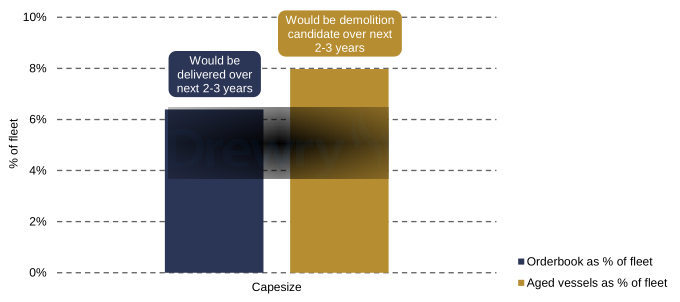
The Capesize supply will contract since almost 8% of the fleet is now over 18 years and these vessels could be demolished over the next two-three years (when all of these become more than 20 years old), while the orderbook accounts for less than 6.5% of the fleet, which would be insufficient to replace the ageing fleet. These vessels will easily trade past their fourth Special Survey under normal circumstances. However, the tightening regulations and the need to adopt the carbon-emission norms would push most of these older tonnages out of operations sooner rather than later. It would not be economically viable for these aged vessels to operate for a long time without incurring extra costs in compliance, diminishing their competitiveness.
There has been a considerable shift in China’s coal imports, from smaller vessels to Capesizes, as China resumed imports from Australia. A detailed analysis of the factors influencing Capesize demand will be discussed in the Dry Bulk Forecaster, to be published in August 2024.
Conclusion
Although the steel industry is trying to move away from the blast furnace route to the electric arc furnace method dependent on ferrous scrap, a lack of recycled metal will keep the iron ore trade high. Furthermore, the surge in bauxite trade on Capesize vessels, coupled with a relatively low orderbook compared to the ageing fleet, will support the Capesize charter market in the long run.
Source: Drewry



Related News.

Global Flag State Ranking 2026 who is up, who is down
Lorrendraaier publishes Global Flag State Ranking 2026: 148 flags measured on objective data, Singapore leads, Pakistan falls 35 places, the Dutch…
Will Germany have enough gas this winter?
As of mid-September 2026, Germany had stored just about 141 terawatt-hours of gas, accounting for around 57% of the country’s total storage…

Record diesel prices put US policy options in focus
Record-high diesel prices and tight inventories have put US exports under scrutiny, but keeping more barrels at home may offer only temporary…

IUMI elects Sean M. Dalton as President and says farewell to Frédéric Denèfle
The International Union of Marine Insurance (IUMI) has elected Sean M. Dalton as its new President. The election took place today at a meeting of the…
F/V MISTRESS Shipwreck ‘Lost’ Near Block Island Located After Seven Years
Green Oceans’ Underwater Investigation Reveals a Shipwreck Presumed to be the F/V Mistress found at the Base of Block Island Turbine #1 - Asks…

OCEAN at 50 celebrating a proud past and Maritime Future
OCEAN, the European sub-committee of ISSA, celebrated half a century of service to Europe’s ship supply sector with a landmark anniversary conference…

DORIC MONTHLY BRAZIL BAROMETER SEPTEMBER 2026
Pls find below the DORIC MONTHLY - BRAZIL BAROMETER SEPTEMBER 2026 BRAZIL_BAROMETER_SEPTEMBER_2026

Steel flows face fresh challenges in the final quarter of 2026
Steel flows slip into negative growth in July 2026 Global steel flows fall 1% y/y in July 2026 to reach 22.2 Mt. China’s share of global steel…

Insurance must shift “from repair to prevention”, says IUMI
Marine insurers will need to place greater emphasis on loss prevention as risks become more complex and costly to insure, according to Pascal Dubois,…

BIMCO’s Container Shipping Market Overview & Outlook September 2026 is out
Container Shipping Market Overview & Outlook Supply pressure is mounting "Disruptions and strong growth in head-haul trades continue to support…
Subscribe to our newsletter!
if you dont want to swim alone in the ocean of news, sign up for the newsletter, and you will receive daily all the important news of world shipping!
