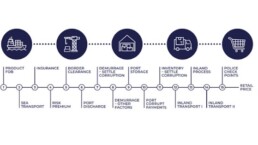

For over a decade, the Maritime Anti-Corruption Network (MACN) has gathered first-hand data to map the extent of maritime corruption in the port and maritime sector. While detailed accounts of the direct cost of corruption have been documented, a comprehensive assessment of its overall monetary impact on the maritime industry and wider society, including indirect costs such as extended vessel lead times and delays, has been lacking. Understanding these hidden costs is crucial, as they profoundly affect commercial activity and society.
A new MACN study, developed by QBIS, quantifies the dollar value of corruption for the private sector, government, and society, including hidden indirect costs from corrupt practices across the maritime supply chain. The study captures import costs from sea transport to the price to the end consumer, excluding profit, while considering hidden indirect costs from long lead times, delays, and corrupt payments.
Using Nigeria as a case study, the assessment seeks to understand the wide-reaching impact of maritime corruption on the industry and society. Assuming all bribery requests during vessel clearance are met without resistance from the private sector or government, corruption costs for importing food and bulk products into Nigeria exceed USD 162 million per year, adding about 15% to total transport and logistics costs. Per shipment, the cost of corruption for bulk imports is, on average, USD 182,300.
With 63% of Nigerians, or 133 million people, classified as multidimensionally poor, increased costs due to corruption are likely to reduce household demand and make essential goods less affordable for the average family. Based on this scenario, the cost of corruption adds about 1-2 percent to retail prices for grain and petrol. This results in less consumption and sales, negatively impacting GDP, tariffs collected by Customs, and job creation. Maritime corruption results in an annual reduction in GDP of USD 204 million; an annual reduction in revenue collected by Customs of USD 42 million; and 235,000 fewer Full-Time Equivalent (FTE) jobs due to reduced sales and economic activity.
The total economic damage of maritime corruption is likely to be much higher. If similar costs of corruption apply to container imports, the economic damage of maritime corruption will more than double according to this study.
The study also highlights the impact of MACN’s current anti-corruption initiatives. Through industry commitment and proactive government measures, significant progress has been made in reducing corruption within the Nigerian port sector. Before 2019, resolving a single bribery case took 7 to 10 days. Current data shows that over 90% of corruption incidents addressed through MACN are resolved within 24 hours by the relevant government agency in Nigeria.
This new study demonstrates a clear economic benefit and a compelling business case for proactive anti-corruption measures by both governments and businesses. These benefits have positive ripple effects on the economy, domestic revenue mobilization, the business climate, and people’s livelihoods.
Source: Maritime Anti-Corruption Network (MACN)



Related News.

Beyond Technical Skills: WISTA Cyprus explores the human side of leadership
WISTA Cyprus hosted The Art of Leadership & Emotional Mastery, an interactive workshop held on 15 October at the Alasia Hotel in Limassol,…
The human cost of sending merchant mariners into war zones extends far beyond the immediate danger of missiles and drones. It raises a harder question: who is really protecting the seafarer?
Who protects the seafarer? I have spent much of my professional life at sea. I am a Master Mariner. I have stood on the bridge, made decisions…
Loss of bridge control: Human failure is normal – context is key
When bridge control is lost in a functioning system, it can be easy to blame human error. But accidents rarely happen because of one mistake…
Danish Shipping announces the transport of live animals by sea new rules should improve safety for animals, seafarers and the environment
Revised rules on the transport of live animals by sea are being negotiated in the EU. Danish Shipping wants to ensure good animal welfare,…

Japan’s flawed shipping proposal leaves developing countries adrift
A new analysis by Opportunity Green warns governments of the wide-ranging risks posed by Japan’s proposal at the International Maritime Organization…

Intermodal Report Week 42 2026
Pls find below the Intermodal Report - Week 42 2026 Intermodal Report Week 42 2026
Allied Weekly Market Review Week 42
Pls find below the Allied - Weekly Market Review - Week 42 ALLIED - Weekly Market Report- Week 42
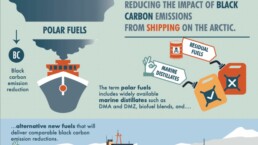
EU Arctic Strategy NGOs welcome EU ambition on on cutting shipping’s Arctic Black Carbon Emissions
Responding to today’s publication of the EU’s Arctic Strategy, which definitively states the EU’s intention to support International Maritime…
The final quarter of 2026 is expected to see softer bauxite flows
Chinese front-loading is expected to have run its course, pointing to softer bauxite flows in 2026 Q4. Global bauxite flows increased by 2.8% y/y…

DP World Foundation and Belewan new container terminal mark groundbreaking of AED 3.7 million school project in Indonesia
Classrooms of Hope initiative expands to Belawan, Medan with a new junior high school designed to provide modern learning facilities and greater…
Subscribe to our newsletter!
if you dont want to swim alone in the ocean of news, sign up for the newsletter, and you will receive daily all the important news of world shipping!
