KIMM opens up the possibility of building “eco-friendly fuel stations” as it strives to make “clean fuels” a reality through the production of electrofuels
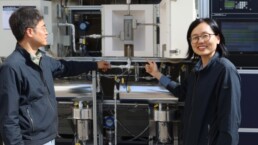

For the first time in the country, KIMM develops a microchannel reactor for producing electrofuels similar to diesel fuel –
– Newly developed reactor, which has a capacity 30 times larger than that of current reactors while reducing the amount of catalyst to 30 percent, is anticipated to accelerate carbon reductions
Starting in 2035, the European Union will prohibit the sale of internal combustion engine vehicles powered by gasoline or diesel, except for newly manufactured cars that utilize electrofuels. In this regard, a breakthrough has been achieved nationally with the development of a microchannel reactor** that can produce electrofuels comparable to diesel. This innovative technology not only converts carbon dioxide into diesel-like fuels, making it a viable solution for future international fuel standards, but also holds promise for various industries requiring heat management, including electrofuel production and ammonia synthesis.
Electrofuels: Electrofuels, also known as e-fuels, are manufactured using green hydrogen (renewable hydrogen) obtained through electrolysis using renewable energy, together with carbon dioxide captured from the air. Considered as “clean fuels,” electrofuels are expected to contribute to the reduction of carbon emissions in the transportation sector.
Microchannel reactor: A microchannel reactor is a reactor composed of very small channels, and is a highly efficient system that performs chemical reactions through these channels. This reactor facilitates the efficient transfer of heat.
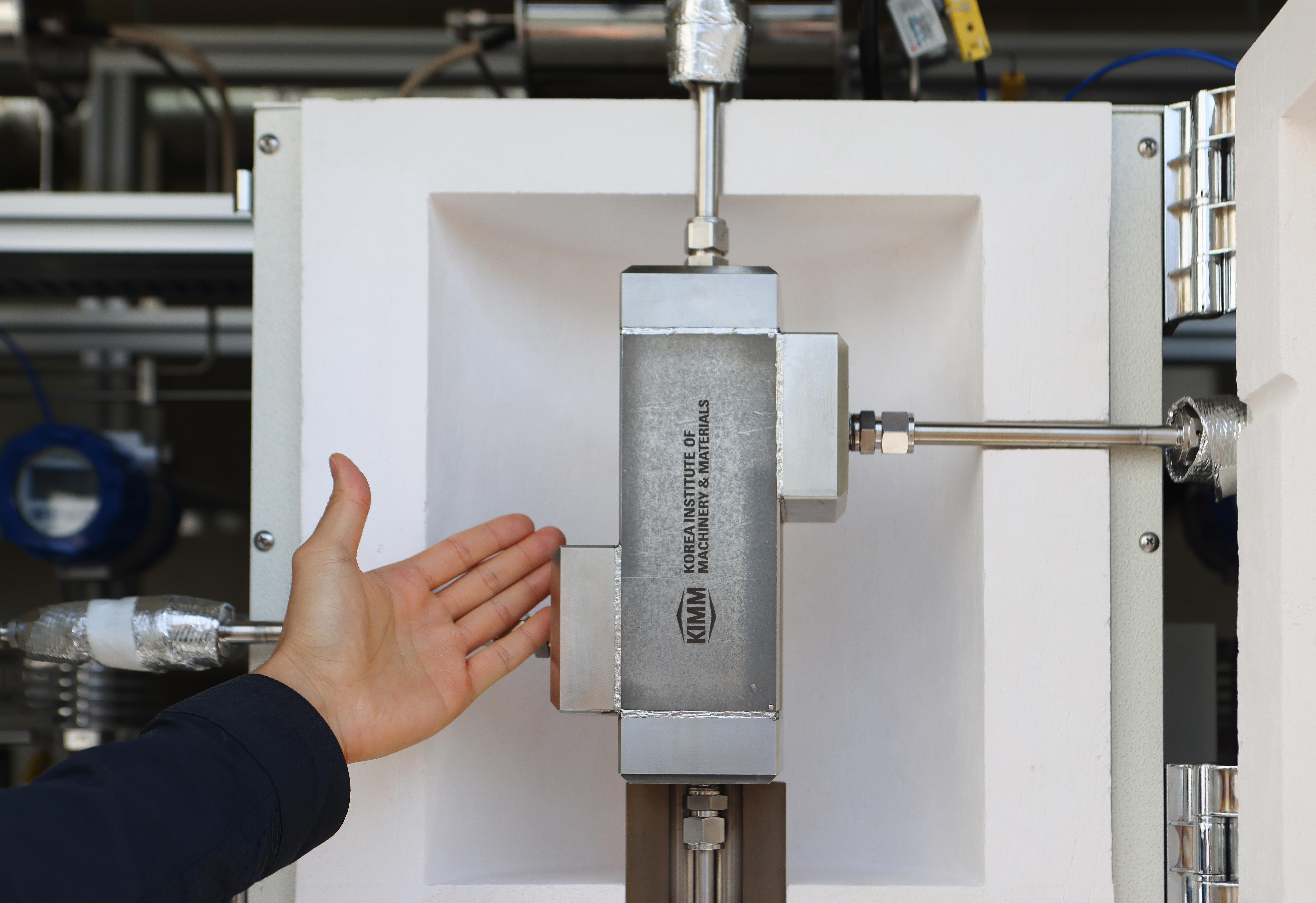
The research team led by Principal Researcher Young Kim from the Heat Pump Research Center of the Research Institute of Carbon-neutral Energy Machinery of the Korea Institute of Machinery and Materials (President Seog-Hyeon Ryu, hereinafter referred to as KIMM) has successfully developed a highly efficient microchannel reactor which reduces the required catalyst amount to 30 percent for electrofuel production, yet offers a capacity 30 times greater than current reactors. This reactor is safe at high temperature and pressure and is easy to remove heat, so the temperature setting is flexible, making it advantageous for e-fuel production.
The production of electrofuels involves synthesizing green hydrogen with carbon dioxide, a process that generates significant amount of heat. Consequently, a crucial technology is needed to effectively dissipate this heat. The reactor developed by the KIMM employs a novel approach of fusing plates with a layered microchannel structure through a high-temperature method rather than using adhesives. This design enables the reactor to excellently manage heat, even at elevated temperatures.
The electrofuels generated using the reactor created by the KIMM’s research team exhibit a cetane index* of 55.7, satisfying the domestic requirement for vehicle diesel, which mandates a cetane index of at least 52. This index aligns closely with the cetane numbers of diesel sold by Korean refineries, typically ranging from 54 to 57.
Cetane index: Cetane index is an indicator of the combustion performance of diesel fuels, and is used for calculating how easily the fuel is ignited in the diesel engine. The higher the cetane index, the faster and easier the fuel ignites in the engine.
Conventionally, slurry reactors or fluidized bed reactors (FBRs) are used when excessive heat is generated during the fuel synthesis process, but these are effective in large-scale production. As the amount of hydrogen produced from the surplus power in decentralized renewable power plants is relatively small, applying a large-sized reactor has the disadvantage of inhibiting economic efficiency.
Leveraging the existing technology for microchannel heat exchangers, the KIMM’s research team has engineered a compact, highly efficient microchannel reactor. During testing, it was confirmed that 93 percent of the synthetic gas was converted into fuel. The development of a production process for electrofuels, compact enough to fit within a cargo container, could eventually lead to the establishment of eco-friendly fuel stations dispensing electrofuels
Principal Researcher Young Kim of the KIMM was quoted as saying, “The superior heat management capabilities of this new technology allow it to swiftly adapt to variations in the supply of intermittently stored renewable energies, such as solar or wind power.” Kim further stated, “In anticipation of future scenarios with surplus renewable energy supplies, our team is committed to enhancing the economic viability of renewable energy production and improving power grid stability through the application of sophisticated power demand management technologies.”
Meanwhile, this research was facilitated by the project for the “development of a microchannel reactor for power-to-fuel systems,” one of the basic projects of the KIMM.



Related News.

Navigating the Multi-Orbit Era: In Conversation with Intellian’s Jon Harrison at SMM 2026
At SMM 2026 in Hamburg, the rapid evolution of maritime satellite communications took centre stage. Across the exhibition halls, discussions among…
Cyprus ports need joint energy and investment strategy, shipping agents chief says
Cyprus needs a coordinated strategy for shipping, energy and environmental protection to support port investment and modernisation, Cyprus shipping…

MASO Public Affairs introduces MASO Regulatory Intelligence
A new subscription service helping businesses understand what is changing and what it means for them MASO Public Affairs introduces MASO Regulatory…
Anglo-Eastern helps turn CMBTECH’s ammonia ambition into an operational reality
From early feasibility study and risk-based design to newbuilding supervision, crew readiness and technical management, Anglo-Eastern drew on its…

Escalation of attacks threatens to derail recovery in Middle East oil exports
World oil demand is forecast to fall by 2.5 mb/d y-o-y in 4Q26 and 2.6 mb/d on average in 2026. As the Iran war manifests itself through restricted…

New study finds shipping pays twice its share to EU ETS earmarked revenues should triple to help build market for sustainable fuels and technologies
Shipping is responsible for around 10% of EU ETS emissions but pays almost 20% of the ETS bill. Unlike other sectors, it has never received free…

MSARC strengthens maritime mass rescue readiness through training and national live exercise off Dakar, Senegal
Joint MSARC–FHAS programme combines three days of SAR training with a national multi-agency live exercise The Maritime Search and Rescue Council ,…
Sogese report deliveries are still being delayed as container freight rates fluctuate
FOR IMPORTERS Spot rates into the Mediterranean are back at January levels, Far East to Europe reliability sits at pandemic lows, and nearly…
Glencore begins trading on Australian Securities Exchange
Glencore has begun trading on the Australian Securities Exchange under the ASX code GLC. Gary Nagle, Glencore’s CEO, said it was an exciting day for…
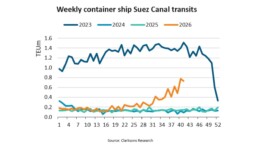
BIMCO Shipping Number of the Week
Suez Canal container ship transits exceed 50% of pre-disruption levels "During the first two weeks of October, weekly container ship capacity…
Subscribe to our newsletter!
if you dont want to swim alone in the ocean of news, sign up for the newsletter, and you will receive daily all the important news of world shipping!
