Bureau Veritas report highlights the potential of carbon capture technologies and the development of carbon value chains for shipping
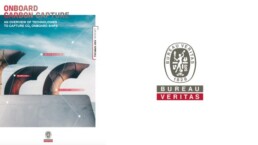

Bureau Veritas , a global leader in the Testing, Inspection, and Certification industry, has released a report which assesses the technical viability of current carbon capture & storage technology within the marine market, and highlights the vital role that shipping can play across the entire CCS value chain.
The technology report, titled Onboard Carbon Capture: An Overview of Technologies to Capture CO2 Onboard Ships, details the current state of play regarding a wide range of emerging CCS technologies. The paper explores the technical and commercial viability of implementing CCS technology onboard vessels, highlighting the results from key feasibility studies that showed achievable capture rates between 82% and 90%.
The report also details the challenges to the wider adoption and integration of CCS technologies, such as regulatory frameworks that are yet to be consolidated at a global level, as well as from an operational perspective. Concerns have been raised regarding the available space onboard vessels to accommodate CCS technologies, as well as the safe handling of CO2 onboard.
While alternative fuels are generally seen as the key to ushering in a new era of sustainable shipping, the BV report recognizes that the role of carbon capture technologies in decarbonising the maritime sector cannot be overlooked. The paper also outlines the significant role that shipping can play in facilitating the development of a global carbon capture, utilisation, and storage (CCUS) value chain as a major mode of CO2 transportation, particularly given the growing interest in offshore CO2 storage sites. Globally, some 230 million metric tons of CO2 are already used in industrial applications every year, including in the production of fertilizers, steel, and food and beverages.

Marcos Salido, Environmental Project Manager (Strategy & Advanced Services) at Bureau VeritasMarine & Offshore and main author of the report, said: “When assessing the feasibility of carbon capture technology onboard vessels, it is vital to do so within the context of the entire CCUS value chain, taking into account the potential challenges related to the management of the captured CO2. With sufficient regulations and infrastructure in place, the maritime industry could benefit from the development of a truly circular CO2 economy, whilst contributing to the industry’s ambitious decarbonization targets.”



Related News.

Navigating the Multi-Orbit Era: In Conversation with Intellian’s Jon Harrison at SMM 2026
At SMM 2026 in Hamburg, the rapid evolution of maritime satellite communications took centre stage. Across the exhibition halls, discussions among…

Cyprus ports need joint energy and investment strategy, shipping agents chief says
Cyprus needs a coordinated strategy for shipping, energy and environmental protection to support port investment and modernisation, Cyprus shipping…

MASO Public Affairs introduces MASO Regulatory Intelligence
A new subscription service helping businesses understand what is changing and what it means for them MASO Public Affairs introduces MASO Regulatory…

Anglo-Eastern helps turn CMBTECH’s ammonia ambition into an operational reality
From early feasibility study and risk-based design to newbuilding supervision, crew readiness and technical management, Anglo-Eastern drew on its…

Escalation of attacks threatens to derail recovery in Middle East oil exports
World oil demand is forecast to fall by 2.5 mb/d y-o-y in 4Q26 and 2.6 mb/d on average in 2026. As the Iran war manifests itself through restricted…

New study finds shipping pays twice its share to EU ETS earmarked revenues should triple to help build market for sustainable fuels and technologies
Shipping is responsible for around 10% of EU ETS emissions but pays almost 20% of the ETS bill. Unlike other sectors, it has never received free…

MSARC strengthens maritime mass rescue readiness through training and national live exercise off Dakar, Senegal
Joint MSARC–FHAS programme combines three days of SAR training with a national multi-agency live exercise The Maritime Search and Rescue Council ,…

Sogese report deliveries are still being delayed as container freight rates fluctuate
FOR IMPORTERS Spot rates into the Mediterranean are back at January levels, Far East to Europe reliability sits at pandemic lows, and nearly…

Glencore begins trading on Australian Securities Exchange
Glencore has begun trading on the Australian Securities Exchange under the ASX code GLC. Gary Nagle, Glencore’s CEO, said it was an exciting day for…

BIMCO Shipping Number of the Week
Suez Canal container ship transits exceed 50% of pre-disruption levels "During the first two weeks of October, weekly container ship capacity…
Subscribe to our newsletter!
if you dont want to swim alone in the ocean of news, sign up for the newsletter, and you will receive daily all the important news of world shipping!
