Telefónica automates a printing process and creates its centenary key ring
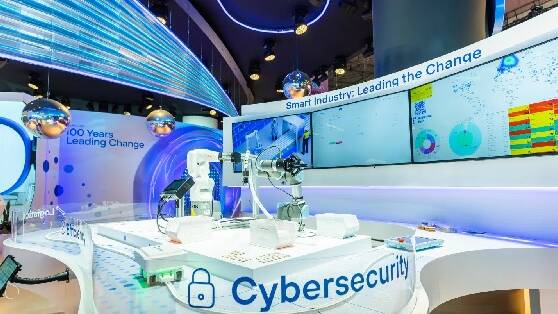

• Telefónica presents the demo ‘Smart Industry: Leading the Change’ at the MWC, where a printing process in a key ring factory is automated and digitised. The result will be the creation of a key ring with the company’s centenary logo and a QR code that ensures its authenticity and traceability through blockchain technology.
• The process will be protected with Aristeo, a pioneering threat capture and predictive analysis tool developed by Telefónica Tech, which reproduces real industrial environments to confuse attackers and extract all the knowledge about the threats received.
At the Mobile World Congress (MWC), Telefónica is showcasing its technological capacity to develop a fully automated, digitised and secure industrial process that incorporates advanced technologies such as 5G, edge computing, OT cyber security, big data and data analytics, artificial vision and blockchain. Through its demo ‘Smart Industry: Leading the Change’, the company shows on its stand how the industrial sector can automate and digitise factory processes and creates for visitors, as an example, a wooden key ring with a screen-printed logo commemorating its 100 years of history.
The demo ‘Smart Industry: Leading the Change’ is a comprehensive proposal of solutions that help the industrial sector to digitally transform itself to be more competitive, innovative and environmentally friendly. It mainly consists of two robotic arms (one of them collaborative) and an IoVI artificial vision camera that performs quality control of the parts and through artificial intelligence makes decisions and launches actions to the collaborative robotic arm. Each element registers through TrustOS, Telefónica Tech’s blockchain service, all the relevant events in the process (entry and exit of each zone, quality parameters…) to be able to offer visitors detailed traceability and details of the different phases of the key ring’s manufacture.
In addition, the demo also features an AMR dedicated to intralogistics functions, which will be immune to potential threats thanks to the OT cybersecurity measures adopted.
María Jesús Almazor, Telefónica Tech COO for Spain and the Americas, said: “Industry is a priority sector for us because of its importance in the economy and because of the countless opportunities that technology offers in building more efficient and competitive production processes. This demo is a clear example of the comprehensive technological capabilities we have to cover any automation and safety needs in the sector”.
How the demo works
In the ‘Smart Industry: Leading the Change’ demo, Telefónica demonstrates the collaborative robot’s ability to pick up the parts in a drawer and transport them to the machine vision camera to determine whether they meet optimum quality levels. If the part is free of any irregularities, the robot will continue the process of making the key ring by bringing it close to the robotic arm to print the company’s centenary logo with its integrated industrial printer. However, if the computer vision technology detects any damage to the part or is unable to find the key ring perforation, the system will inform the robot of the reason for discarding it so that the robot can put it aside and deposit it in a different drawer for defective materials.
The key ring, in addition to the screen-printed image of Telefónica’s centenary logo, will also have a QR code printed on the back with a dual purpose. On the one hand, each key ring has a digital certificate issued by TrustOS, Telefónica Tech’s managed blockchain platform, which accredits the originality and authenticity of the key ring as part of the limited series manufactured to mark the company’s centenary. On the other hand, it allows visitors to see the detailed traceability of the industrial process, from the date it was manufactured to the different analyses carried out on the different elements. Blockchain technology guarantees both the authenticity of the product and control over the production process by creating ecosystems of trust where the information recorded is totally transparent and cannot be modified, altered or eliminated without leaving evidence of it.
The demo also relies on the MES and WMS industrial digitalisation systems to monitor available virgin material and printed parts, as well as to give orders to the AMR to bring in more raw material and replace full drawers. In this way, the industrial sector is able to optimise its warehouse by being able to technologically manage its inventory, provide end-to-end product traceability and control stock and production in real time.
All this data (part quality, the rate of printed parts produced per minute and the number of defects, among others) provides valuable information to management platforms to ensure a more efficient and productive production cycle. In this sense, the demo shows a digital twin, representing virtually and in real time the physical environment thanks to the low latency of 5G and edge computing, which collects all the data from each of the processes, makes it possible to simulate changes and foresee situations, anticipate possible breakdowns and take measures and even apply responses to check if they work before implementing them in the factory.
The ‘Smart Industry: Leading the Change’ demo also incorporates the Aristeo cyber security solution to protect connected elements from possible attacks by cybercriminals. Aristeo is a pioneering predictive threat capture and analysis project developed by Telefónica Tech that consists of deploying a network of decoys on the Internet with real industrial hardware that reproduces industrial environments to confuse attackers and extract all the information about the threats received (their strengths, weaknesses and their behaviour in each part of the system they pass through). As a predictive system, it also identifies trends and unknown vulnerabilities that it will later use to improve and update customer protection.
In this case, visitors will be able to see how, without Aristeo’s intelligence, the robot paralyses and emits light and acoustic signals when it receives a cyber-attack, and yet how the loading of its intelligence into the security systems manages to protect the robot from a threat for which the security system was not prepared a priori.



Related News.
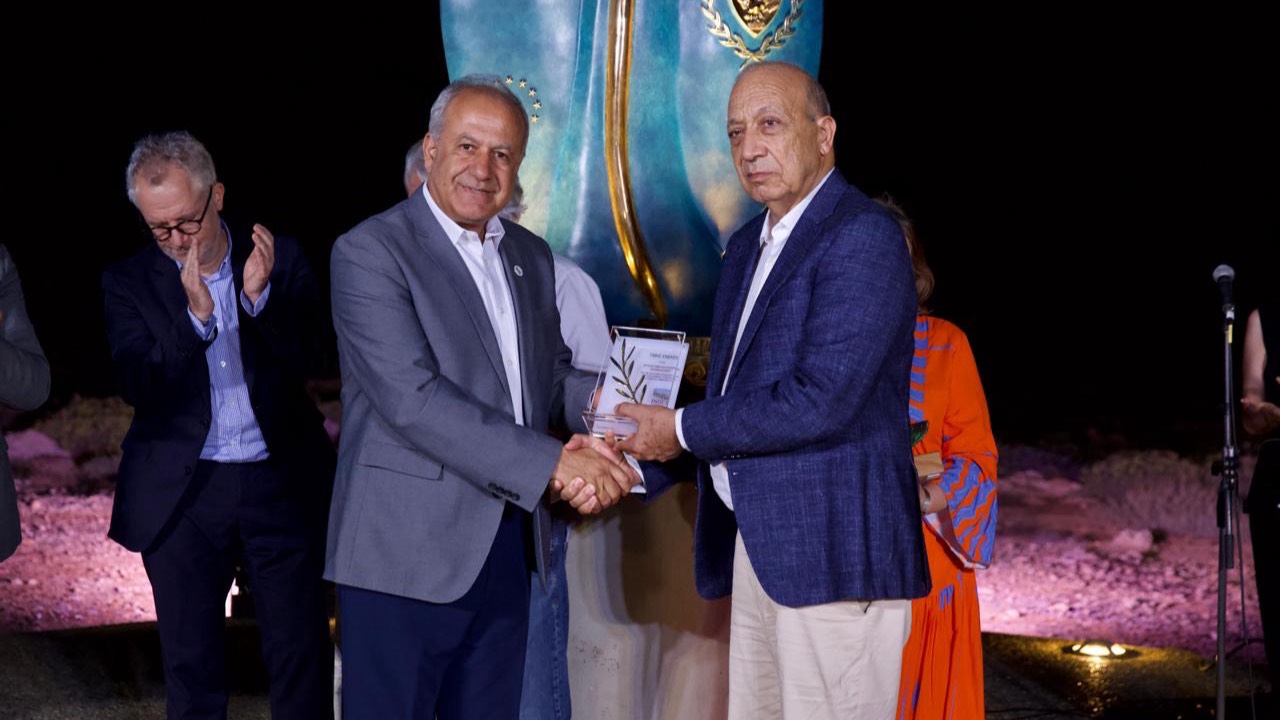
ISLAND OIL: Unveiling of the Sculpture “Cyprus’s Journey Through the Ages” in Protaras – A Tribute and Landmark to Cyprus’s Historical Memory and Cultural Heritage
In a modest ceremony marked by a moving atmosphere, the sculpture “Cyprus’s Journey Through the Ages”, created by acclaimed Cypriot sculptor…

World Maritime Day 2026 from Policy to Practice – powering Maritime Excellence
Global regulations will deliver safer, more resilient shipping when they are implemented worldwide. The international maritime community marks…

Diana Shipping announces Time Charter Contract for m/v DSI Polaris with Dai An Ocean Shipping
Diana Shipping , a global shipping company specializing in the ownership and bareboat charter-in of dry bulk vessels, announced that, through a…

Chief Economists Expect Global Economy to Stabilize, but Fiscal Constraints, Rising Living Costs and AI Investment Uncertainty Threaten Growth
The global economy is stabilizing, but the fiscal support that cushioned successive shocks since 2020 is unlikely to play the same role in the year…
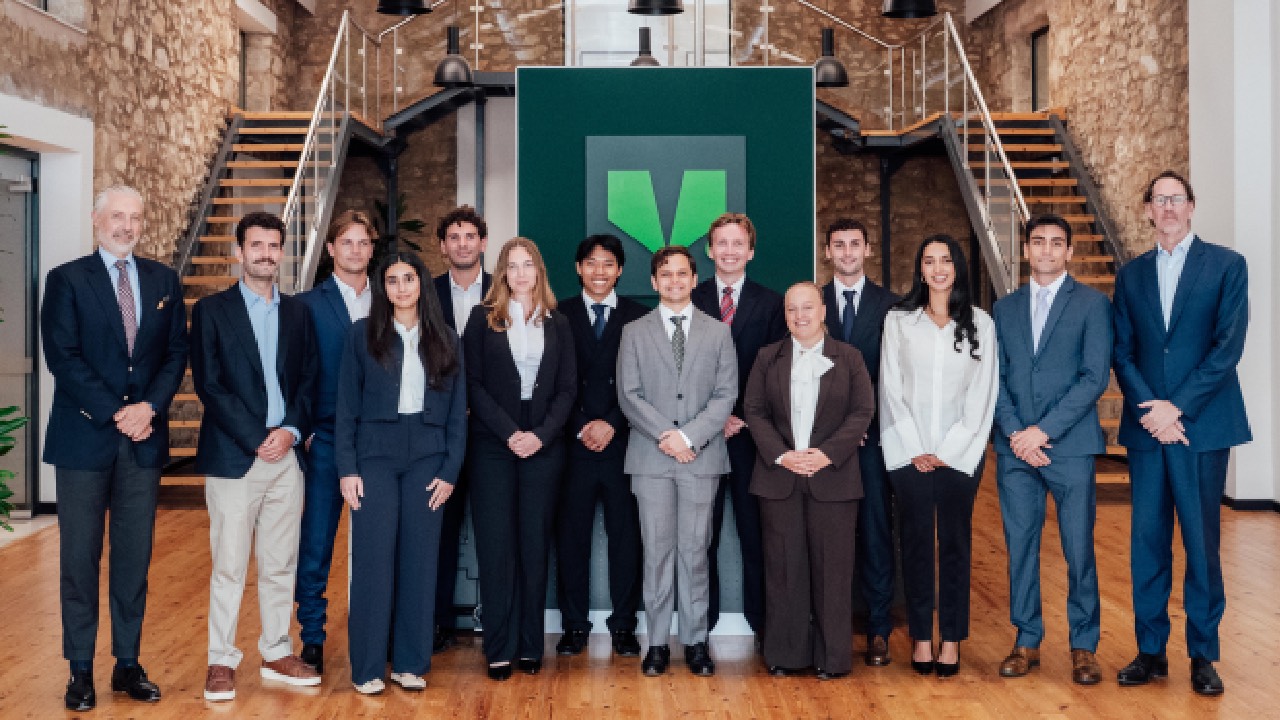
V. welcomes its new graduate cohort as programme expands across the group
Twelve graduates from nine nationalities join 11th year of V.’s expanded international management programme. V., the global ship manager and marine…

From Policy to Practice: Why Seafarers Are the Key to Maritime Excellence
The shipping industry is no stranger to regulation. Seafarers and ship operators work within a vast framework of international conventions, national…

Intermodal Report – Week 38 2026
Please find below the Intermodal market report for week 38 2026. Intermodal Report Week 38 2026 Market Insight By Nikos Tagoulis, Head of…

Allied – Weekly Market Review – Week 38
Please find below the Allied Weekly Report for Week 38 | 2026 ALLIED - Weekly Market Report- Week 38

Record year on the Northeast Passage but Arctic shipping remains very limited
In 2025, a record 103 transit voyages were made via the Northeast Passage. However, this is still equivalent to only around a day and a half of…

[xclusiv] S&P Report 21th September 2026
Please find below the [xclusiv] latest Weekly S&P Report [xclusiv] 2026_09_21 Market Commentary: VLCCs: Freight Boom Reprices the Fleet The VLCC…
Subscribe to our newsletter!
if you dont want to swim alone in the ocean of news, sign up for the newsletter, and you will receive daily all the important news of world shipping!
