Astroscale’s ELSA-d finalises De-Orbit operations marking successful mission conclusion
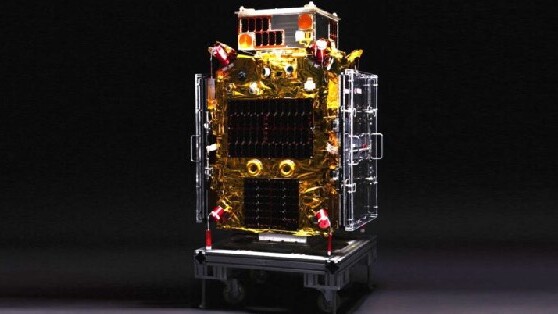

The mission demonstrated capabilities essential for on-orbit servicing, including capture and rendezvous and proximity operations, paving the way for a sustainable future in space.
Astroscale Holdings, the market leader in satellite servicing and long-term orbital sustainability across all orbits, announces it has completed the final phase of its End-of-Life Services by Astroscale (ELSA-d) mission with the safe and controlled de-orbit operations of the ELSA-d servicer satellite using the remaining operational thrusters, marking the successful conclusion of the pioneering mission. The servicer is orbiting at an altitude of approximately 500km and will re-enter and burn-up in approximately 3.5 years — well within the commonly adopted 25-year guidelines. The client satellite, which does not have the ability to maneuver, is predicted to naturally de-orbit within five years.
ELSA-d was the world’s first commercial mission to prove the core technologies necessary for on-orbit satellite servicing in low Earth orbit (LEO). The mission, which consisted of two satellites — a servicer designed to safely remove debris from orbit and a client that serves as a piece of replica debris — was launched as a stack from the Baikonur Cosmodrome in Kazakhstan in March 2021.
The mission successfully completed unprecedented demonstrations in orbit, including repeated magnetic capture and rendezvous operations. In the first demonstration, the servicer released the client and manually performed magnetic docking, successfully validating the capture system, on-board sensors and cameras. During the Autonomous Capture demonstration, the servicer released the client and began autonomous relative navigation holding a “home position” for over seven hours. However, anomalous spacecraft conditions were detected and for the safety of the mission, the team decided not to proceed with the capture attempt.
Despite the servicer losing the use of four out of its eight thrusters, the mission went on to complete further controlled close-approach rendezvous operations between its two spacecraft in orbit. The technologies proven in this demonstration included tracking of an object from a great distance, rendezvous with an uncontrolled object, and handover from absolute navigation to relative navigation for a LEO servicing spacecraft. These capabilities are essential for rendezvous and proximity operations and on-orbit servicing, and this demonstration was unprecedented for a commercially funded mission in LEO.
The ELSA-d mission proved other key capabilities required for on-orbit servicing, including:
- autonomous guidance, navigation and control algorithms,
- closed loop control with on-board navigation sensors,
- autonomous thruster rendezvous maneuvering and attitude control,
- navigation of a servicer spacecraft from approximately 1,600 km to within 160 m of a client using absolute navigation techniques (GPS and ground-based observations),
- transition from absolute navigation to relative navigation using on-board LPR sensor, and
- more than two years of servicer and client satellite in-orbit mission operations.
ELSA-d received numerous awards and accolades for breaking new ground for space sustainability and on-orbit servicing, including the International Astronautical Federation’s Excellence in Industry Awards 2023, Via Satellite 2021 Satellite Technology of the Year, and the Minister of State for Space Policy Award, sponsored by the Cabinet Office, Government of Japan.
“Despite the setbacks once in orbit, ELSA-d demonstrated multiple dynamically complex capture capabilities and rendezvous and proximity operations necessary for any future satellite servicing mission,” said Gene Fujii, Chief Engineer of Astroscale. “I congratulate the entire Astroscale team, our partners, and supporters for the successful conclusion of this mission. Now we turn our attention to our next launch, where ADRAS-J will showcase our technologies to approach and characterize an existing piece of large debris in orbit.”
Astroscale has harnessed what it learned from ELSA-d and evolved future missions, including the upcoming Active Debris Removal by Astroscale-Japan (ADRAS-J) mission. The mission is the world’s first attempt to safely approach, characterize and survey the state of an existing piece of unprepared large debris through rendezvous and proximity operations. ADRAS-J is designed to rendezvous with an unprepared Japanese H2A upper stage rocket body (approximately 11 meters long, 4 meters in diameter, and weighing approximately 3 tons), demonstrate proximity operations, and gather images to assess the rocket body’s movement and condition of the structure. Unprepared objects in orbit pose an additional challenge as they have not been prepared with any technologies that enable docking or potential servicing or removal. The mission will demonstrate some of the most challenging rendezvous and proximity capabilities necessary for on-orbit services.



Related News.
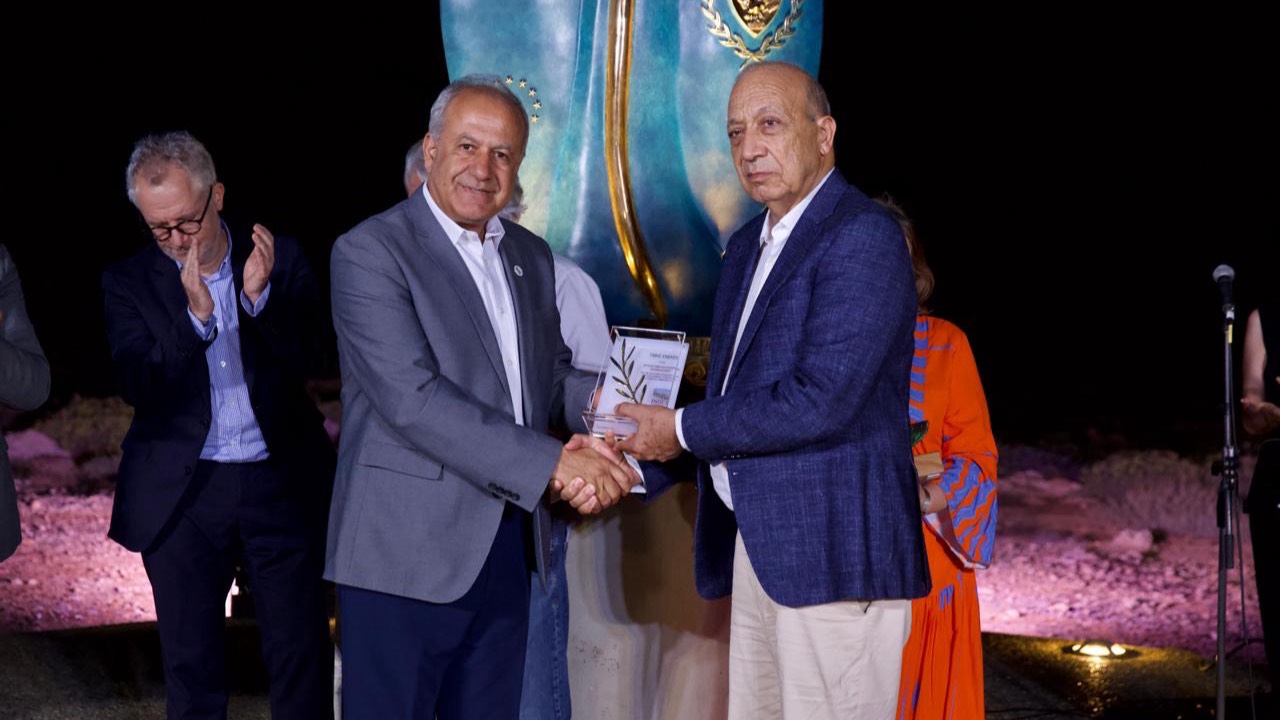
ISLAND OIL: Unveiling of the Sculpture “Cyprus’s Journey Through the Ages” in Protaras – A Tribute and Landmark to Cyprus’s Historical Memory and Cultural Heritage
In a modest ceremony marked by a moving atmosphere, the sculpture “Cyprus’s Journey Through the Ages”, created by acclaimed Cypriot sculptor…

World Maritime Day 2026 from Policy to Practice – powering Maritime Excellence
Global regulations will deliver safer, more resilient shipping when they are implemented worldwide. The international maritime community marks…

Diana Shipping announces Time Charter Contract for m/v DSI Polaris with Dai An Ocean Shipping
Diana Shipping , a global shipping company specializing in the ownership and bareboat charter-in of dry bulk vessels, announced that, through a…

Chief Economists Expect Global Economy to Stabilize, but Fiscal Constraints, Rising Living Costs and AI Investment Uncertainty Threaten Growth
The global economy is stabilizing, but the fiscal support that cushioned successive shocks since 2020 is unlikely to play the same role in the year…
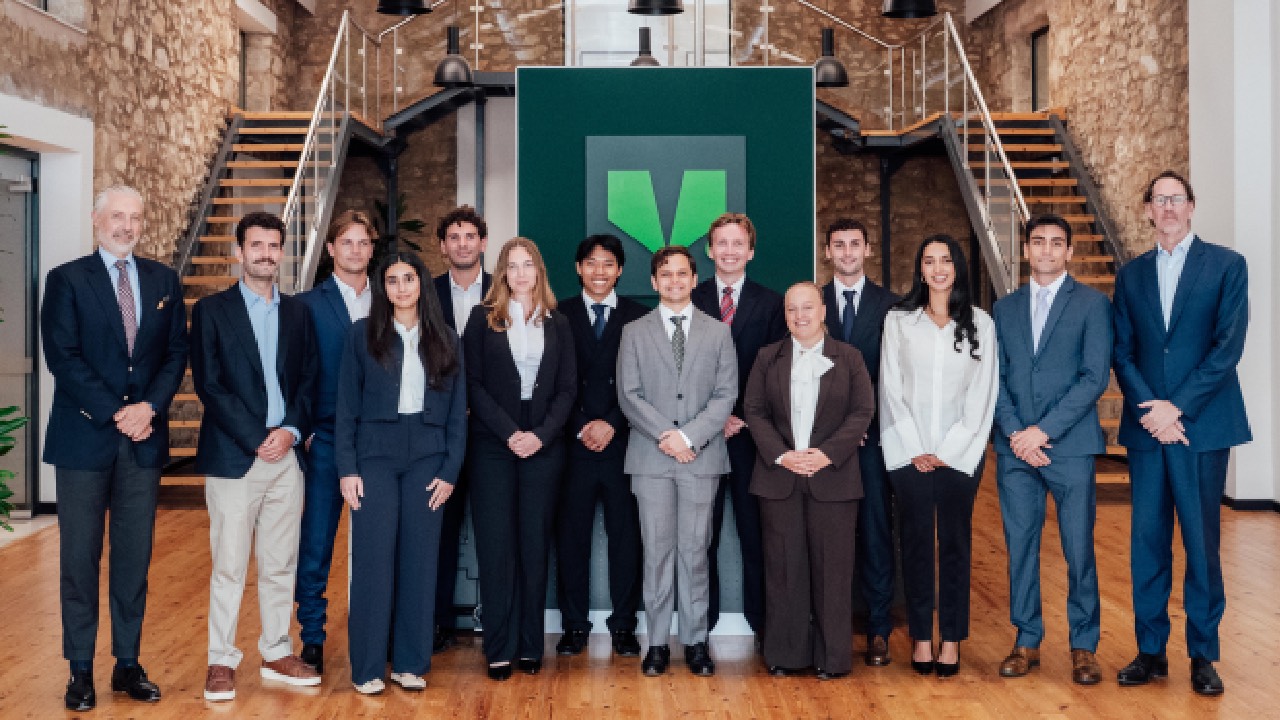
V. welcomes its new graduate cohort as programme expands across the group
Twelve graduates from nine nationalities join 11th year of V.’s expanded international management programme. V., the global ship manager and marine…

From Policy to Practice: Why Seafarers Are the Key to Maritime Excellence
The shipping industry is no stranger to regulation. Seafarers and ship operators work within a vast framework of international conventions, national…

Intermodal Report – Week 38 2026
Please find below the Intermodal market report for week 38 2026. Intermodal Report Week 38 2026 Market Insight By Nikos Tagoulis, Head of…

Allied – Weekly Market Review – Week 38
Please find below the Allied Weekly Report for Week 38 | 2026 ALLIED - Weekly Market Report- Week 38

Record year on the Northeast Passage but Arctic shipping remains very limited
In 2025, a record 103 transit voyages were made via the Northeast Passage. However, this is still equivalent to only around a day and a half of…

[xclusiv] S&P Report 21th September 2026
Please find below the [xclusiv] latest Weekly S&P Report [xclusiv] 2026_09_21 Market Commentary: VLCCs: Freight Boom Reprices the Fleet The VLCC…
Subscribe to our newsletter!
if you dont want to swim alone in the ocean of news, sign up for the newsletter, and you will receive daily all the important news of world shipping!
