Next wave of ECAs demands a new approach to emissions monitoring says SeaARCTOS


MEPC 80 saw details finalised for Mediterranean ECA and proposals tabled for new zones in the Canadian Arctic and North East Atlantic
Flag and port state control authorities will need new tools to monitor compliance within the next wave of Emissions Control Areas if compliance is to meet minimum standards, according to emissions management start-up SeaARCTOS.
The Mediterranean Sea will join the world’s other designated ECAs on May 1, 2025, requiring owners to switch from high to low sulfur fuel before passing Gibraltar, Suez and the Bosporus.
Proposals discussed at the recent IMO Marine Environment Protection Committee would see a Northeast Atlantic ECA link the Mediterranean ECA with those already established in the English Channel, North Sea, Baltic Sea. A further plan for a Canadian Arctic ECA would extend from the northern limits of the North American ECA effectively encompassing the continent.
The additional European ECA would effectively cover the majority of Europe’s waters requiring a vessel sailing into the Mediterranean Sea from the Suez Canal bound for a North European port to be compliant for that whole section of the voyage.
The pressure on vessel operators to demonstrate fuel switches to inspecting authorities before entering and after exiting these ECA zones will increase considerably. So will the burden of compliance monitoring by port and flag state control authorities whose job it is to enforce the regulation.
SeaARCTOS estimates that the Med ECA alone will impact 700,000 transits a year, but inspection and enforcement could be limited to around 10% of vessels and only on the inbound leg. The company believes that as attention has shifted towards emissions of carbon dioxide and other greenhouse gases, sulfur no longer commands the attention it deserves.
In April this year SeaARCTOS announced completion over 20,000 hours of real world testing on its Arctos-1 stack-mounted sensor gathering data from the fleets of Interlink Maritime and Bernhard Schulte. Type Approval in Principle was awarded by Lloyd’s Register.
ARCTOS-1 captures data directly from the engine and transmits it to the cloud independent of the ship’s communications system. The system is entirely self-contained, powered by waste heat from the stack and gives consistently accurate readings of fuel switches when ships enter or exit ECA zones.
“There is a risk that as the industry focuses on carbon, that sulfur emissions fall into the background, but they continue to present a serious public health risk and a compliance challenge,” says Michael Kougellis, SeaARCTOS CEO. “Growth in the ECA network means that demand for emissions monitoring and compliance management will continue to increase, requiring a solution the industry and governments can benefit from.”
ARCTOS-1 units are available by subscription per vessel per day, there is no hardware to buy, no communications costs or other hidden charges. The ability to remotely monitor the time and position of fuel switches also has benefits for owners and charterers, since it supports best practice on fuel management and ESG strategies. Future development of the sensor will include reporting emissions of NOx and CO2 as well as measurement of methane slip.



Related News.

Beyond Technical Skills: WISTA Cyprus explores the human side of leadership
WISTA Cyprus hosted The Art of Leadership & Emotional Mastery, an interactive workshop held on 15 October at the Alasia Hotel in Limassol,…
The human cost of sending merchant mariners into war zones extends far beyond the immediate danger of missiles and drones. It raises a harder question: who is really protecting the seafarer?
Who protects the seafarer? I have spent much of my professional life at sea. I am a Master Mariner. I have stood on the bridge, made decisions…

Loss of bridge control: Human failure is normal – context is key
When bridge control is lost in a functioning system, it can be easy to blame human error. But accidents rarely happen because of one mistake…
Danish Shipping announces the transport of live animals by sea new rules should improve safety for animals, seafarers and the environment
Revised rules on the transport of live animals by sea are being negotiated in the EU. Danish Shipping wants to ensure good animal welfare,…

Japan’s flawed shipping proposal leaves developing countries adrift
A new analysis by Opportunity Green warns governments of the wide-ranging risks posed by Japan’s proposal at the International Maritime Organization…

Intermodal Report Week 42 2026
Pls find below the Intermodal Report - Week 42 2026 Intermodal Report Week 42 2026
Allied Weekly Market Review Week 42
Pls find below the Allied - Weekly Market Review - Week 42 ALLIED - Weekly Market Report- Week 42
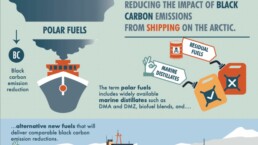
EU Arctic Strategy NGOs welcome EU ambition on on cutting shipping’s Arctic Black Carbon Emissions
Responding to today’s publication of the EU’s Arctic Strategy, which definitively states the EU’s intention to support International Maritime…
The final quarter of 2026 is expected to see softer bauxite flows
Chinese front-loading is expected to have run its course, pointing to softer bauxite flows in 2026 Q4. Global bauxite flows increased by 2.8% y/y…

DP World Foundation and Belewan new container terminal mark groundbreaking of AED 3.7 million school project in Indonesia
Classrooms of Hope initiative expands to Belawan, Medan with a new junior high school designed to provide modern learning facilities and greater…
Subscribe to our newsletter!
if you dont want to swim alone in the ocean of news, sign up for the newsletter, and you will receive daily all the important news of world shipping!
