Slight decline in freight throughput port of Rotterdam in first quarter of 2023
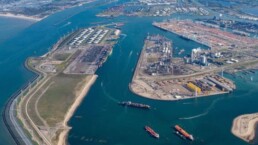

In the first quarter of 2023, 1.5% less freight passed through the port of Rotterdam than in the same period last year. In total, 111.7 million tonnes were handled compared with 113.4 million tonnes in the same period in 2022. The fall mainly concerned the throughput of containers and freight in the breakbulk segment . Throughput in the mineral oil products, crude oil, LNG, iron ore & scrap, agribulk and coal segments increased
Allard Castelein, CEO of the Port of Rotterdam Authority: ‘As expected, the year 2023 started with a slight decline in throughput. Especially in the container segment, we faced a decline in volumes due to high inflation and a weakening economy. Results in the other segments mainly show growth and confirm that dependence on Russian energy flows has been further reduced in line with the sanctions. For the remainder of the year, we expect a limited decline in throughput volumes due to the uncertainties posed by the current geopolitical situation and high inflation.’
Liquid bulk
In the first quarter, liquid bulk throughput increased by 5.6% to 54.3 million tonnes. Within this market segment, the supply of crude oil increased by 0.8 million tonnes (+3.2% to 26.3 million tonnes). As a replacement for Russian oil, more crude oil was supplied from the United States, West Africa and the Middle East. Since this oil is transported over longer distances, the use of Very Large Crude Carriers (VLCCs) increased. In the first quarter, twice as many VLCCs (50) have already unloaded crude oil as last year. Port calls from Suezmax tankers also increased by 30%. Transhipment of mineral oil products increased by 1.6 million tonnes to 15.1 million tonnes (12%) in the first quarter. This increase was mainly due to the increase in the throughput of diesel at independent terminals and at the dolphins. This served mainly to replace imports of sanctioned Russian diesel. The throughput of LNG also increased by 14.3% to 3 million tonnes in the first quarter. This was due to the high European gas price and the fact that more spot cargo has been shipped. The growth in LNG supply comes mainly from the United States as an alternative to reduced European imports of Russian gas by pipeline.
Dry bulk
The dry bulk segment showed a slight growth of 0.2% to 17.9 million tonnes in the first quarter. In this segment, iron ore & scrap and coal are the main commodities. Both commodities showed an increase. Throughput of iron ore & scrap rose by 10.1% to 6.2 million tonnes. As a result of the temporary failure of blast furnaces in Dunkirk, Gijón and IJmuiden, factories in Rotterdam’s hinterland operated more intensively. This was also the cause for the increased demand for cokes for steel production. In the first quarter, the total coal throughput increased by 26.3% to 7.4 million tonnes.
Containers
Container throughput decreased 11.5% by weight to 31.5 million tonnes and 11.6% by volume to 3.2 million TEU (the standard unit for containers). This decline had already started during 2022 due to the elimination of volumes to and from Russia. As the war in Ukraine only began in late February, the impact on throughput volumes in the first quarter of last year was still limited. In the past, these volumes accounted for 8% of total container throughput. The decline in imports from Asia (-14.2% in TEUs) due to lower demand for physical goods due to accumulated stocks and inflation was also reflected in the throughput figures. Despite the strong improvement in chain performance, no transhipment has been recovered yet in the first quarter. These volumes moved to smaller ports due to congestion during the pandemic.
RoRo and other breakbulk
The total throughput in the breakbulk segment (Roll-on/Roll-off and other general cargo) decreased by 6.0% to 7.9 million tonnes. RoRo traffic decreased by 2.2% to 6.6 million tonnes compared with the first quarter of last year. This was due to lower demand from the UK due to a moderately performing economy. Throughput of other general cargo fell by 20.9% to 1.4 tonnes. This was mainly caused by cargo shifting back to the container segment due to lower container rates.



Related News.

5th CSN Greece ICT Conference, Athens 19th November 2026 “Intelligent Skies, Secure Seas: The AI Impact on ICT” – Save the date
About the Conference The 5th CSN Greece Shipping ICT Conference, titled “Intelligent Skies, Secure Seas: The AI Impact on ICT”, will take place on…
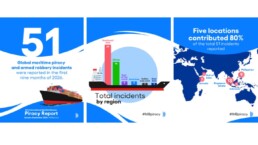
Maritime piracy incidents remain at historic lows despite Somali piracy concerns
The ICC International Maritime Bureau (IMB) has reported the lowest level (51) of piracy and armed robbery incidents since 1992 in the first nine…
Piraeus Port Authority main sponsor of Ferry Shipping Summit 2026
With the participation of more than 200 delegates from several European countries, the Ferry Shipping Summit 2026 took place on 8–9 October 2026 in…

EuroDry announces order for the construction of a third modern 82,000 DWT Kamsarmax Bulk Carrier
EuroDry , an owner and operator of drybulk vessels and provider of seaborne transportation for drybulk cargoes, announced that it has signed a…
India urges Russia, Ukraine to protect Black Sea shipping
India has urged both Russia and Ukraine to ensure safe passage for commercial shipping through the Black Sea as attacks on merchant vessels put…

PD Ports strengthens its commitment to the River Tees with multi-million pound Marine investment
PD Ports has officially opened a new multi-million-pound Marine facility on the banks of the River Tees, reinforcing its long-term commitment to the…
Maritime leaders head to Shanghai for the Annual Summit 2026
Shared seas, shifting horizons Maritime trade stands at a turning point. The rules-based order on which shipping has long depended is under…

Indian Register of Shipping grants type approval to Medha Energy’s 92 kWh LTO Lithium-Ion battery system
Indian Register of Shippinghas successfully completed the Type Approval process for the 92 kWh Lithium-Ion Battery System developed by M/s Medha…

KLine opens a Singapore New Hub for Consolidated Ship Management and Maritime Talenτ
Three Companies, One Roof — Singapore's New Hub for Consolidated Ship Management and Maritime Talenτ A ceremony for around 280 guests sets the stage…
ASA explores measures to Safeguard Free and Safe Navigation at Critical International Maritime Chokepoints
The Asian Shipowners’ Association which accounts for 56% of the world’s fleet capacity and consists of China, Cook Islands, Hong Kong, Japan, Korea…
Subscribe to our newsletter!
if you dont want to swim alone in the ocean of news, sign up for the newsletter, and you will receive daily all the important news of world shipping!
