Certificates of compliance for tank vessels in the United States

Recently, Skuld has seen an increase in inquiries regarding Certificates of Compliance inspections in the United States. This note intends to provide general guidance to members on basic requirements for COCs.
What is a COC?
A COC is a certificate issued by the United States Coast Guard to non-US flag tank vessels carrying liquid bulk hazardous cargoes, such as crude oil or other petroleum products, chemicals, liquefied gas, or compressed gas. The COC is not a required international certificate; it is a unique certificate needed for non-US flag tankers to operate in the navigable waters of the US. The goal is to ensure that no substandard tank vessel is operating in the US and threatening its coastline and territorial waters.
A valid COC must be aboard the vessel when loading, discharging, or carrying any liquid bulk hazardous cargoes into a US port.
What is the scope of COC inspection?
During COC inspection, the USCG verifies, among other things, that the ship meets certain design and equipment requirements (double hull design standards, vapor collection system, ballast tanks etc.). The focus is on cargo and fire protection and tank vessel construction standards. The vessel must also comply with applicable marine safety and environmental protection laws and international conventions. The vessel must have a valid Cargo Ship Safety Certificate, or Cargo Ship Safety Construction and Safety Equipment Certificates issued under the provisions of the International Convention for the Safety of Life at Sea, 1974, as amended and, if applicable, an IMO Certificate of Fitness and/or an International Pollution Prevention Certificate for the Carriage of Noxious Liquid Substances in Bulk (NLS Certificate).
COC inspection is often conducted simultaneously with Port State Control Inspections. Deficiencies found during PSC inspections will not usually prevent issuance of a COC, unless some deficiencies are related to cargo operations or safety.
How long is a COC valid for?
A COC is issued for two years. However, each COC contains a deadline for annual inspection – which is one year after the date of issuance. Even though a COC is within its two-year expiration period, a vessel will not be allowed to conduct cargo operations if the annual inspection is overdue. As such, owners and operators are recommended to view COC inspection as an annual requirement.
Scheduling COC inspections and conducting cargo operations
A request for COC inspection (for either annual or renewal inspection) should be made to the relevant Coast Guard authorities as soon as practicable. Chemical tankers should give at least seven-day notice to the Coast Guard of the port where the vessel is to be inspected. Oil tankers are required to provide minimum 96 hours advance notice of arrival and advise that the vessel is due for a COC exam. By giving ample advance notice, owners optimize the chances of a timely COC inspection and thereby minimize the risk of delays to cargo operations.
Applying for COC inspection waivers
A vessel arriving at a US port with a more than 90-days overdue annual exam or expired COC cannot conduct cargo operations until a COC exam has been performed. In our experience, no waiver is granted once the overdue inspection has passed the 90-days mark. However, if the vessel’s COC is 90 days or less past the COC expiration date or annual exam, then vessel owners, operators and/or their agents can usually apply for a waiver. If the waiver is granted by the Coast Guard, the vessel will be allowed to conduct cargo operation, and a COC exam will be scheduled before the vessel leaves port.
Before granting a waiver, the Coast Guard will typically ensure that statutory certificates such as certificates of fitness or COFRs are valid and will ask the master to affirm that various cargo and fire systems onboard were successfully examined and tested.
It should be noted that the Coast Guard has discretionary power to grant waivers, and waiver requirements, forms and procedures may vary per Coast Guard sectors. Vessel Owners should always check the local requirements for each port.
Qualship 21 and E-Zero Programs
The USCG Qualship 21 program identifies the companies and vessels that demonstrate the highest commitment to quality and safety through the highest level of compliance with international standards and US laws. Vessels must be registered to flags that have met all the requirements for full participation in the program. As of March 2023, 27 flag administrations were participating in the program. Vessels enrolled in the Qualship 21 program that are exemplary in their adherence to environmental compliance can also seek the E-Zero designation.
As a reward, the vessels enrolled in both Qualship 21 and E-Zero programs are permitted to conduct cargo operations within six months of both the COC annual examination due date and the COC expiration date. At a minimum, cargo-specific documents (such as certificate of fitness) will be verified and operationality of cargo systems will be confirmed before cargo operations begin. COC inspection must then be done prior to the vessel’s departure from the port.
Source: Skuld



Related News.

5th CSN Greece ICT Conference, Athens 19th November 2026 “Intelligent Skies, Secure Seas: The AI Impact on ICT” – Save the date
About the Conference The 5th CSN Greece Shipping ICT Conference, titled “Intelligent Skies, Secure Seas: The AI Impact on ICT”, will take place on…
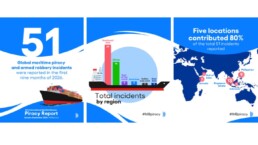
Maritime piracy incidents remain at historic lows despite Somali piracy concerns
The ICC International Maritime Bureau (IMB) has reported the lowest level (51) of piracy and armed robbery incidents since 1992 in the first nine…
Piraeus Port Authority main sponsor of Ferry Shipping Summit 2026
With the participation of more than 200 delegates from several European countries, the Ferry Shipping Summit 2026 took place on 8–9 October 2026 in…
EuroDry announces order for the construction of a third modern 82,000 DWT Kamsarmax Bulk Carrier
EuroDry , an owner and operator of drybulk vessels and provider of seaborne transportation for drybulk cargoes, announced that it has signed a…
India urges Russia, Ukraine to protect Black Sea shipping
India has urged both Russia and Ukraine to ensure safe passage for commercial shipping through the Black Sea as attacks on merchant vessels put…
PD Ports strengthens its commitment to the River Tees with multi-million pound Marine investment
PD Ports has officially opened a new multi-million-pound Marine facility on the banks of the River Tees, reinforcing its long-term commitment to the…
Maritime leaders head to Shanghai for the Annual Summit 2026
Shared seas, shifting horizons Maritime trade stands at a turning point. The rules-based order on which shipping has long depended is under…
Indian Register of Shipping grants type approval to Medha Energy’s 92 kWh LTO Lithium-Ion battery system
Indian Register of Shippinghas successfully completed the Type Approval process for the 92 kWh Lithium-Ion Battery System developed by M/s Medha…

KLine opens a Singapore New Hub for Consolidated Ship Management and Maritime Talenτ
Three Companies, One Roof — Singapore's New Hub for Consolidated Ship Management and Maritime Talenτ A ceremony for around 280 guests sets the stage…
ASA explores measures to Safeguard Free and Safe Navigation at Critical International Maritime Chokepoints
The Asian Shipowners’ Association which accounts for 56% of the world’s fleet capacity and consists of China, Cook Islands, Hong Kong, Japan, Korea…
Subscribe to our newsletter!
if you dont want to swim alone in the ocean of news, sign up for the newsletter, and you will receive daily all the important news of world shipping!
