Protective personal equipment de-constructing the last line of defence
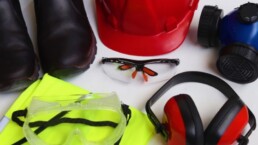

A common non-conformity observed during various ship surveys and office audits performed by Skuld as well as during behaviour-based safety reporting, is the unsafe practice found on ships where the crew were found to not be wearing proper Protective Personal Equipment.
This unsafe practice happens despite ample safety procedures and routine training that emphasizes the importance of using PPE for various types of work carried out onboard.
PPE are equipment that are designed to protect the crew against any health or safety risks at work.
PPE are also the last line of defence to protect the crew when other safety barriers in the hierarchy of risk controls, such as Elimination, Substitution, Engineering and Administrative Controls, are breached.
In accordance with the Code of Safe Working Practices (COSWP), the PPE are broadly divided into the following categories, based on the type of protection offered by the equipment:
| Type | Examples |
| Head protection | Safety helmets, bump caps, hair protection |
| Hearing protection | Earmuffs, earplugs |
| Face and eye protection | Goggles and spectacles, facial shields |
| Respiratory protective equipment | Dust masks, respirators, breathing apparatus |
| Hand and foot protection | Gloves, safety boots and shoes |
| Body protection | Safety suits, safety belts, harnesses, aprons, high-visibility clothing |
| Protection against drowning | Lifejackets, buoyancy aids and lifebuoys |
| Protection against hypothermia | Immersion suits and anti-exposure suits |
Unfortunately, the habit of not donning proper and adequate PPE continues in the industry.
Any incident arising out of such risky behaviour will only stand to increase the crew and members’ exposure to medical evacuation, deviation, medical care, repatriation, injury and death compensation.
However, when delving deeper to find the underlying causes of this issue, the following main attributing reasons were reported by crew:
- The design is uncomfortable and restricts work
- The PPE are sometimes found in a deteriorated or poorly maintained condition
- Male-centric design (unfit for female crew)
Ergonomics
Ergonomic relates to the design of an equipment which makes it comfortable and effective for people who use it. In other words, that the design fits the crew, the work scope and the work environment.
An ergonomically designed PPE is very useful since it facilitates comfort, efficiency, focus, protection and safe working.
Men vs. Women
The maritime and offshore industry is traditionally male dominated and typically PPEs are largely manufactured to suit men. However, with the growing numbers of women now working onboard ships and rigs, PPE designed specifically for women must also be taken into consideration and provided for, but this is not always the case.
More awareness needs to be fostered among the key stakeholders on this issue.
Quality, maintenance and lifespan
The quality of the PPE must conform to international safety and technical standards and regulatory requirements.
A robust routine inspection and maintenance schedule as per manufacturer’s recommendations must be implemented to maintain the PPE’s reliability.
For those PPEs that require regular shore-based servicing in addition to onboard maintenance, members are to ensure that competent and approved contractors are engaged.
All PPEs have a varying degree of lifespan according to their design and use including exposure to various types of work, environment, dusts, chemicals etc.
It is important to check the manufacturer’s instruction manual and/or prints on the PPE itself, regarding the expiry date or other applicable precautions.
If the PPEs supplied onboard do not have such information, members are strongly advised to contact the relevant manufacturers or suppliers.
Conclusion
The COSWP cautions that the use of PPE may in itself cause a hazard e.g., through reduced field of vision, loss of dexterity or agility.
As highlighted in this article, to avoid such hazards and constraints, it is worth ensuring that the PPEs are of an approved type, ergonomically designed, gender-specific where necessary, and suitable for the assigned work as well as kept well maintained.
In addition to the above, the crew must understand how to use the PPE correctly and safely, including its capabilities and limitations.



Related News.

5th CSN Greece ICT Conference, Athens 19th November 2026 “Intelligent Skies, Secure Seas: The AI Impact on ICT” – Save the date
About the Conference The 5th CSN Greece Shipping ICT Conference, titled “Intelligent Skies, Secure Seas: The AI Impact on ICT”, will take place on…
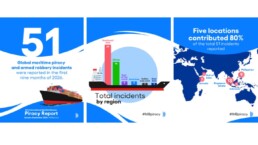
Maritime piracy incidents remain at historic lows despite Somali piracy concerns
The ICC International Maritime Bureau (IMB) has reported the lowest level (51) of piracy and armed robbery incidents since 1992 in the first nine…
Piraeus Port Authority main sponsor of Ferry Shipping Summit 2026
With the participation of more than 200 delegates from several European countries, the Ferry Shipping Summit 2026 took place on 8–9 October 2026 in…

EuroDry announces order for the construction of a third modern 82,000 DWT Kamsarmax Bulk Carrier
EuroDry , an owner and operator of drybulk vessels and provider of seaborne transportation for drybulk cargoes, announced that it has signed a…
India urges Russia, Ukraine to protect Black Sea shipping
India has urged both Russia and Ukraine to ensure safe passage for commercial shipping through the Black Sea as attacks on merchant vessels put…
PD Ports strengthens its commitment to the River Tees with multi-million pound Marine investment
PD Ports has officially opened a new multi-million-pound Marine facility on the banks of the River Tees, reinforcing its long-term commitment to the…
Maritime leaders head to Shanghai for the Annual Summit 2026
Shared seas, shifting horizons Maritime trade stands at a turning point. The rules-based order on which shipping has long depended is under…
Indian Register of Shipping grants type approval to Medha Energy’s 92 kWh LTO Lithium-Ion battery system
Indian Register of Shippinghas successfully completed the Type Approval process for the 92 kWh Lithium-Ion Battery System developed by M/s Medha…
KLine opens a Singapore New Hub for Consolidated Ship Management and Maritime Talenτ
Three Companies, One Roof — Singapore's New Hub for Consolidated Ship Management and Maritime Talenτ A ceremony for around 280 guests sets the stage…
ASA explores measures to Safeguard Free and Safe Navigation at Critical International Maritime Chokepoints
The Asian Shipowners’ Association which accounts for 56% of the world’s fleet capacity and consists of China, Cook Islands, Hong Kong, Japan, Korea…
Subscribe to our newsletter!
if you dont want to swim alone in the ocean of news, sign up for the newsletter, and you will receive daily all the important news of world shipping!
