TotalEnergies and BW LNG partner with Nautilus Labs to reduce LNG consumption and improve CII
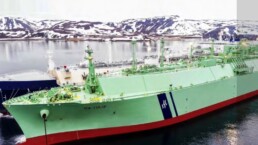

TotalEnergies, signatory of the Sea Cargo Charter in 2020, identified the need for a better monitoring system that also allows to report and optimize GHG emissions for its LNG fleet. Reporting on emissions was a tedious, manual time-consuming process that was prone to error, and left little room for optimization. BW, the owner and operator of some LNG vessels chartered by the energy major, was at the same time focused on monitoring and improving the environmental performance of their vessels and was excited to work closely with TotalEnergies on their shared objectives.
Given the contractual structures of the industry, incentives of stakeholders are often misaligned and don’t necessarily encourage the search for new ways of improvements that could serve the industry or the planet as a whole. Owners are not incentivized to share data or insights with their respective charterers – and LNG shipping is not immune to the lack of transparency found in other segments. Safe transport of Liquified Natural Gas (LNG) is one of shipping’s most complex challenges: as a dynamic product, the temperature and pressure of the cargo change over time, and the vessel’s engines are set to run on the boil-off of the -160 degree Celsius cargo. The vessel’s master must make decisions to ensure that the cargo is in specific conditions when the ship arrives for discharge. On the way, issues of cargo sloshing, the degree of boil-off gas – and whether it is used as fuel or liquefied – must also be managed.
“We knew that we had to break down these siloes and barriers,” said Eric Lepesan, Head of LNG Shipping at TotalEnergies. “We decided with BW that we need to embrace collaboration for improved voyage outcomes and a reduced carbon footprint. We determined that Nautilus Labs was the right company to partner with as an independent third party. As a collective, we started a collaboration project to tackle these barriers and challenges on selected vessels.”
Nautilus integrated the vessels’ high-frequency data to build ship-specific machine learning-based performance models that power its Voyage Optimization solution. The Platform enables BW – the owner – to share insights with TotalEnergies as the charterer while still maintaining data privacy.
The companies decided to leverage Nautilus’s Boil-off Gas Optimization, the Voyage Optimization solution specifically created for the LNG segment. First, Nautilus simulated the impact of its Optimization solution over multiple voyages for the vessel, BW Tulip, throughout late 2021 and 2022. The task was clear: The vessel must adhere to its ETA and ensure terminal requirements at the arrival port while sailing with the lowest LNG consumption possible.
By determining the optimal speed over ground based on the set ETA, Nautilus first calculated the corresponding shaft speed, and ultimately the total expected LNG consumption on BW Tulip’s leg. Leveraging its proprietary machine learning and thermodynamic models, ship performance characteristics, and real-time empirical data, Nautilus estimated the amount of gas that needed to be consumed vs. reliquefied to meet the arrival requirements for temperature and pressure. Taking into account cargo composition, vapor header pressure, and vessel speed, Nautilus determined that the vessel could afford to travel at a much lower speed – even if this resulted in increased use of the Gas Combustion Unit (GCU), while still meeting temperature and pressure requirements at the arrival terminal. The slower speed was expected to result in increased reliquefication rates and ultimately lower total gas consumption and reduced emissions.
Executing an optimal voyage strategy requires the vessel owner to take a range of complex factors into account: Should the vessel proceed on natural boil-off speed, arrive early, and loop in circles – or should it slow down to improve reliquefication and arrive just-in-time while managing tank pressure through the GCU?
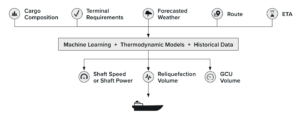
Increasing the GCU usage is considered controversial in the industry as, traditionally, an increased power on generators has been the preferred method to control tank pressure and meet terminal requirements.
BW started looking into the voyage models with the objective of minimizing the overall consumption. This involved maximizing reliquefication and in some cases involved higher GCU usage instead of using propulsion to obtain the best outcome for a voyage. If successful, BW evaluated this would contribute to a reduction of total LNG consumption throughout a voyage. Considering current market prices, this implied a notable amount of monetary savings.
BW and TotalEnergies closely evaluated the incentives and metrics within the industry. To the companies, it was clear that total consumed – and therefore lost – gas over a voyage has a direct impact on our environment. However, the metrics of EEXI and CII would potentially create different incentives as these are based on distance sailed. ‘Full steam ahead’ to keep tank pressure under control could result in the best CII rating, though being in conflict with the actual advice proposed by Nautilus’s data models.
The analyses and predictions discussed above were only possible with the collaboration of all stakeholders involved, looking at the same high-frequency data and machine learning models. Rather than leveraging a software vendor, BW and TotalEnergies found a partner in Nautilus to determine optimal operations for improved long-term outcomes.
“At TotalEnergies, we strongly believe in collaboration with the owners of our chartered-in fleet. We need to break down siloes and share insights to unlock the potential to optimize voyages and drive better outcomes. Taking a data-driven approach and leveraging machine learning-powered technology helps us reduce emissions today on our path toward decarbonization to achieve TotalEnergies net-zero goals. In Nautilus, we found an independent partner that can work across all owners and provides us with daily recommendations to optimize every voyage.” – Eric Lepesan, TotalEnergies
Harald Martin Myhre, VP IT and Digital at BW LNG, added: “For us, it is clear that the charterer has to be onboard to successfully work on such a project. It would be difficult – if not impossible – for an owner to drive this change on their own. The engagement across the value chain is essential to make a positive impact on reducing shipping’s carbon footprint.”



Related News.

OL Shipping Group in Tokyo: Capt. Eberhard Koch calls for realistic solutions to Maritime Decarbonisation
An intensive and engaging couple of days in Tokyo brought together leading figures from the international maritime community, providing a valuable…
Regatta for Peace one of the largest ever in Cyprus
Cyprus will host the first European stop on a global sailing journey leading up to the 2027 America’s Cup in Naples. More than 120 sailors…
The propulsion technology powering the marine energy transition
The marine industry is under increasing pressure to future-proof fleets, balancing the need to reduce emissions and improve efficiency. Propulsion…
Signal Ocean acquires Lgmar
Signal Ocean announced the acquisition of Lgmar, the Athens-based company behind Telix, a maritime email and communication platform in daily use…

Canada clean power push challenged by interprovincial grid limits, says GlobalData
Canada is entering a pivotal phase of power-sector expansion as federal tax credits, the phase-out of coal-fired generation, and accelerating…

Maritime safety depends on human factors and leadership, not procedures alone
Interim survey findings point to a gap between seafarers’ perceptions of risk and injury data Seafarers may misjudge when and where they are most at…

New BIMCO contracts tackle ship recycling and energy-saving retrofits
BIMCO adopted two new contractual solutions designed to help you manage important operational and regulatory challenges: the revised…
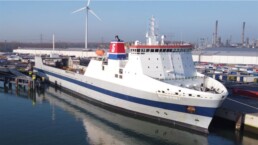
Stena Line to acquire vessel and make changes to its network
Stena Line has reached an agreement to acquire the RoRo vessel Somerset from CLdN. Subject to closure and transfer, the vessel would begin operating…
DORIC WEEKLY INSIGHT 16 OCTOBER 2026
Please find below the DORIC Market Insight for the week ending 16th October 2026. Weekly Report 16.10.2026
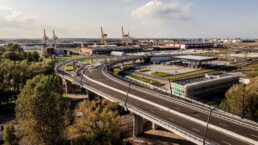
Important information for port clients and freight carriers effective November 1, a new traffic overpass and port checkpoint will open for traffic to the Port of Riga on Kundziņsala
Starting November 1 of this year, a new traffic overpass connecting Tvaika Street to Kundziņsala will open to facilitate traffic to and from the Port…
Subscribe to our newsletter!
if you dont want to swim alone in the ocean of news, sign up for the newsletter, and you will receive daily all the important news of world shipping!
