Transparency in shipping’s Digital Age


Digitalisation may prove one of the maritime industry’s most effective tools to face multiple challenges posed by decarbonisation, recruitment and even diversity, according to WISTA International President Despina Panayiotou Theodosiou
As co-CEO of leading satellite communications and digital solutions provider Tototheo Maritime, Despina Panayiotou Theodosiou knows all about the impact connectivity has on commercial ship efficiency, but her mind is also constantly probing for links between progressive technology and Environmental, Social and Governance concerns.
“New technologies and digitalisation are there to help us achieve our goals, but it is important to remember that they are not the solution in themselves,” she says. “The focus should be on how technology is used and the benefits or opportunities it can offer.”
In shipping, the fear of job losses can often top the agenda when new technologies are introduced, “without having a parallel discussion about the new jobs and opportunities,” observes Theodosiou. “However, while digitalisation is bringing about fundamental changes within our industry, ships are extremely complex machines and digitalisation will not change that. Instead, it provides potential to enhance the operation and management of assets while also creating a range of new roles.”
Seafarers in transition
Inmarsat recently reported a 70% increase in data usage by ships over a 12-month period, with around 70-80% of current consumption attributable to seafarers. This is a measure of changing expectations of the life at sea, says Theodosiou, but also an indicator that seafarers are ready and willing to engage with technology, rather than resistant to having it imposed upon them.
That engagement could easily focus on the digitalisation and data-driven decision-making that optimises ship sustainability and allows shipowners to lead on ESG, rather than being portrayed as only responding when regulation demands it, or under pressure from society or investors.
“Digital solutions that monitor, report and advise on sustainability in a transparent way are also likely to attract the next generation of tech-savvy, environmentally aware talent with the skills needed to drive the industry forward evidence that ESG is in hand,” she comments.
Theodosiou is the current President of WISTA International and has first-hand experience of how digitalisation is helping to level the playing field for men and women as employees. “Shipping’s digital transformation is creating a wide range of new roles where both men and women have the opportunity to succeed. I am not saying that there is any motivation for reducing our campaign for gender equality in maritime; what I am saying is the skillsets and experience required for shipping’s Digital Age are also transparently gender neutral. The same goes for ethnicity.”
Social mobility in maritime
Based on generational progression in IT literacy, future seafarers and shore-based personnel are likely to have more transferrable skillsets, creating more opportunities for mobility in an industry which thinks of itself as global but often provides limited scope for progression.
“Shipping is not homogenous; it is a complex and often fragmented industry. It will always provide plenty of opportunities for specialists, but a digitalised and data-driven approach can create the kind of transparency that attracts the best talent to support a growing part of our industry’s needs.”
Far from resisting, the talent of tomorrow will also expect higher levels of automation. “We expect to see a newly engaged shipping industry as the role of the asset operator becomes more crucial, and that will also involve using technology to automate some functions, processes or even roles that are mundane,” Theodosiou comments. “Digitalisation will create a new kind of crew, that has a more rounded view of a vessel’s operational profile, a crew that is engaged with digital technologies when performing their roles.”
If digitalisation is shaping the future of maritime employment, Theodosiou also believes action is needed to support its usefulness to shipping personnel today.
The 2019 World Maritime University report Transport 2040: Automation, Technology, Employment – The Future if Work highlighted how automation would drive the emergence of new skillsets. However, one of its key takeaways was to emphasise the need for education and training among existing workers – to ensure they can up-skill as new technologies are introduced.
“We need to be discussing this constantly,” says Theodosiou. “The actual evolution of shipping is a good thing, and we need to make sure our workforce retrains continuously and has the tools needed to be part of the transition; otherwise, we may fail.”



Related News.

5th CSN Greece ICT Conference, Athens 19th November 2026 “Intelligent Skies, Secure Seas: The AI Impact on ICT” – Save the date
About the Conference The 5th CSN Greece Shipping ICT Conference, titled “Intelligent Skies, Secure Seas: The AI Impact on ICT”, will take place on…
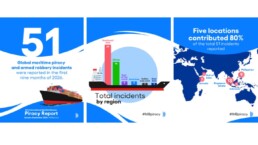
Maritime piracy incidents remain at historic lows despite Somali piracy concerns
The ICC International Maritime Bureau (IMB) has reported the lowest level (51) of piracy and armed robbery incidents since 1992 in the first nine…
Piraeus Port Authority main sponsor of Ferry Shipping Summit 2026
With the participation of more than 200 delegates from several European countries, the Ferry Shipping Summit 2026 took place on 8–9 October 2026 in…

EuroDry announces order for the construction of a third modern 82,000 DWT Kamsarmax Bulk Carrier
EuroDry , an owner and operator of drybulk vessels and provider of seaborne transportation for drybulk cargoes, announced that it has signed a…
India urges Russia, Ukraine to protect Black Sea shipping
India has urged both Russia and Ukraine to ensure safe passage for commercial shipping through the Black Sea as attacks on merchant vessels put…

PD Ports strengthens its commitment to the River Tees with multi-million pound Marine investment
PD Ports has officially opened a new multi-million-pound Marine facility on the banks of the River Tees, reinforcing its long-term commitment to the…

Maritime leaders head to Shanghai for the Annual Summit 2026
Shared seas, shifting horizons Maritime trade stands at a turning point. The rules-based order on which shipping has long depended is under…
Indian Register of Shipping grants type approval to Medha Energy’s 92 kWh LTO Lithium-Ion battery system
Indian Register of Shippinghas successfully completed the Type Approval process for the 92 kWh Lithium-Ion Battery System developed by M/s Medha…
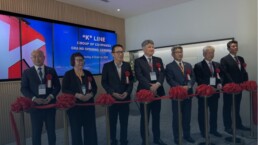
KLine opens a Singapore New Hub for Consolidated Ship Management and Maritime Talenτ
Three Companies, One Roof — Singapore's New Hub for Consolidated Ship Management and Maritime Talenτ A ceremony for around 280 guests sets the stage…
ASA explores measures to Safeguard Free and Safe Navigation at Critical International Maritime Chokepoints
The Asian Shipowners’ Association which accounts for 56% of the world’s fleet capacity and consists of China, Cook Islands, Hong Kong, Japan, Korea…
Subscribe to our newsletter!
if you dont want to swim alone in the ocean of news, sign up for the newsletter, and you will receive daily all the important news of world shipping!
