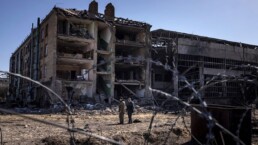

Amid the humanitarian crisis sparked by Russia’s aggression against Ukraine, labour markets are being disrupted both in the country and in neighbouring states
An estimated 4.8 million jobs have been lost in Ukraine since the start of the Russian aggression, according to a new brief by the International Labour Organization.
The study estimates that if hostilities were to escalate employment losses would increase to seven million. However, if the fighting was to cease immediately a rapid recovery would be possible, with the return of 3.4 million jobs. This would reduce employment losses to 8.9 per cent, according to the brief, The impact of the Ukraine crisis on the world of work: Initial assessments .
The Ukrainian economy has been severely affected by the Russian aggression. Since it began, on 24 February, more than 5.23 million refugees have fled to neighbouring countries. The refugees comprise mainly women, children, and persons over the age of 60. Of the total refugee population, approximately 2.75 million are of working age. Of these, 43.5 per cent, or 1.2 million, were previously working and have lost or left their jobs.
In response to this disruption the Government of Ukraine has made considerable efforts to keep the national social protection system operational by guaranteeing the payment of benefits, including to internally displaced persons, through the utilization of digital technologies.
Regional and global crisis
The crisis in Ukraine may also create labour disruption in neighbouring countries, mainly Hungary, Moldova, Poland, Romania and Slovakia. If the hostilities continue, Ukrainian refugees would be forced to remain in exile longer, putting further pressure on the labour market and social protection systems in these neighbouring states and increasing unemployment in many of them.
The significant economic and employment disruption affecting the Russian Federation are having significant ripple effects on Central Asia, especially countries whose economies depend on remittances from the Russian Federation, such as Kazakhstan, Kyrgyzstan, Tajikistan and Uzbekistan.
These four states are among the top ten countries of origin for migrants in the Russian Federation, and many of these migrants send a significant share of remittances back to their home countries. If the hostilities and the sanctions against the Russian Federation lead to job losses for migrant workers in the Russian Federation and these migrant workers return to their countries of origin, there will be severe economic losses in Central Asia as a whole.
The aggression in Ukraine has also created a shock for the global economy, further complicating the recovery from the COVID-19 crisis. This is likely to affect growth in employment and real wages and put additional pressure on social protection systems.
In many high-income countries, which have recently witnessed signs of a stronger labour market recovery, the fallout from the Ukraine crisis may worsen labour market conditions and reverse some of the gains made. The situation is particularly hard in low- and middle-income countries, many of which have been unable to fully recover from the impact of the COVID-19 crisis.
Immediate actions
In March, the ILO’s Governing Body passed a resolution calling on the Russian Federation to “immediately and unconditionally cease its aggression” against Ukraine. It expressed its grave concern at reports of civilian casualties and attacks on civilian facilities and the severe impact on workers and employers who were risking their lives to continue working.
To mitigate the impact of the crisis on the Ukrainian labour market the ILO recommends several immediate measures, including to:
- Facilitate the initiatives of employers’ and workers’ organizations so they can play an important role in providing humanitarian support and ensuring the continuation of work, where possible. The individual and collective efforts of the social partners can contribute positively to cohesion and foster inclusive economic, social and political development.
- Provide targeted employment support in the comparatively safe areas of Ukraine, including by building on the continuing government-sponsored programme to relocate workers and enterprises. ILO-supported Local Employment Partnerships (LEPs) can help create job opportunities.
- Support the social protection system in Ukraine to ensure that it continues to pay benefits, including newly-established cash transfers, to (past and new) beneficiaries.
- Prepare for a post-conflict reconstruction strategy that encourages the creation of decent and productive jobs through employment-intensive investment.



Related News.

Navigating the Multi-Orbit Era: In Conversation with Intellian’s Jon Harrison at SMM 2026
At SMM 2026 in Hamburg, the rapid evolution of maritime satellite communications took centre stage. Across the exhibition halls, discussions among…
Cyprus ports need joint energy and investment strategy, shipping agents chief says
Cyprus needs a coordinated strategy for shipping, energy and environmental protection to support port investment and modernisation, Cyprus shipping…

MASO Public Affairs introduces MASO Regulatory Intelligence
A new subscription service helping businesses understand what is changing and what it means for them MASO Public Affairs introduces MASO Regulatory…
Anglo-Eastern helps turn CMBTECH’s ammonia ambition into an operational reality
From early feasibility study and risk-based design to newbuilding supervision, crew readiness and technical management, Anglo-Eastern drew on its…

Escalation of attacks threatens to derail recovery in Middle East oil exports
World oil demand is forecast to fall by 2.5 mb/d y-o-y in 4Q26 and 2.6 mb/d on average in 2026. As the Iran war manifests itself through restricted…
New study finds shipping pays twice its share to EU ETS earmarked revenues should triple to help build market for sustainable fuels and technologies
Shipping is responsible for around 10% of EU ETS emissions but pays almost 20% of the ETS bill. Unlike other sectors, it has never received free…

MSARC strengthens maritime mass rescue readiness through training and national live exercise off Dakar, Senegal
Joint MSARC–FHAS programme combines three days of SAR training with a national multi-agency live exercise The Maritime Search and Rescue Council ,…

Sogese report deliveries are still being delayed as container freight rates fluctuate
FOR IMPORTERS Spot rates into the Mediterranean are back at January levels, Far East to Europe reliability sits at pandemic lows, and nearly…

Glencore begins trading on Australian Securities Exchange
Glencore has begun trading on the Australian Securities Exchange under the ASX code GLC. Gary Nagle, Glencore’s CEO, said it was an exciting day for…
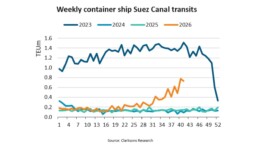
BIMCO Shipping Number of the Week
Suez Canal container ship transits exceed 50% of pre-disruption levels "During the first two weeks of October, weekly container ship capacity…
Subscribe to our newsletter!
if you dont want to swim alone in the ocean of news, sign up for the newsletter, and you will receive daily all the important news of world shipping!
