Neptune Energy announces aim to store more carbon than it emits by 2030
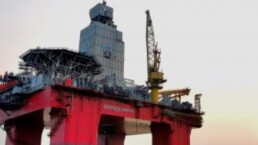

Neptune Energy announced its aim to go beyond net zero and store more carbon than is emitted from its operations and the use of its sold products by 2030.
The company is currently progressing two carbon capture and storage developments in the Dutch and UK sectors of the North Sea that could see it store more than 9 million tonnes of carbon dioxide emissions per year for third parties by the end of this decade. That would exceed its projected direct emissions and emissions from the use of its sold products.
Neptune’s aim will be supported by a refreshed strategy, focusing on lower carbon energy production and integrated energy hubs.
1. Lower carbon energy production: produce lower carbon gas and oil safely and efficiently
Neptune will focus on electrification where it is economic to do so, and continue to reduce emissions from its operations.
The company will continue to target production in its key producing regions, maintaining its gas-weighted portfolio and lower carbon intensity. New gas and oil developments that are consistent with its lower carbon strategy will be prioritised, along with those that provide opportunities to integrate energy systems.
Given Neptune’s portfolio is lower carbon due to actions taken already, further operational improvements will likely have only a modest impact on Group emissions intensity. Neptune will therefore pursue electrification to decarbonise some of its highest producing assets where it is economic do so and where the regulatory regime is supportive. Consequently, its short-term focus for electrification is in Norway.
By the end of 2022, more than 35 kboepd of Neptune’s net annual production will be electrified. With further projects planned in Norway, the company aims to have around 50 kboepd electrified by 2027.
2. Integrated energy hubs: utilise existing infrastructure and capability to integrate energy systems
Neptune’s integrated energy hub strategy provides an opportunity to drive offshore decarbonisation, by extending the life of offshore assets and repurposing them to facilitate CO2 storage and hydrogen production, using domestic, lower carbon intensive gas or wind power. By extending field life, electrification could become more economic, helping decarbonise existing production further. This strategy builds on the company’s experience with CCS in the Netherlands and Norway.
Neptune, with its partners, is currently developing the L10 CCS project in the Netherlands, which could store up to 5mt of carbon per year. The company plans to have the project FEED-ready by the end of 2022, with a final investment decision due in 2023. First carbon injection could be in 2026.
Neptune is also pursuing a CCS storage and appraisal licence in the UK, and further potential opportunities in the UK and Norway.
Through CCS, Neptune aims to store more carbon for third-party emitters than is emitted from its operations and the use of its sold products by 2030.
At 6kg CO2/boe, the carbon intensity of Neptune’s operated portfolio is already among the lowest in the sector and ahead of the industry average of 15 kg CO2/boe. The methane intensity of its operated production is 0.02%, below the industry average of 0.20% and Neptune remains on target to reach net zero methane emissions by 2030.
Pete Jones, CEO of Neptune Energy, said: “Neptune has one of the lowest carbon intensities in the sector due to the steps we have taken already to reduce operational emissions. We have both the infrastructure and the experience with electrification and CCS to now accelerate our ambitions.
“Gas will continue to play a crucial role in decarbonisation globally, while also being vital for energy security. Our gas-weighted portfolio positions us well and we will use this to integrate energy systems, increasing CO2 storage, electrification and hydrogen production, with the aim of storing more carbon than we emit by 2030.”
Neptune also today announced changes to simplify its executive management team in line with its strategic priorities:
• Armand Lumens will add IT to his current role as CFO. Having delivered the key priorities of Neptune’s digital transformation programme successfully, Kaveh Pourteymour, currently CIO, will leave the business to pursue other opportunities.
• Philip Lafeber, currently VP, Operations for North Africa and Asia Pacific, will take up the new role of VP, HSEQ & Technical Services, with the responsibility for the technical assurance of HSEQ, projects and engineering, operations and electrification, drilling and wells, and supply chain and logistics. Mark Richardson, currently VP, Projects & Engineering, will retire, having overseen the successful delivery of the Gjøa P1, Duva and Merakes projects last year.
• Neptune’s UK and Norwegian businesses will be brought together and report to Neptune’s MD, Norway and the UK, Odin Estensen. Neptune will retain its offices in both Aberdeen and Stavanger, with local leadership teams remaining in country. Alix Thomas, currently MD, UK, will take up the role of MD, Egypt.
• Eko Lumadyo, currently MD, Indonesia, will take on the additional responsibility for Neptune’s Australia business, becoming MD, Asia Pacific.



Related News.
Navigating the Multi-Orbit Era: In Conversation with Intellian’s Jon Harrison at SMM 2026
At SMM 2026 in Hamburg, the rapid evolution of maritime satellite communications took centre stage. Across the exhibition halls, discussions among…
Cyprus ports need joint energy and investment strategy, shipping agents chief says
Cyprus needs a coordinated strategy for shipping, energy and environmental protection to support port investment and modernisation, Cyprus shipping…

MASO Public Affairs introduces MASO Regulatory Intelligence
A new subscription service helping businesses understand what is changing and what it means for them MASO Public Affairs introduces MASO Regulatory…
Anglo-Eastern helps turn CMBTECH’s ammonia ambition into an operational reality
From early feasibility study and risk-based design to newbuilding supervision, crew readiness and technical management, Anglo-Eastern drew on its…

Escalation of attacks threatens to derail recovery in Middle East oil exports
World oil demand is forecast to fall by 2.5 mb/d y-o-y in 4Q26 and 2.6 mb/d on average in 2026. As the Iran war manifests itself through restricted…
New study finds shipping pays twice its share to EU ETS earmarked revenues should triple to help build market for sustainable fuels and technologies
Shipping is responsible for around 10% of EU ETS emissions but pays almost 20% of the ETS bill. Unlike other sectors, it has never received free…

MSARC strengthens maritime mass rescue readiness through training and national live exercise off Dakar, Senegal
Joint MSARC–FHAS programme combines three days of SAR training with a national multi-agency live exercise The Maritime Search and Rescue Council ,…
Sogese report deliveries are still being delayed as container freight rates fluctuate
FOR IMPORTERS Spot rates into the Mediterranean are back at January levels, Far East to Europe reliability sits at pandemic lows, and nearly…
Glencore begins trading on Australian Securities Exchange
Glencore has begun trading on the Australian Securities Exchange under the ASX code GLC. Gary Nagle, Glencore’s CEO, said it was an exciting day for…
BIMCO Shipping Number of the Week
Suez Canal container ship transits exceed 50% of pre-disruption levels "During the first two weeks of October, weekly container ship capacity…
Subscribe to our newsletter!
if you dont want to swim alone in the ocean of news, sign up for the newsletter, and you will receive daily all the important news of world shipping!
