The Mærsk Mc-Kinney Møller Center for Zero Carbon Shipping partners with Maersk Broker Advisory Services and McKinsey & Company to advise shipowners, operators and governments in defining their decarbonisation roadmap and strategy
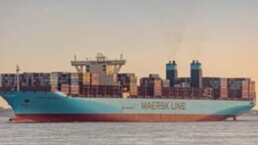

To accelerate the maritime decarbonization journey, the Mærsk Mc-Kinney Møller Center for Zero Carbon Shipping is teaming up with Maersk Broker Advisory Services and McKinsey & Company to offer data-based advisory services on decarbonization pathways.
The service called ‘Fleet Decarbonization Optimizer’ combines deep industry knowledge and techno- economic analytical capabilities across the three parties and together they model bespoke decarbonization pathways taking data points like fleet size, fleet age, vessel specifics and types of operations into consideration.
The ambition to decarbonize the maritime industry by 2050 calls for immediate action. However, uncertainty around future fuels and technologies, lack of global standards and regulation and limited visibility on timelines makes the investment case challenging. The goal is to de-risk fleet decarbonization plans by advising on
- Retrofits of energy efficiency technologies to reduce future emissions and energy demand
- Retirement schedule of legacy vessels for continued fleet optimization
- Newbuilds incl. proposed alternative fuels / propulsion
Maersk Broker Advisory Services and McKinsey & Company announced the partnership in July 2021 and since then the Center has participated in a pilot project to validate the concept and collaboration model. Based on the positive result of the pilot the three parties have now formalized the agreement and will start offering the services in the market immediately.
Bo Cerup-Simonsen, CEO of the Mærsk Mc-Kinney Møller Center for Zero Carbon Shipping:
“We see great interest from shipping companies who want to contribute to the decarbonization of the industry but identifying the optimal decarbonization pathway is not easy. The partnership with Maersk Broker Advisory Services and McKinsey can help accelerate the transition by offering bespoke, data-based advice on viable ways forward. This new way of activating and leveraging our publicly available tools, our modeling skills and knowledge ensures close interaction with the shipping industry and will inform our research and activities going forward as we learn even more about the concrete, practical challenges the shipping companies face.”
Anders Hald, CEO of Maersk Broker:
“We believe collaboration will be key for a successful and just transition of the maritime industry and we are excited for the Mærsk Mc-Kinney Møller Center for Zero Carbon Shipping to join this partnership. The industry has to decarbonize but most companies are hesitant to initiate a transition due to the considerable uncertainty on what the future holds. In our opinion the combined knowledge put into the Fleet Decarbonization Optimizer brings forward the best available data to the industry so companies can make well-informed investment decisions and navigate the uncertainty. The Fleet Decarbonization Optimizer provides tangible solutions in an environment filled with unanswered questions on future fuels, rules, and regulations. We are looking forward to assisting the industry to prepare and put forward a credible- and data-based decarbonization roadmap. A clear decarbonization strategy will be essential to initiate a successful green transition.”
Matt Stone, Partner of McKinsey & Company:
“In a large, diverse, global industry like shipping, decarbonization at scale will require participants across the value chain to move together and at pace. The partnership with Maersk Broker Advisory Services and the Mærsk Mc-Kinney Møller Center for Zero Carbon Shipping on the Fleet Decarbonization Optimizer brings the best of our three organizations together to help the shipping industry understand what it will take to decarbonize in the most cost-optimal way.”
Shipping’s roadmap to decarbonization
With 100.000 ships consuming around m300Tons fuel p.a. global shipping accounts for around 3% of global carbon emissions, a share that is likely to increase as other industries tackle climate emissions in the coming decades.
Achieving the long-term target of decarbonization requires new fuel types and a systemic change within the industry. Shipping is a globally regulated industry, which provides an opportunity to secure broad-based industry adoption of new technology and fuels.
To accelerate the development of viable technologies a coordinated effort within applied research is needed across the entire supply chain. Industry leaders play a critical role in ensuring that research is successfully matured to scalable solutions matching the needs of industry. At the same time, new legislation will be required to enable the transition towards decarbonization.



Related News.
Navigating the Multi-Orbit Era: In Conversation with Intellian’s Jon Harrison at SMM 2026
At SMM 2026 in Hamburg, the rapid evolution of maritime satellite communications took centre stage. Across the exhibition halls, discussions among…
Cyprus ports need joint energy and investment strategy, shipping agents chief says
Cyprus needs a coordinated strategy for shipping, energy and environmental protection to support port investment and modernisation, Cyprus shipping…

MASO Public Affairs introduces MASO Regulatory Intelligence
A new subscription service helping businesses understand what is changing and what it means for them MASO Public Affairs introduces MASO Regulatory…
Anglo-Eastern helps turn CMBTECH’s ammonia ambition into an operational reality
From early feasibility study and risk-based design to newbuilding supervision, crew readiness and technical management, Anglo-Eastern drew on its…

Escalation of attacks threatens to derail recovery in Middle East oil exports
World oil demand is forecast to fall by 2.5 mb/d y-o-y in 4Q26 and 2.6 mb/d on average in 2026. As the Iran war manifests itself through restricted…
New study finds shipping pays twice its share to EU ETS earmarked revenues should triple to help build market for sustainable fuels and technologies
Shipping is responsible for around 10% of EU ETS emissions but pays almost 20% of the ETS bill. Unlike other sectors, it has never received free…

MSARC strengthens maritime mass rescue readiness through training and national live exercise off Dakar, Senegal
Joint MSARC–FHAS programme combines three days of SAR training with a national multi-agency live exercise The Maritime Search and Rescue Council ,…

Sogese report deliveries are still being delayed as container freight rates fluctuate
FOR IMPORTERS Spot rates into the Mediterranean are back at January levels, Far East to Europe reliability sits at pandemic lows, and nearly…

Glencore begins trading on Australian Securities Exchange
Glencore has begun trading on the Australian Securities Exchange under the ASX code GLC. Gary Nagle, Glencore’s CEO, said it was an exciting day for…
BIMCO Shipping Number of the Week
Suez Canal container ship transits exceed 50% of pre-disruption levels "During the first two weeks of October, weekly container ship capacity…
Subscribe to our newsletter!
if you dont want to swim alone in the ocean of news, sign up for the newsletter, and you will receive daily all the important news of world shipping!
